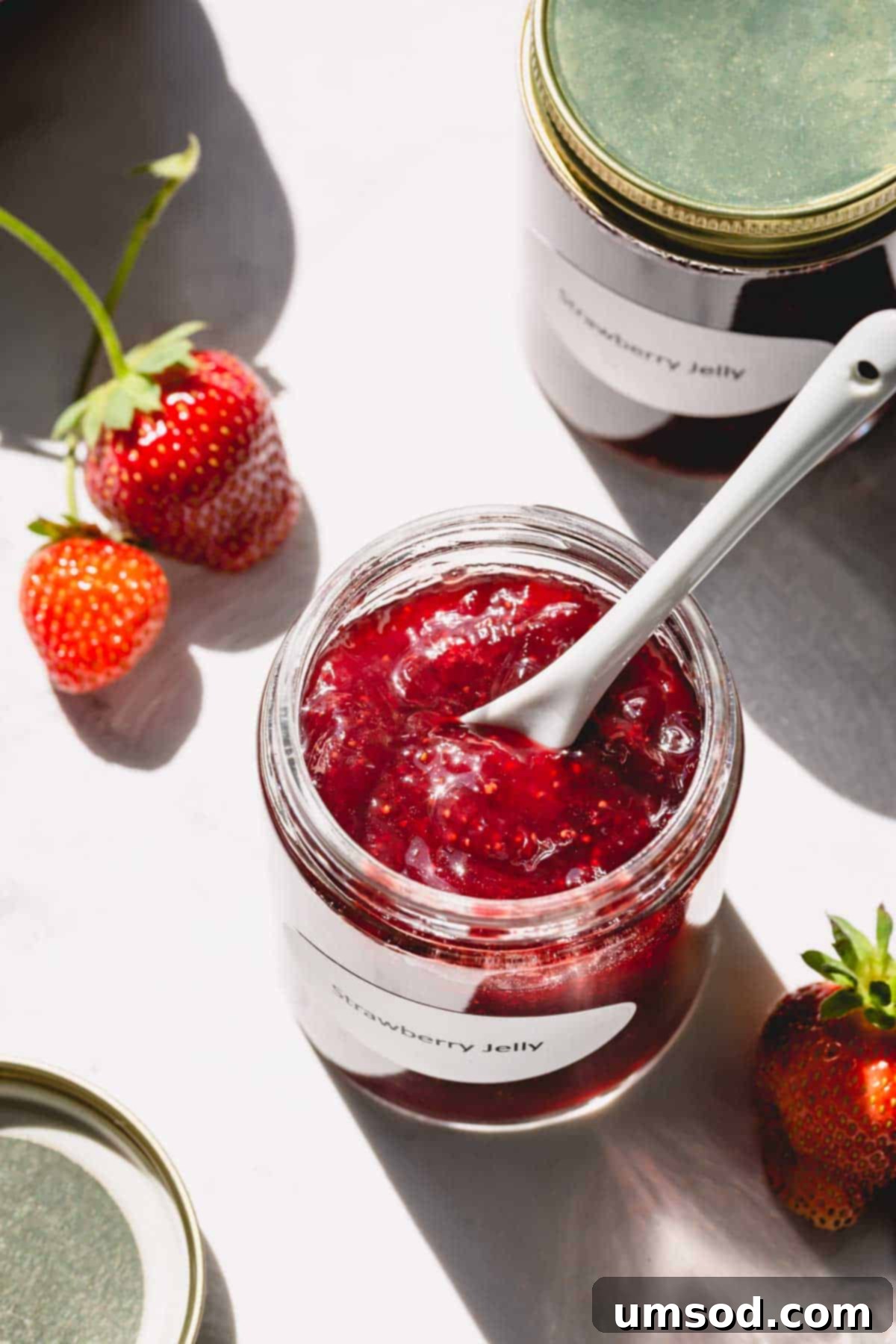
Welcome to the delightful world of homemade preserves! Learn how to make an incredibly delicious small batch strawberry jam without pectin. This recipe yields a sweet, perfectly jammy, and wonderfully spreadable preserve, requiring no special equipment or complex canning techniques. Follow our easy step-by-step photos and instructions to create a batch of fresh, flavorful strawberry jam that will elevate any meal.
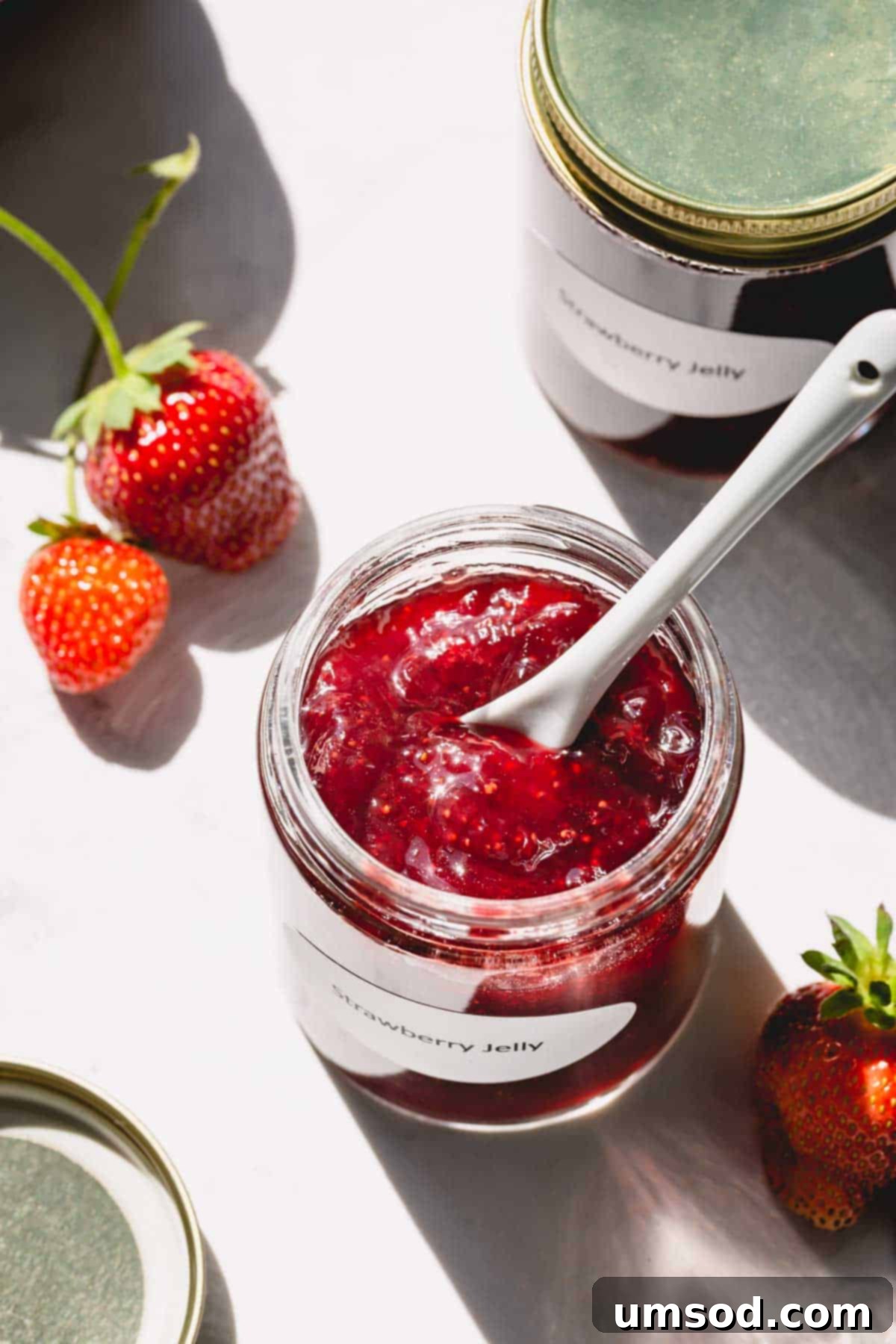
Why You’ll Adore This Easy Homemade Strawberry Jam
There’s truly nothing quite like the taste of homemade jam, especially when spread generously over warm pancakes, delicate crepes, or a simple slice of buttered toast on a lazy Sunday morning. The process of making your own jam might seem daunting at first, but this pectin-free strawberry jam recipe is surprisingly easy and incredibly rewarding. If you’re new to the world of preserving, this recipe offers a fantastic starting point for creating delicious homemade treats without the intimidation of traditional canning methods.
- Effortlessly Simple: This strawberry jam recipe is designed for beginners and seasoned cooks alike, focusing on straightforward steps and readily available ingredients.
- Canning is Optional: While traditional canning extends shelf life considerably, this small batch recipe offers delicious jam that can be stored in the refrigerator, making water bath canning entirely optional.
- Perfect Texture: Achieve a soft, beautifully spreadable jam that’s neither too thick nor too runny, ideal for all your favorite dishes.
- Natural Ingredients: Rely on the inherent goodness of ripe strawberries, sugar, and lemon juice to create a preserve bursting with authentic fruit flavor.
While I could happily enjoy spoonfuls of this exquisite homemade jam straight from the jar, its versatility knows no bounds! Incorporate it into your morning routine by mixing it into creamy yogurt parfaits, layering it onto a decadent chocolate cheesecake, spooning it generously over fluffy French toast, or spreading it elegantly between cake layers for a truly special dessert. The possibilities are endless, making this homemade strawberry jam a true kitchen staple.
Understanding Pectin: Nature’s Gelling Agent
Pectin is a naturally occurring complex carbohydrate (a type of starch) found in the cell walls of many fruits and vegetables. It plays a crucial role in helping to thicken and gel foods, most notably jams, jellies, and preserves. While all fruits contain some pectin, the amount varies significantly. For instance, apples and citrus fruits are high in pectin, while strawberries contain a moderate amount.
Commercially produced pectin, typically derived from citrus peels, is readily available in the baking aisle of most grocery stores, often near the pudding mixes. It’s frequently used to ensure a consistent, firm set in jams and jellies, especially when working with fruits naturally low in pectin or when aiming for a quicker cooking time.
However, the good news is that commercial pectin isn’t always necessary to achieve a beautifully set jam. This recipe leverages the natural pectin present in strawberries. By combining the fruit with sugar and lemon juice, and then cooking it adequately, we encourage the release of the strawberries’ natural pectin. The cooking process also works to evaporate excess liquid, concentrating the fruit sugars and pectin, leading to that perfect jammy consistency without any artificial thickeners. It’s a testament to the simplicity and magic of traditional jam-making!
Essential Ingredients for Perfect Pectin-Free Jam
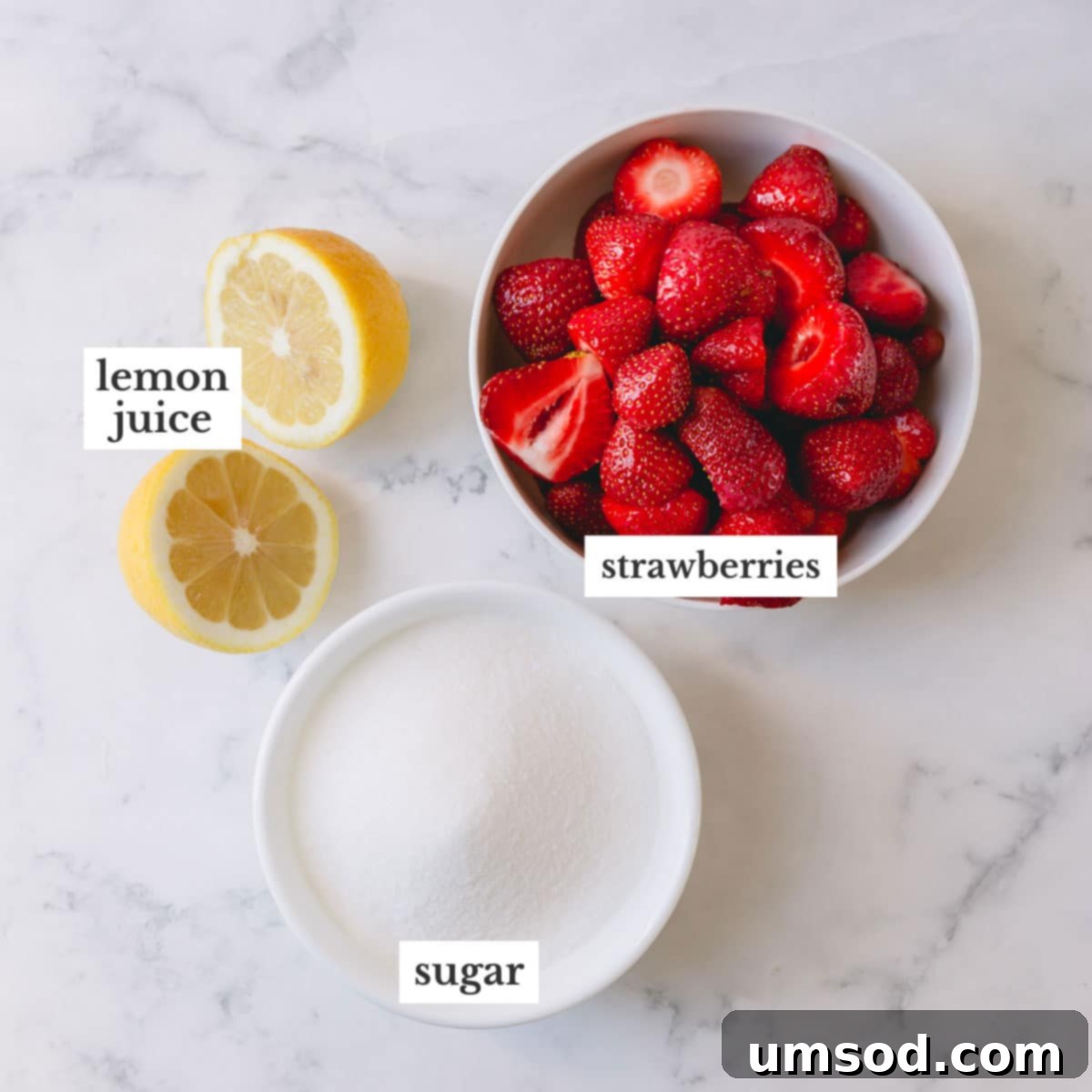
Crafting exceptional homemade strawberry jam starts with selecting the right ingredients. Each component plays a vital role in achieving the ideal flavor, texture, and preservation of your jam.
- Strawberries: The heart of our jam! For the absolute best results, prioritize ripe, deeply colored strawberries that are in season. Trust this advice wholeheartedly; peak-season strawberries offer unparalleled sweetness and vibrant flavor, which directly translates to the BEST jam. I always make sure to stock up every year when grocery store shelves are overflowing with these luscious berries and their prices are at their most appealing.
- Sugar: More than just a sweetener, sugar is a multi-tasking hero in jam making. It encourages the natural pectin in the strawberries to activate and work its magic, aiding in the thickening process. Furthermore, sugar acts as a crucial preservative, inhibiting microbial growth and extending the shelf life of your jam. Do not be tempted to reduce the sugar significantly, as it directly impacts both texture and preservation.
- Lemon Juice: Never skip the lemon juice! The acid in fresh lemon juice performs several critical functions. Firstly, it brightens and enhances the natural strawberry flavor, preventing the jam from tasting flat. Secondly, and most importantly for a pectin-free recipe, it is absolutely crucial for a proper set. The acidity helps to extract and activate the natural pectin in the strawberries, ensuring your jam thickens beautifully. Whenever possible, choose fresh lemons over bottled lemon juice; the flavor difference is remarkably superior and makes a real impact on the final product.
Crafting Your Homemade Strawberry Jam: A Step-by-Step Guide
Making delicious strawberry jam without pectin is surprisingly simple and can be done right on your stovetop. While canning is an optional step, it’s highly recommended if you wish to store your jam for longer than a month, ensuring pantry stability for up to a year.
Stovetop Method: Simple Strawberry Jam
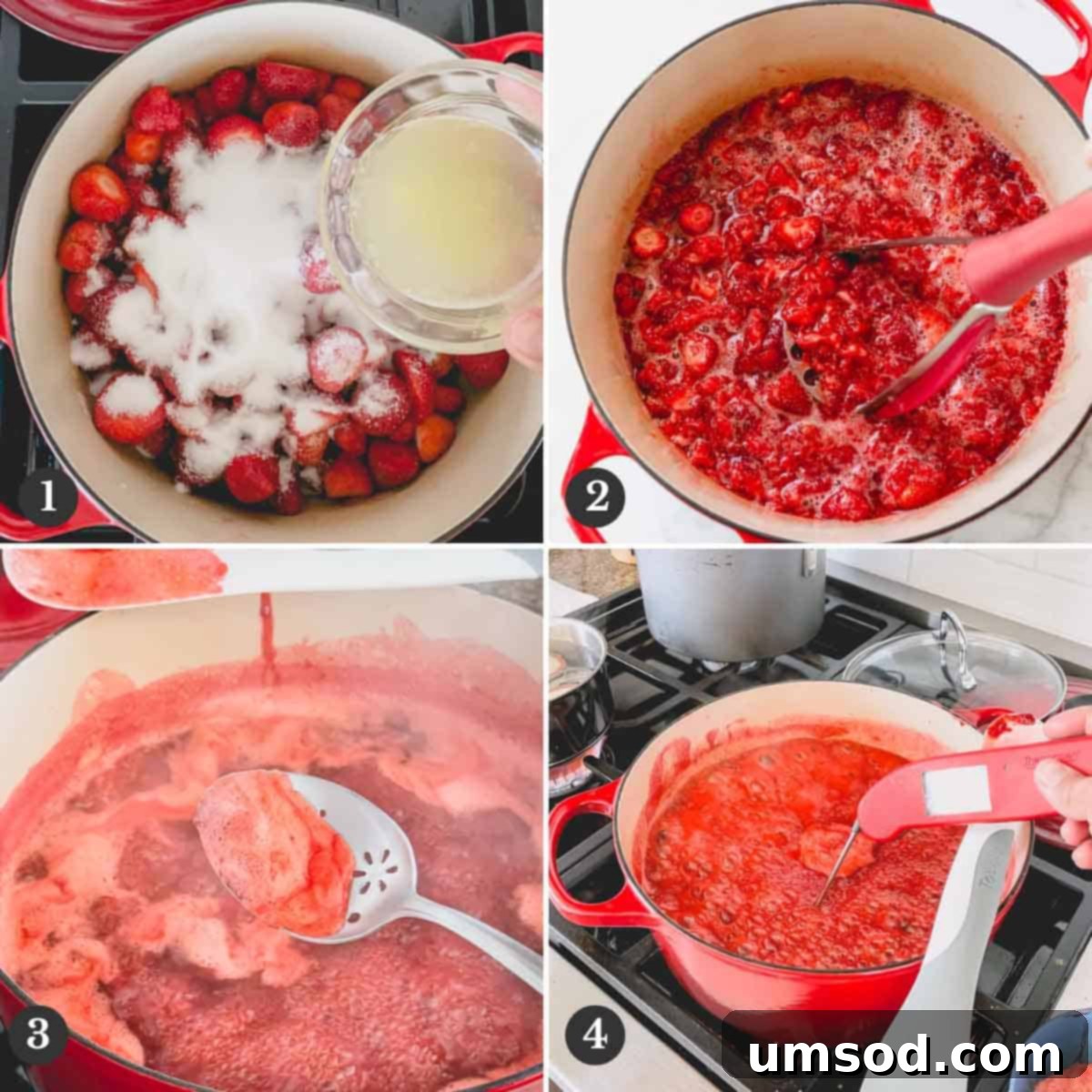
- Prepare the Strawberries: Begin by thoroughly rinsing your fresh strawberries under cool water. Hull them by removing the green leafy tops and the small white core. Once hulled, cut the strawberries into quarters or slices. Don’t worry too much about uniform sizes at this stage, as they will break down beautifully during cooking to become jam.
- Combine and Mash: In a large, heavy-bottomed pot (a Dutch oven works perfectly for even heat distribution), combine the prepared strawberries, granulated sugar, and fresh lemon juice. Using a potato masher, gently mash the strawberries. The goal here is to release their juices and start breaking down the fruit. If you prefer a chunkier jam with noticeable fruit pieces, be sure to leave some larger strawberry chunks unmashed. This initial mashing step is key for releasing the natural pectin!
- Dissolve Sugar and Bring to a Boil: Place the pot over medium heat. Stir the mixture continuously until all the sugar completely dissolves into the strawberry juices. Once dissolved, increase the heat to medium-high and bring the mixture to a vigorous, rolling boil.
- Cook to Setting Point: Continue to cook the jam, stirring frequently to prevent sticking and ensure even cooking, until it reaches 220 degrees Fahrenheit (104 degrees Celsius). This temperature is the crucial “setting point” where the pectin and sugar create the desired jam consistency. Use a candy thermometer for accuracy, ensuring it doesn’t touch the bottom of the pot. Once the temperature is reached, turn off the heat. Use a slotted spoon to carefully skim off any bubbly foam that has accumulated on the surface. Reaching the correct temperature is vital for ensuring your jam sets up perfectly.
- Jar and Cool: Carefully pour the hot strawberry jam into clean glass jars, leaving about ¼ inch of headspace from the rim. Cover the jars with their lids. Allow the filled jars to cool completely to room temperature on your counter.
- Store Refrigerated: Store the cooled, uncanned jam in the refrigerator for up to one month. While many have enjoyed it for longer, this is the recommended duration for optimal freshness and safety without proper canning.
Pro Tip: Mashing for Pectin
Mashing the strawberries upfront isn’t just about texture; it significantly helps in releasing their natural pectin. The more surface area exposed, the more pectin can be extracted during cooking. Mash to your preferred consistency – whether you love a smooth jam or one with delightful fruit chunks!
Optional: Water Bath Canning for Long-Term Storage
For pantry-stable jam that lasts for up to a year, water bath canning is the recommended method. This process creates a vacuum seal, preserving your jam safely.
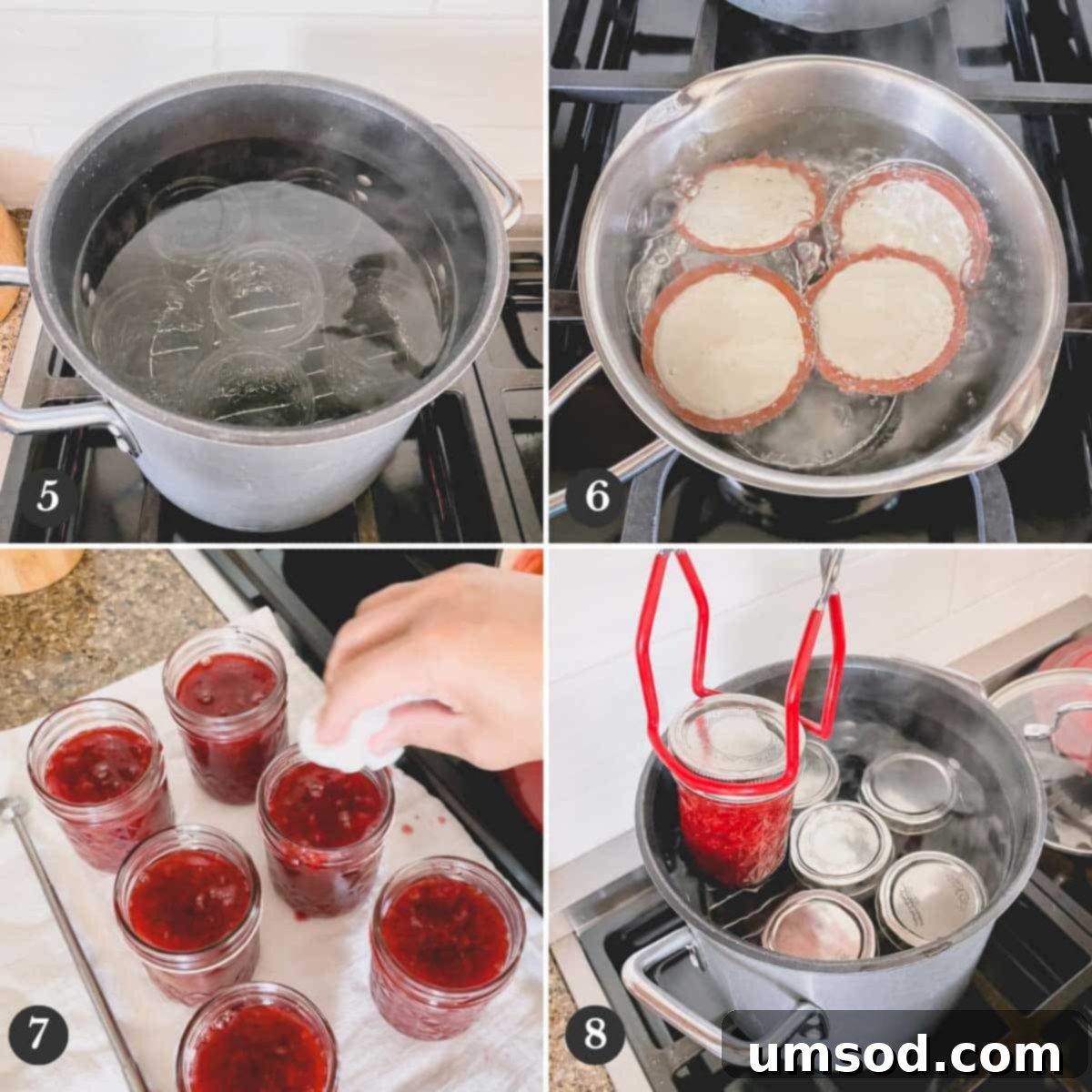
- Sterilize Jars: Sterilization is paramount for safe canning. Wash your canning jars thoroughly with hot, soapy water. Then, place them in a large stock pot or a dedicated canning pot filled with water, ensuring they are completely submerged. Bring the water to a rolling boil and boil the jars for at least 10 minutes. This eliminates any bacteria, ensuring a safe product. Ensure your pot is large enough to comfortably fit all your jars with plenty of room.
- Prepare Lids and Rings: While the jars are sterilizing, place the new canning lids and rings into a separate pot of hot, but not boiling, water. Turn off the heat once the water is hot. Avoid boiling the lids, as excessive heat can compromise the quality of the sealing rubber. Use a magnetic lid wand to safely retrieve the hot lids when you’re ready to seal your jam.
- Fill Jars Properly: Carefully pour the hot jam into the sterilized jars, leaving a precise ¼ inch of headspace from the top rim. This headspace is crucial for creating a proper vacuum seal during processing.
- Remove Air Bubbles: Run a clean, non-metallic knife or a specialized canning tool along the inside edges of each jar to release any trapped air bubbles. Be careful not to scratch the glass bottom of the jar, as this could lead to breakage during processing.
- Clean Rims and Seal: Wipe the rims of the jars thoroughly with a clean, damp paper towel to remove any jam residue. Residue can prevent a proper seal. Place a prepared lid onto each jar, then screw on the rings until they are fingertip tight – meaning snug but not overly tightened.
- Process in Water Bath: Carefully place the filled jars onto a canning rack at the bottom of your canning pot (or large stock pot). Ensure the jars are not touching each other. Fill the pot with hot water, making sure the jars are covered by at least 1 to 2 inches (about 4 inches for general canning safety) of water. Bring the water to a rolling boil and process the jars for 10 minutes. After 10 minutes, turn off the heat and let the jars sit in the hot water for an additional 5 minutes. This allows the internal temperature to equalize.
- Cool and Check Seals: Using a jar lifter, carefully transfer the hot jars to a cooling rack or a towel-lined surface, ensuring they are not disturbed. Let them cool completely for 12 to 24 hours. As they cool, you’ll often hear a “pop” sound, indicating a successful seal. To check the seal, press down on the center of each lid. If it doesn’t flex or spring back, the jar is properly sealed and can be stored at room temperature.
Canning Rack Alternative
If you don’t own a canning rack, don’t worry! You can improvise by placing a clean kitchen towel or a few canning jar rings on the bottom of your pot. This simple hack prevents the glass jars from sitting directly on the heat source, which could cause them to crack or break during boiling.
Expert Tips for Jam-Making Mastery
Achieving perfect homemade jam, especially without added pectin, involves a few key considerations. Keep these tips in mind for consistently delicious results:
- Maintain Sugar Ratios: It’s crucial not to significantly reduce the amount of sugar specified in this recipe. Sugar is indispensable not only for sweetening but also for achieving the correct jam consistency and acting as a vital preservative. Altering the sugar content can affect both the set and the shelf life of your jam.
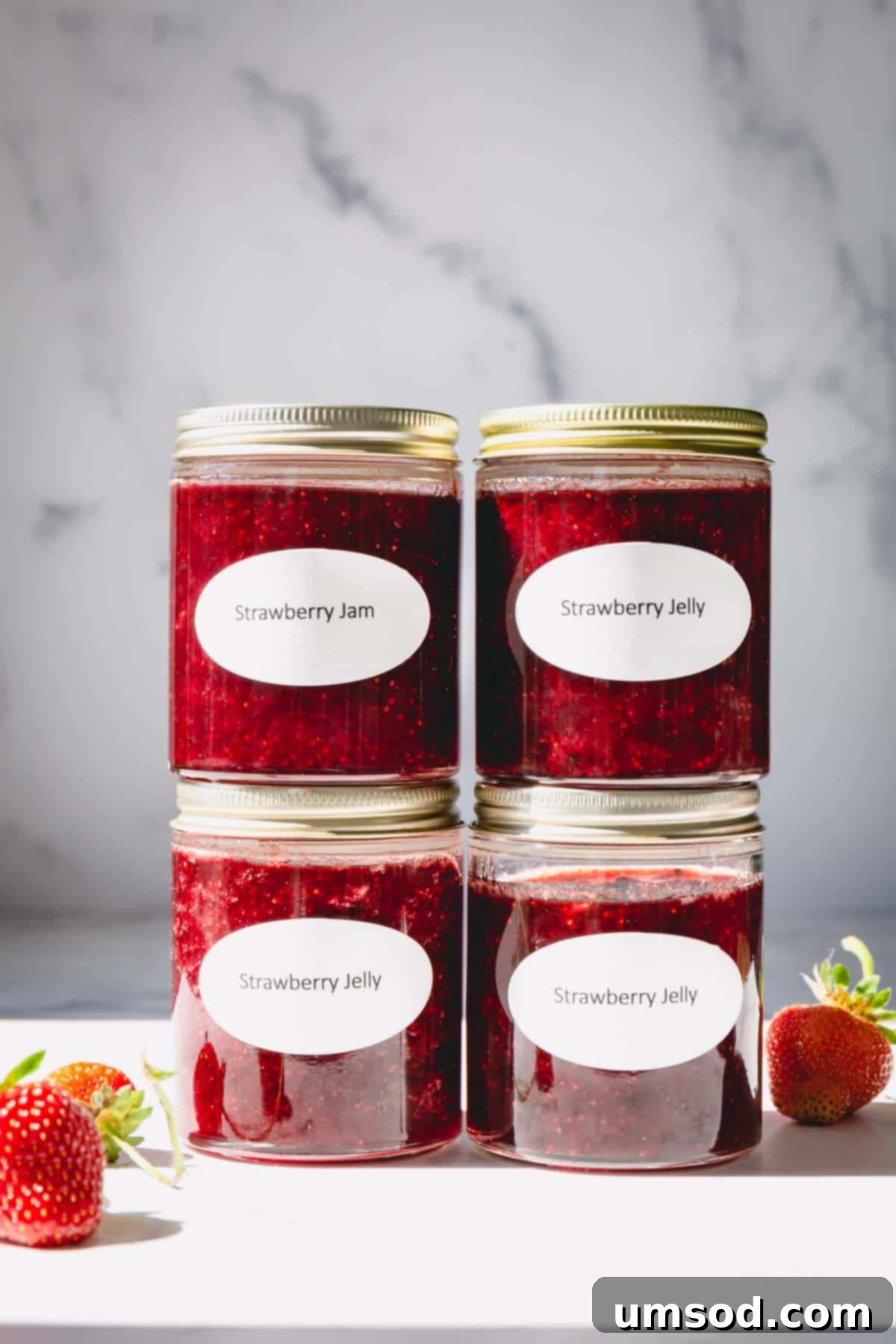
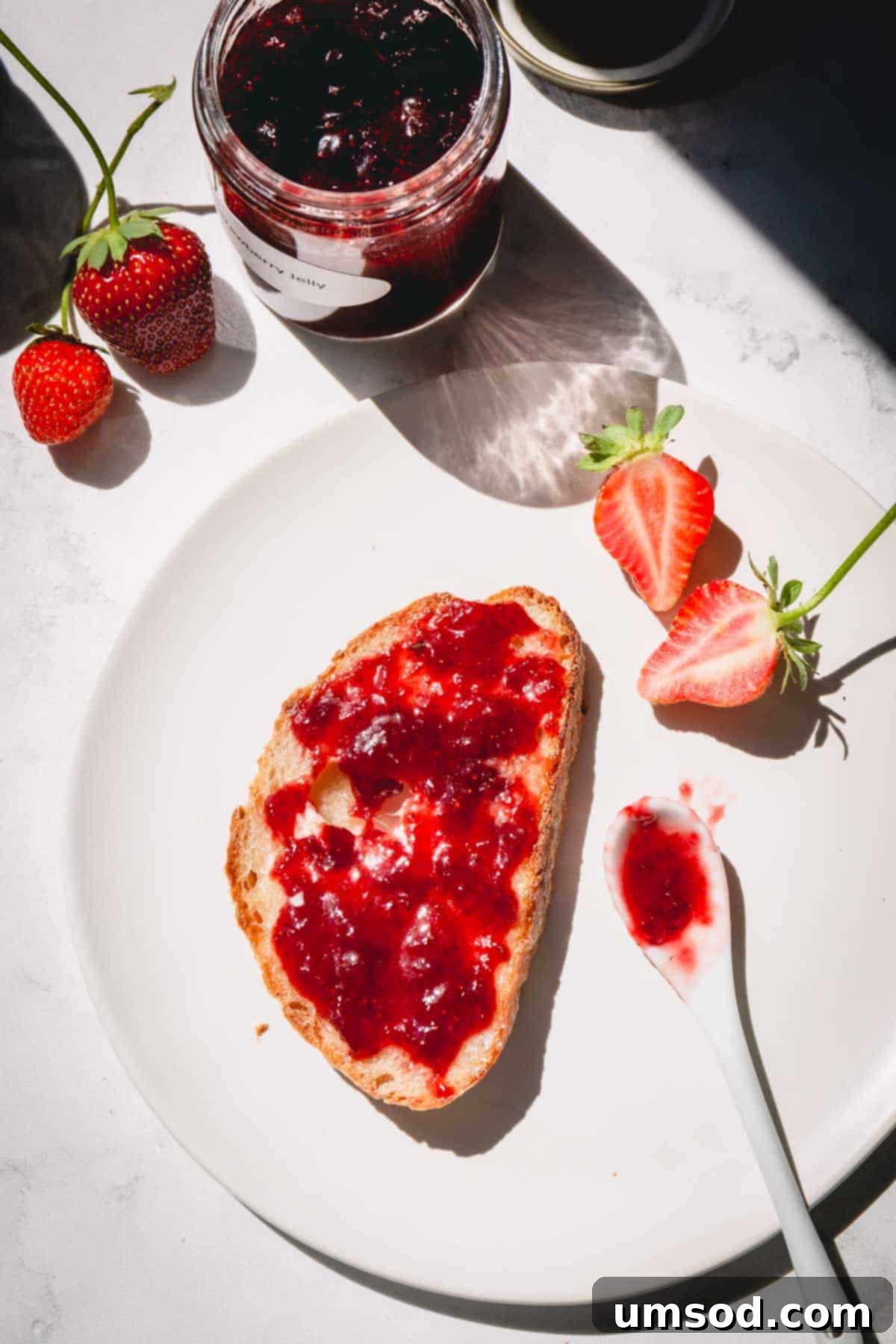
- Embrace the Spreadable Texture: Understand that this recipe is designed to produce a thick yet wonderfully soft and spreadable jam, rather than a solid, marmalade-like consistency often achieved with commercial pectin. This delightful texture is perfect for easily smearing on toast, croissants, warm scones, or delicate crepes. Refer to the image below for a visual representation of the expected consistency.
- No Commercial Pectin Needed: While there’s absolutely nothing wrong with using commercial pectin, this particular recipe truly doesn’t require it! The natural pectin in the strawberries, combined with the right amount of sugar and lemon juice, and proper cooking, yields a beautifully set jam. The resulting texture is precisely what you desire: soft, thick, and effortlessly spreadable.
- Invest in Canning Tools (If Canning): If you plan on making larger batches and canning regularly, consider investing in a basic canning tool set. You can find comprehensive sets for less than 25 dollars on Amazon. Look for one that typically includes essential items like a jar lifter (for safely moving hot jars), a magnetic wand (for retrieving hot lids), and sturdy tongs. Having the right tools makes the entire canning process much simpler, safer, and more seamless.
- Accurate Temperature is Key: Using a reliable candy thermometer is paramount for determining when your jam has reached its setting point. Cooking to 220°F (104°C) ensures enough moisture has evaporated and the pectin has activated to achieve the desired consistency. Don’t eyeball this step for the best results!
Optimal Storage for Your Delicious Strawberry Jam
Proper storage ensures that your homemade strawberry jam remains fresh, flavorful, and safe to enjoy for as long as possible.
- Refrigerated Storage (Uncanned): Jars of jam that have not undergone a water bath canning process should be stored in the refrigerator. For best quality and safety, consume these within one month. Personally, I’ve found that carefully handled jars can last longer, but always err on the side of caution. To maximize freshness, always use clean utensils when serving, and try to minimize the frequency of opening the jar.
- Pantry Storage (Canned and Sealed): Properly sealed jars of water-bath-canned jam can be stored at cool room temperature in a dark, dry place (like a pantry or cupboard) for up to one year. While still safe beyond a year, the quality – including flavor, color, and texture – may begin to degrade. Always ensure lids are properly sealed before storing and check for any signs of spoilage before consuming.
Frequently Asked Questions About Pectin-Free Jam
No, absolutely not! Strawberries, like most fruits, naturally contain pectin. When combined with the right amount of sugar and lemon juice, and then cooked adequately, the natural pectin within the strawberries is released and activated. The cooking process also works to evaporate excess liquid, concentrating the fruit and allowing it to thicken into a beautiful jam without the need for commercial pectin.
The most effective way to thicken jam without commercial pectin is through proper cooking. As the jam simmers, the excess liquid from the fruit evaporates, naturally concentrating the sugars and the fruit’s inherent pectin, which leads to a thicker, jammy consistency. It’s also critical to include sufficient sugar and fresh lemon juice. The sugar helps draw out the pectin and facilitates the gelling process, while the acid from the lemon juice activates the pectin, ensuring a good set. Using a candy thermometer to reach the specific setting temperature (220°F/104°C) is key to achieving this perfect thickness.
Easy Strawberry Jam (No Pectin)
Shinee Davaakhuu
35 minutes
15 minutes
1 hour
48 servings
Comment
Print Recipe
Ingredients
- 2 lbs fresh strawberries
- 2 cups granulated sugar Note 1
- ¼ cup fresh lemon juice
Equipment
- Large, heavy-bottomed pot (e.g., Dutch oven)
- Glass jars with lids
- Potato masher
- Candy thermometer
- Slotted spoon
- Optional for canning: Canning pot with rack, jar lifter, magnetic lid wand
Instructions
- Wash and hull the strawberries. Quarter or slice the strawberries into smaller pieces.
- In a heavy-bottomed pot (like a Dutch oven), combine the prepared strawberries, granulated sugar, and fresh lemon juice. Using a potato masher, mash the strawberries to your desired consistency. For a chunkier jam, leave some larger fruit pieces in the mixture.
- Stir the mixture over medium heat until all the sugar is completely dissolved. Then, increase the heat to medium-high and bring the mixture to a vigorous, rolling boil.
- Continue to cook the mixture, stirring frequently, until it reaches 220°F (104°C) on a candy thermometer. This usually takes about 25-30 minutes. Once the temperature is reached, turn off the heat and use a slotted spoon to skim off any foam that has risen to the surface.
- Carefully pour the hot jam into clean glass jars, leaving about ¼ inch of headspace from the rim. Cover with lids and allow to cool completely to room temperature. Store these uncanned jams in the refrigerator for up to 1 month.
- For Canning (Optional, for longer storage): Sterilize your canning jars by washing them with hot, soapy water, then placing them in a large canning pot or deep stock pot with boiling water for 10 minutes. Ensure there’s a canning rack or kitchen towel at the bottom of the pot to prevent breakage.
- Place new canning lids and rings in hot (not boiling) water in a separate small pot and turn off the heat. Boiling the lids can reduce the quality of the sealing rubber.
- Pour the hot jam into the sterile jars, leaving approximately ¼ inch of headspace from the top rim.
- Run a clean, non-metallic knife or a debubbling tool along the inside edges of the jar to remove any trapped air bubbles in the jam. Be careful not to touch the bottom of the jar with metal utensils, as this can scratch and weaken the glass.
- Wipe the edges of the jars thoroughly with a damp clean towel or paper towel to ensure a clean sealing surface. Place the prepared lids on the jars and tighten the rings fingertip-tight (snug but not overly tight).
- Carefully place the jars onto the rack in the canning pot. Ensure the jars are covered by at least 1-2 inches (or 4 inches for general canning recommendations) of water. Bring the water to a rolling boil and process the jars for 10 minutes. After 10 minutes, turn off the heat and let the jars sit in the hot water for 5 more minutes before carefully transferring them to a cooling rack.
- As the jars cool down on the rack (for 12-24 hours), you should hear characteristic popping sounds. This indicates that the jars are properly sealing. Check the seals by pressing the center of each lid – a properly sealed lid should not flex or spring back. Store sealed jars at room temperature for up to 1 year for best quality.
⭐️ Did you make this recipe?
Please leave a review and let us know how you liked it!
Tips & Notes
You can easily double this recipe if you plan on canning a larger batch.
Note 1 (Sugar): Do not reduce the amount of sugar specified. It is essential for achieving the correct consistency and plays a crucial role in the preservation of the jam.
Storage Instructions:
– Store uncanned jams (refrigerator-only) in the fridge for up to 1 month.
– Sealed (canned) jars can be stored at cool room temperature for up to 1 year for best quality.
Nutrition Information

Did you make this?Leave a rating and your feedback. Thank you!
This post was originally published on April 8, 2013, and has been extensively updated on , to provide the most current and comprehensive information on making homemade strawberry jam without pectin.