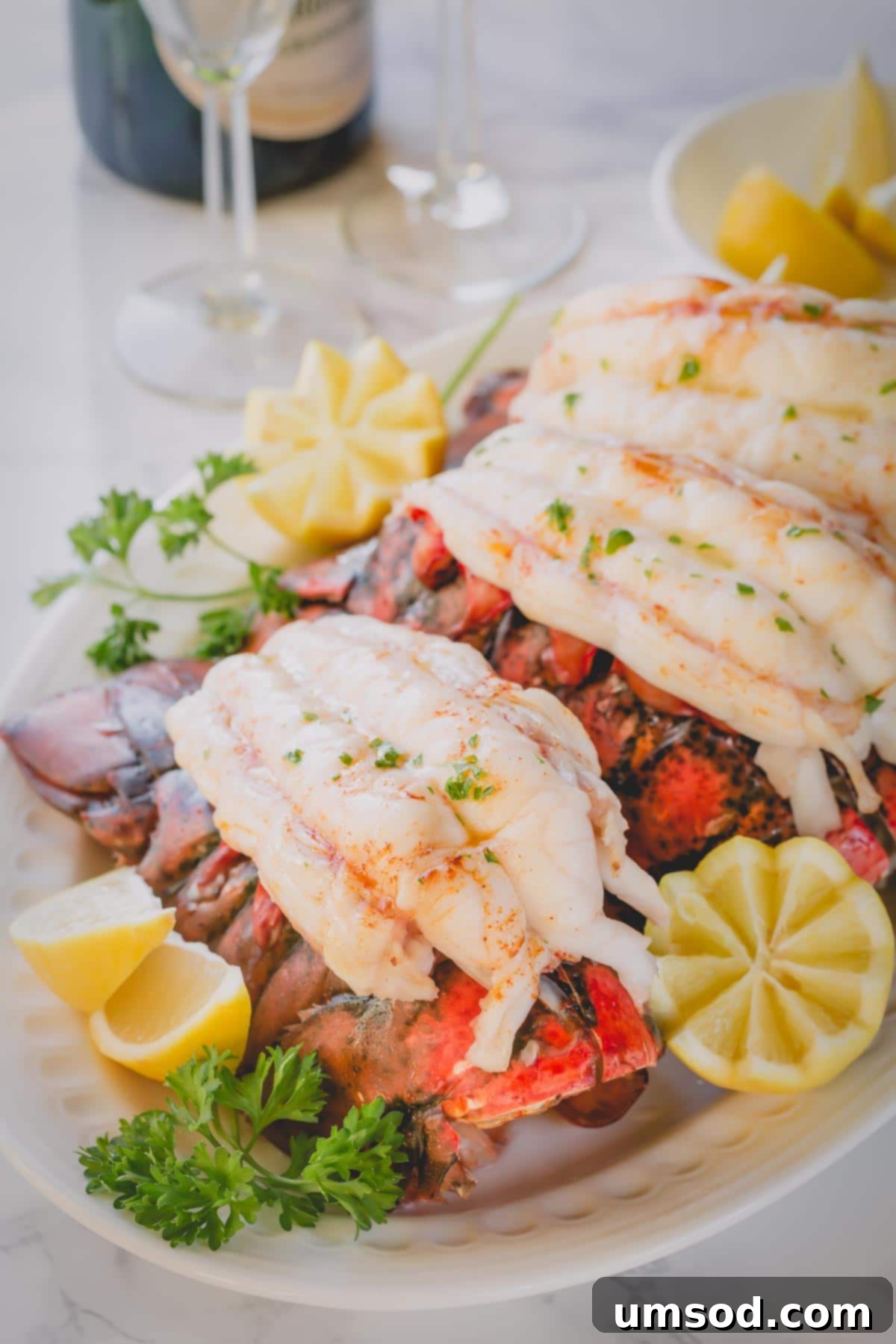
Mastering Baked Lobster Tails: Your Ultimate Guide to Succulent Perfection
Imagine a dish so elegant, so rich, yet so incredibly simple to prepare that it transforms any meal into a special occasion. We’re talking about baking exquisite lobster tails, a culinary delight that, when prepared with a touch of white wine, unlocks their most succulent and sweet flavors. This guide offers the ultimate, easiest method to achieve melt-in-your-mouth tender lobster every single time, making gourmet dining accessible right in your own kitchen.
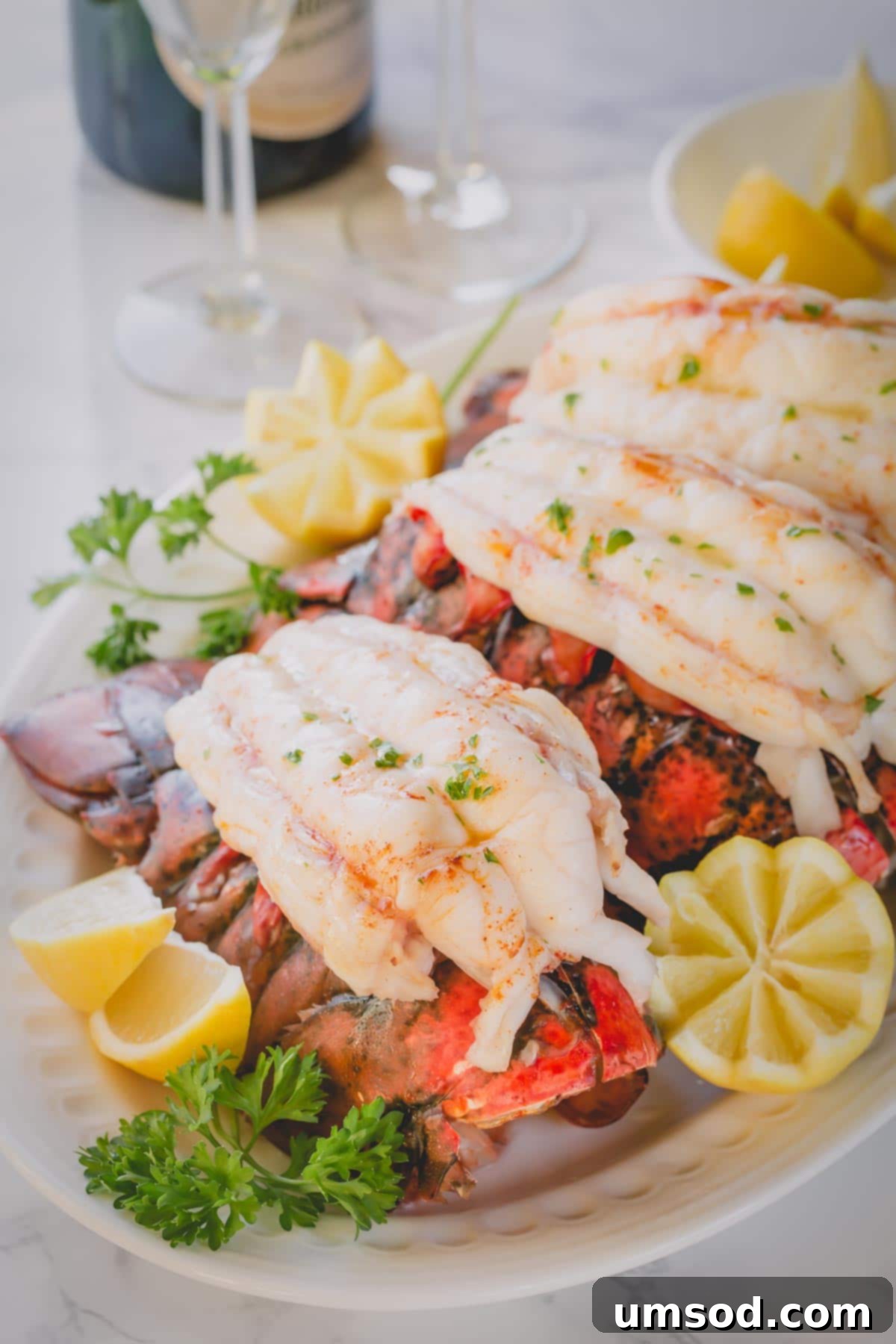
Whether you’re meticulously planning a show-stopping Christmas dinner menu, orchestrating a festive New Year’s Eve party, or simply yearning for a quiet, romantic dinner with your sweetheart, this impressive yet incredibly effortless dish is your answer. Forget complicated techniques and endless prep; when in doubt, perfectly baked lobster tails will always steal the show and leave a lasting impression.
Why You’ll Fall in Love with This Baked Lobster Tail Recipe
This isn’t just another lobster recipe; it’s a commitment to culinary excellence and simplicity. Each beautiful lobster tail is generously smeared with rich butter, delicately seasoned with salt and vibrant paprika, then baked to perfection in a bath of dry white wine until it reaches an unparalleled tenderness and juiciness. Here’s why this method will become your new favorite:
- Restaurant-Quality Elegance at Home: Achieve the luxurious taste and texture of high-end restaurant lobster without the hefty price tag or complex techniques.
- Remarkably Quick & Easy: From prep to plate, your exquisite lobster tails will be ready to savor in just about 35 minutes, making it ideal for busy evenings or spontaneous celebrations.
- Perfect for Any Occasion: Its impressive presentation and delectable flavor make it the star of any holiday feast, celebration, or intimate gathering.
- Foolproof Baking Method: While there are many ways to cook lobster—boiling, steaming, broiling, or grilling—baking offers a consistently foolproof approach. It minimizes the risk of overcooking, ensuring tender, never rubbery, results. It’s truly my personal go-to method for perfection!
Don’t let the impressive presentation intimidate you. This recipe is designed for ease, and we’ll guide you through every step, ensuring your success.
Essential Ingredients for Divine Baked Lobster Tails
Crafting the perfect baked lobster tails requires a few key, high-quality ingredients. Each component plays a crucial role in developing that signature sweet, buttery flavor and tender texture:
- Lobster Tails: For this specific recipe, we utilized three 8-ounce lobster tails, which are an excellent size for individual servings. Remember, the cooking time will primarily depend on the size of your tails, so adjust accordingly. For the firmest, sweetest flesh that retains its shape beautifully and isn’t mushy, always opt for cold-water lobster tails.
- Unsalted Butter: This golden ingredient serves a dual purpose: it’s smeared generously onto the tails before baking to promote tenderness and flavor, and it’s also the perfect base for a rich dipping sauce after they’re cooked. Using unsalted butter allows you complete control over the total sodium content of your dish.
- Salt: The ultimate flavor enhancer! We highly recommend coarse kosher salt. Its larger, more distinct grains make it much easier to sprinkle evenly across the lobster meat without the risk of over-salting, ensuring a perfectly balanced taste.
- Paprika: More than just a sprinkle of color, paprika imparts a mild, sweet, and subtly smoky taste that beautifully complements the delicate lobster meat. Feel free to experiment with other seasonings if you desire; for garlic lovers, a dash of garlic powder would be a fantastic addition.
- Dry White Wine: Any good quality dry white wine, such as Sauvignon Blanc, Pinot Grigio, or Chardonnay (unoaked), works wonders here. The wine infuses the lobster with a nuanced depth of flavor and creates a fragrant steam that keeps the meat moist. If you prefer not to cook with alcohol, vegetable broth or even water can be used as a suitable substitute.
- Lemon: A squeeze of fresh lemon juice just before serving is non-negotiable! The bright, acidic burst of citrus perfectly cuts through the richness of the butter and enhances the delicate, buttery flavor of the lobster, elevating the entire dish.
Fresh vs. Frozen Lobster Tails: What You Need to Know
When it comes to purchasing lobster tails, you generally have two options: fresh or frozen. While many assume fresh is always superior, a high-quality frozen lobster tail, properly thawed, can be virtually indistinguishable from its fresh counterpart in terms of taste and texture.
For truly exceptional results, prioritize buying cold-water lobster tails. These crustaceans, typically sourced from colder regions like Maine, Canada, or South Africa, develop a meat that is inherently more tender, firm, and remarkably sweet. Their superior flavor and texture are a direct result of their slower growth in frigid waters.
In contrast, warm-water lobster tails, often from tropical regions, tend to have softer, sometimes mushier flesh, and may even contain more additives to preserve their quality. If the packaging doesn’t explicitly state the origin, it’s generally safe to assume they are warm-water tails. Investing a little extra in cold-water varieties is highly recommended for a truly gourmet experience.
Expert Tips for Buying the Best Lobster Tails
Selecting premium lobster tails is the first step towards a perfect meal. Follow these guidelines to ensure you’re bringing home the finest quality:
- Inspect for Discoloration: Avoid any tails with visible black spots, a grayish-yellow tinge, or any other signs of discoloration on the meat or shell. These indicate spoilage or poor handling.
- Uniformity in Size: Aim to purchase lobster tails that are all roughly the same size. This ensures that they cook evenly and simultaneously, preventing some from being undercooked or overcooked.
- Cold-Water Quality: As mentioned, cold-water lobster tails are typically more expensive, but their sweet taste, firm texture, and superior quality are undoubtedly worth the investment for an exceptional dish.
- Avoid Re-Thawed Tails: Always avoid lobster tails that have been thawed and then refrozen, or those that are already thawed in the seafood case but were previously frozen. For the freshest flavor and best texture, purchase them frozen and thaw them yourself immediately before you plan to cook them.
- Check Flesh & Shell: The raw lobster flesh should appear firm, bright white, and have a slight translucent quality. The shell should feel dry and coarse. If the flesh feels squishy, or the shell appears slimy or wet, it’s a clear sign of poor quality or spoilage – do not purchase them!
The Correct Way to Thaw Frozen Lobster Tails
Properly thawing frozen lobster tails is a critical step that ensures even cooking and preserves their delicate flavor and tender texture. Rushing this process or using incorrect methods can lead to rubbery, unevenly cooked lobster. Follow these simple yet crucial instructions:
- Quick Thawing Method (Cold Water): For a faster thaw, place the frozen lobster tails in a large bowl and submerge them in cold tap water. Allow them to thaw for approximately 30 minutes, changing the water once halfway through to maintain its cold temperature. For larger tails, you may need an additional 30 minutes and another water change.
- Overnight Thawing Method (Refrigerator): If you have ample time, the safest and most gentle thawing method is to place the frozen lobster tails on a baking sheet or plate, then transfer them to the refrigerator to thaw overnight. This slow, controlled thaw helps maintain the integrity of the meat.
- Absolutely Avoid: Never, under any circumstances, thaw lobster tails in hot water or in the microwave. These methods can partially cook the lobster, resulting in a tough, rubbery texture and potentially making them unsafe to eat. Always keep them cold until you are ready to cook.
How to Perfectly Butterfly Lobster Tails for Baking
Butterflying lobster tails not only makes for a stunning presentation but also ensures the meat cooks more evenly and is easier to access. Follow these steps carefully:
- Prepare the Tail: Place a dry, completely thawed lobster tail onto a clean cutting board.
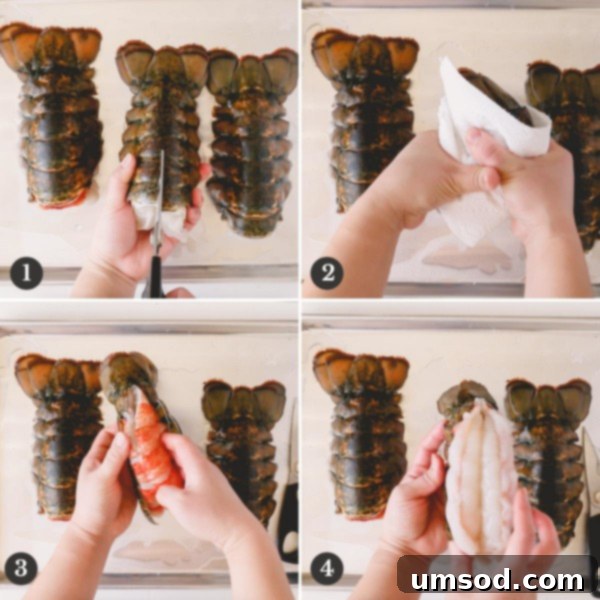
- Cut the Shell: Using sturdy kitchen shears, carefully cut a slit through the top center of the lobster shell, starting from the thickest part and continuing all the way down to the tail fins. As you cut the shell, you will inevitably cut through some of the meat underneath, which is perfectly normal and helps the meat separate and cook evenly.
- Crack the Shell: For better grip and to protect your hands, wrap the tail in a paper towel. Gently but firmly squeeze the tail from the underside to crack open the bottom of the shell. Be cautious not to crush the shell completely.
- Separate and Lift the Meat: Use your fingers to carefully spread the cut shell open. Gently work your fingers between the shell and the meat, separating the meat from the bottom of the shell. Ensure the very base of the meat remains attached to the tail end of the shell.
- Position the Meat: Once separated, gently lift the entire piece of lobster meat upwards, carefully resting it on top of the opened shell. This creates a beautiful “piggyback” presentation.
- Remove Vein (if present): Inspect the middle of the lobster meat for any dark veins (the digestive tract). If present, gently remove and discard them.
Step-by-Step Guide: Baking Lobster Tails to Perfection
This baked lobster tail recipe is designed for maximum flavor with minimal effort. Here’s how you’ll bring these beautiful tails to life:
- Prepare for Baking: Preheat your oven to a precise 425°F (220°C). Arrange your perfectly butterflied lobster tails in a shallow baking dish, ensuring they have a little space between them.
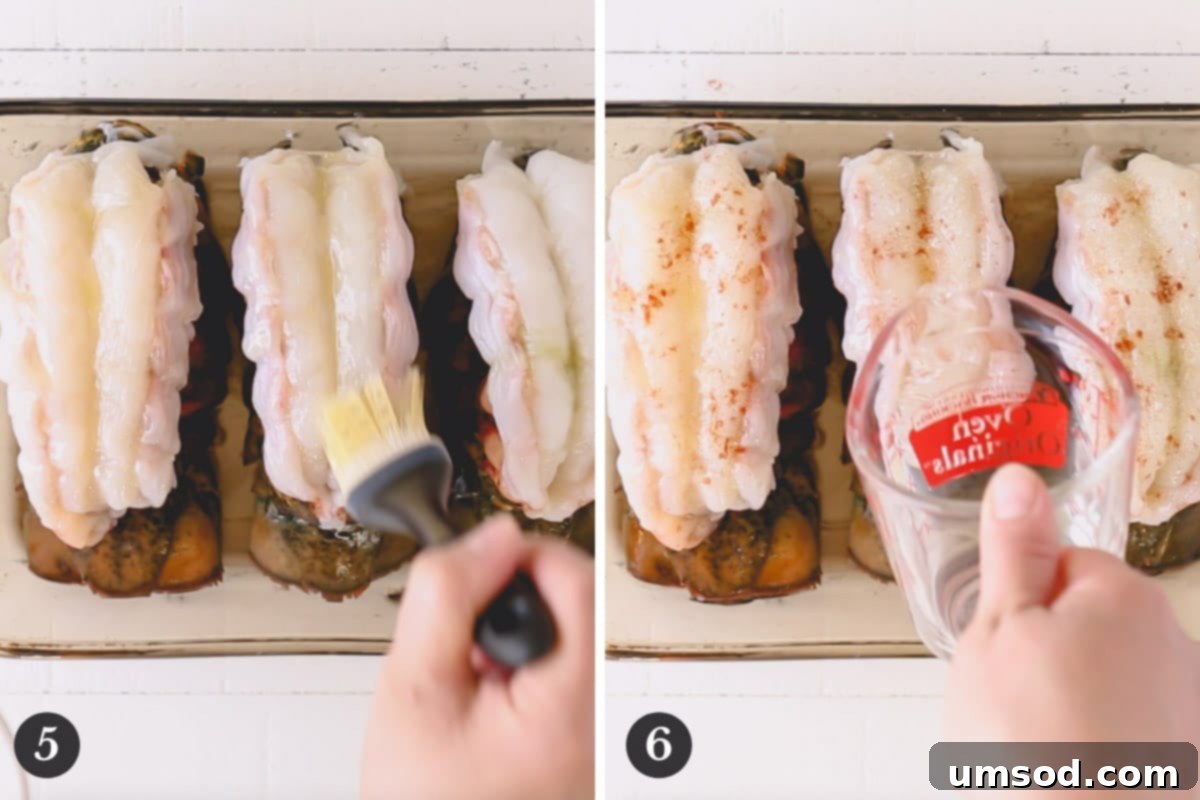
- Season Generously: With a pastry brush, liberally brush each lobster tail with melted unsalted butter. Follow this by evenly sprinkling them with coarse kosher salt and a generous dusting of paprika. This combination creates a beautiful crust and infuses the meat with flavor.
- Add the White Wine: Carefully pour the dry white wine over the lobster tails and directly into the bottom of the baking dish. The wine will create a flavorful steam, keeping the lobster incredibly moist and adding a subtle depth of flavor.
- Bake to Perfection: Place the baking dish into your preheated oven and bake for 20-25 minutes. The precise baking time will vary based on the size of your tails; a good general rule is 1 to 1½ minutes per ounce of lobster. For example, if you have three 8-ounce tails (totaling 24 ounces), aim for around 24 minutes.
Chef’s Tip: Perfect Baking Time
Baking Time Guidance: A helpful rule of thumb is to bake for approximately 1 to 1½ minutes per ounce of lobster tail. For instance, if you’re cooking three 8-ounce tails, which totals 24 ounces, your target baking time would be around 24 minutes.
Preventing Overcooking: Lobster meat can become tough and rubbery if overcooked. To ensure tender results, it’s highly recommended to start checking for doneness 2-3 minutes before the estimated cooking time. A meat thermometer is your best friend here!
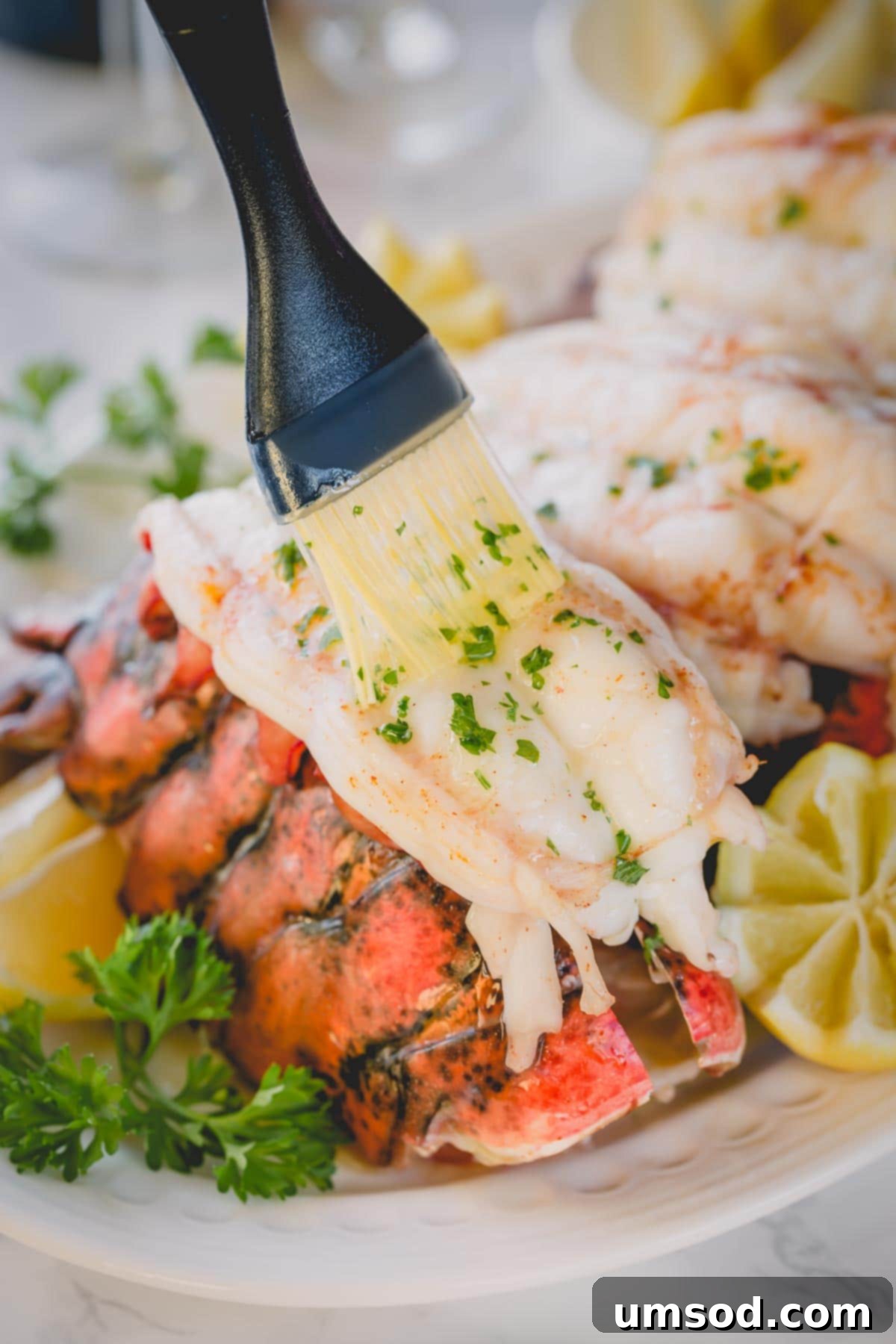
- Final Touch & Serve: While the lobster bakes, prepare your serving butter. In a small microwave-safe dish, combine 3 tablespoons of melted butter with 1 tablespoon of freshly chopped parsley. Once the lobster tails are baked, remove them from the oven, brush this vibrant parsley butter mixture over the glistening lobster meat, and serve immediately with fresh lemon wedges on the side.
How to Confidently Tell When Your Lobster Tail is Fully Cooked
The golden rule of cooking lobster is to avoid overcooking it at all costs, as this is the only way to truly “ruin” its delicate texture. Overcooked lobster becomes tough and rubbery, losing its inherent succulence. Here’s how to ensure your lobster tails reach perfect doneness every time:
- Visual Cues: A perfectly cooked lobster tail will display a vibrant, bright red shell. The meat itself should transform from translucent to an opaque, pristine white color throughout. There should be absolutely no grayish or translucent areas left in the center.
- Internal Temperature: For the most accurate assessment, use an instant-read meat thermometer. Insert it into the thickest part of the lobster meat without touching the shell. The ideal internal temperature for cooked lobster is 140°F (60°C). Keep in mind that lobster, like other proteins, will continue to cook slightly after being removed from the oven due to residual heat (carry-over cooking). Therefore, it’s best to remove your lobster tails when they reach about 135°F (57°C) to account for this.
Elevate Your Meal: What to Serve with Baked Lobster Tails
Baked lobster tails are a showstopper on their own, but pairing them with the right side dishes can truly complete the dining experience. If you’re searching for quick, flavorful accompaniments that perfectly complement the richness of lobster, consider these well-loved favorites. Personally, I find a heaping pile of crispy steak fries to be an irresistible match!
- Creamy Roasted Garlic Mashed Potatoes: A classic pairing, the richness of garlic mashed potatoes provides a comforting contrast to the delicate lobster.
- Crispy Garlic Rosemary Baked Steak Fries: For a more casual yet equally delicious experience, these fries offer a satisfying crunch and aromatic herbs.
- Warm Quinoa Brussels Sprouts Salad: A lighter, nutrient-rich option that adds a touch of earthy flavor and texture without overpowering the main dish.
- 3-Ingredient Bacon Wrapped Fingerling Potatoes: The salty crispness of bacon and tender potatoes make for an indulgent and easy side.
- Refreshing Veggie Pasta Salad: A vibrant, cool pasta salad can offer a delightful contrast, especially for warmer weather meals.
- Steamed Asparagus with Lemon: Simple, elegant, and healthy, asparagus spears lightly steamed and drizzled with lemon juice are a perfect green complement.
- Creamy Risotto: A luxurious mushroom or parmesan risotto can turn your lobster dinner into an incredibly decadent feast.
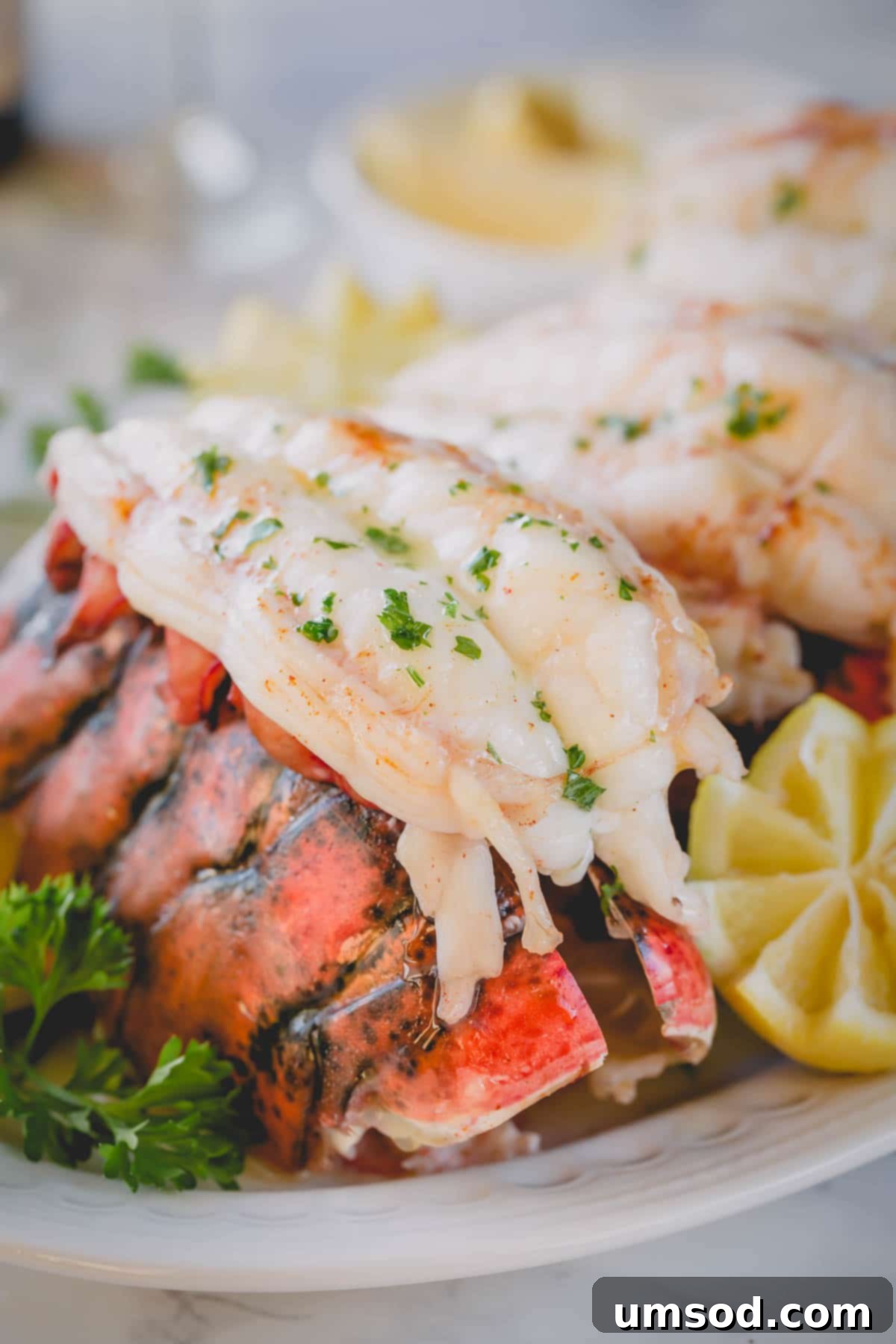
And here’s a pro tip for maximizing your gourmet experience: once you’ve savored every last bite of your perfect lobster dinner, don’t be too quick to discard those shells! They are a treasure trove of flavor. Repurpose them to create a rich, aromatic lobster broth, which is the essential foundation for a restaurant-quality lobster bisque. It’s an incredible way to extend the luxury and ensure no part of this magnificent ingredient goes to waste.
Can’t you tell I’m a huge lobster fan? This recipe is a true labor of love!
Baked Lobster Tails
By Shinee Davaakhuu
Baking these beautiful lobster tails in white wine brings out the succulent sweet flavors perfectly. This is the easiest way to cook a lobster tail with melt-in-your-mouth tender meat every time.
Cook: 25 mins
Total: 35 mins
Servings: 3 servings
Ingredients
Main Ingredients:
- 3 lobster tails (Note 1)
- 2 tablespoons unsalted butter, melted
- 1 teaspoon coarse kosher salt
- 1 teaspoon paprika
- ½ cup (120ml) dry white wine (Note 2)
For Serving:
- 3 tablespoons unsalted butter, melted
- 1 tablespoon chopped fresh parsley
- Lemon wedges
Instructions
- Preheat your oven to 425°F (220°C).
- Using kitchen shears, carefully cut along the top center of each lobster tail lengthwise, from the thickest part down to the tail fins. It’s okay to cut into the meat slightly, as this helps it cook evenly.
- To protect your hands and aid grip, wrap the tail in a paper towel. Gently squeeze the tail from the bottom to crack open the shell, being careful not to smash it.
- Run your finger between the shell and the meat to detach the meat from the bottom of the shell. Keep the very base of the meat attached to the tail end of the shell. Then, gently pull the meat out and position it over the shell, creating the “piggyback” presentation.
- Inspect the meat for any dark veins (digestive tract) running through the middle. If found, gently remove and discard them.
- Place the prepared lobster tails in a shallow baking dish.
- Brush each lobster tail generously with the 2 tablespoons of melted unsalted butter.
- Evenly sprinkle the coarse kosher salt and paprika over all the lobster tails.
- Carefully pour the ½ cup of dry white wine over the lobster tails and into the baking pan.
- Bake for 1 to 1½ minutes per ounce of lobster. For three 8-ounce tails (24 ounces total), bake for approximately 24 minutes. The lobster tails are fully cooked when the shell is bright red and the meat is opaque white throughout, with no translucency. Be vigilant not to overcook, as this can make the lobster tough and rubbery.
- While the lobster is baking, in a small dish, combine the 3 tablespoons of melted butter and chopped fresh parsley for serving.
- Serve the baked lobster tails immediately, brushed with the parsley butter, and accompanied by fresh lemon wedges.
⭐️ Did you make this recipe? Please leave a review and let us know how you liked it!
Tips & Notes
Note 1: For this recipe, we used 8-ounce lobster tails. Both fresh and high-quality frozen lobster tails work wonderfully, provided they are thawed correctly. For the best flavor and texture, prioritize cold-water lobster tails.
Note 2: For a non-alcoholic version of this recipe, feel free to substitute the dry white wine with an equal amount of chicken broth, vegetable broth, or even water. The lobster will still be incredibly flavorful!
Nutrition Information (Approximate per serving)
Calories: 223 kcal
Carbohydrates: 1g
Protein: 5g
Fat: 19g
Sugar: 1g
Sodium: 128mg
Course: Main Course
Cuisine: American

Did you make this?
Leave a rating and your feedback. Thank you!
This recipe was originally published on December 7th, 2017, and has been updated for clarity and comprehensiveness.