
Embarking on the journey of baking French macarons is a delightful challenge, often described as a delicate dance between precision and patience. While the allure of these exquisite almond meringue cookies is undeniable, their notoriously finicky nature can lead to moments of frustration. This comprehensive macaron troubleshooting guide, complete with illustrative photos, delves into the most common issues bakers face, exploring their root causes and offering practical, actionable solutions to help you achieve macaron perfection.
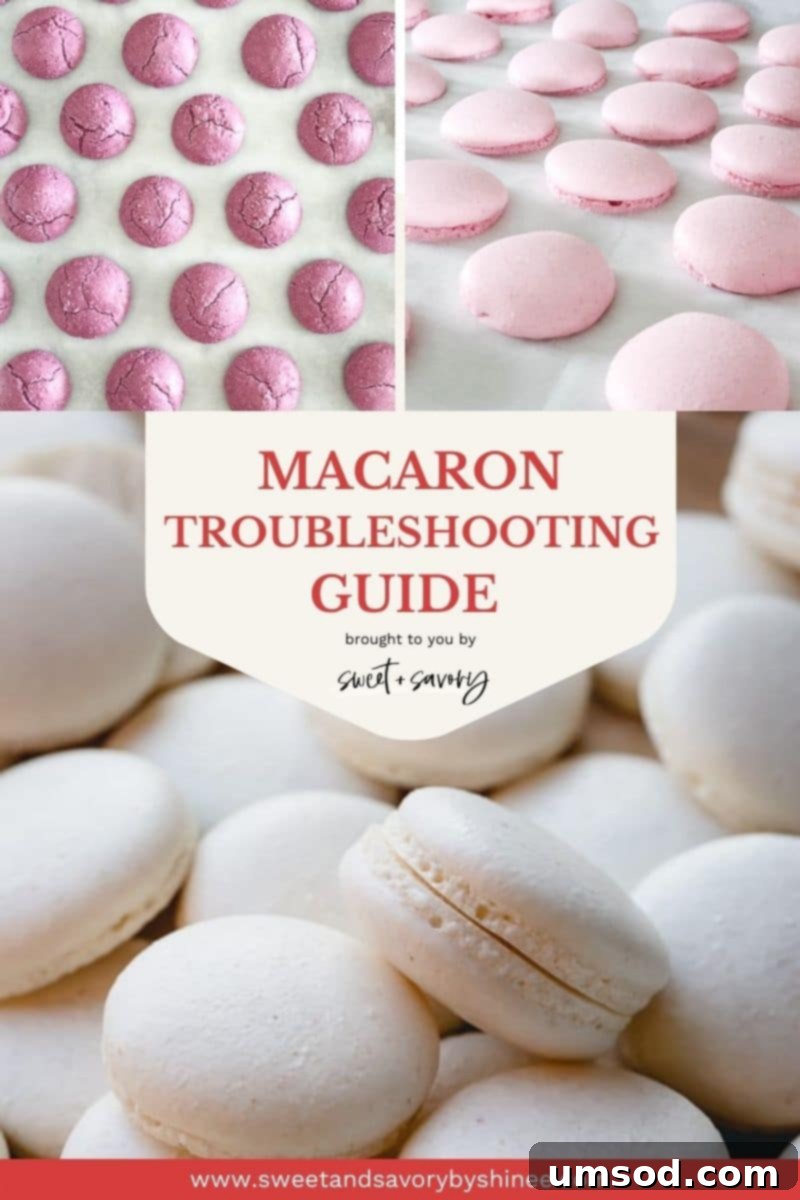
Having personally baked thousands of macarons in my home kitchen since 2012, I’ve navigated through countless trials and errors. From disheartening batches of cracked shells to the triumphant joy of picture-perfect macarons, I’ve encountered virtually every problem imaginable. This extensive experience has equipped me with a wealth of tips and tricks, not just for resolving those frustrating issues, but more importantly, for preventing them from occurring in the first place.
It’s crucial to remember that macaron failures can sometimes seem to happen without any clear reason, leaving even seasoned bakers scratching their heads. However, I strongly encourage you to never give up on your macaron journey. The immense satisfaction of watching your macarons gracefully rise, forming those iconic ruffled “feet,” and pulling out a tray of perfectly round cookies with smooth, glossy tops, is an incredibly rewarding experience. This moment of pure culinary magic is truly priceless.
Every single time I witness my macarons puffing up and baking flawlessly through the oven door, I can’t help but perform a little happy dance in my kitchen. It’s an unadulterated moment of pure joy that makes every previous struggle worth it.
What Defines a Perfect Macaron?
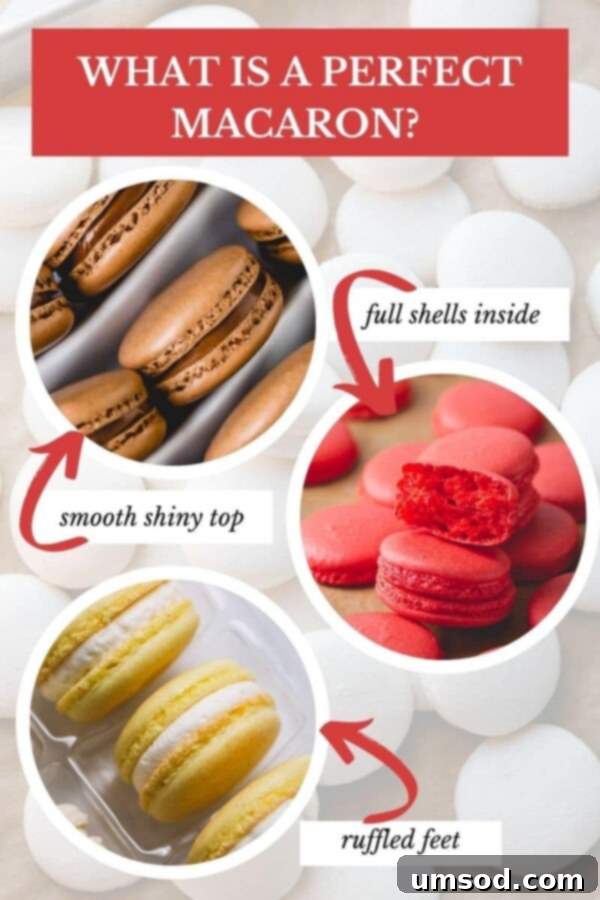
While the definition of a “perfect” macaron can be somewhat subjective, a truly exceptional macaron generally exhibits a set of desirable characteristics. To me, these are the hallmarks of macaron mastery:
- Smooth Shells: The top surface of the macaron should be impeccably smooth, free from bumps, cracks, or grainy textures.
- Ruffled Feet (Pieds): The distinct, ruffled edge that forms at the base of the macaron shell, lifting it slightly from the baking surface. These “feet” are a signature characteristic and a sign of proper technique.
- Full Interior (Chewy Fille): When broken open, a perfect macaron should reveal a full, chewy, and slightly moist interior, often referred to as the ‘fille’ or filling. There should be no significant air pockets or hollowness.
Macaron 101: A Comprehensive Guide
Unlock the secrets of French macarons and create your signature flavors with confidence!
Macaron Troubleshooting Video Tutorial
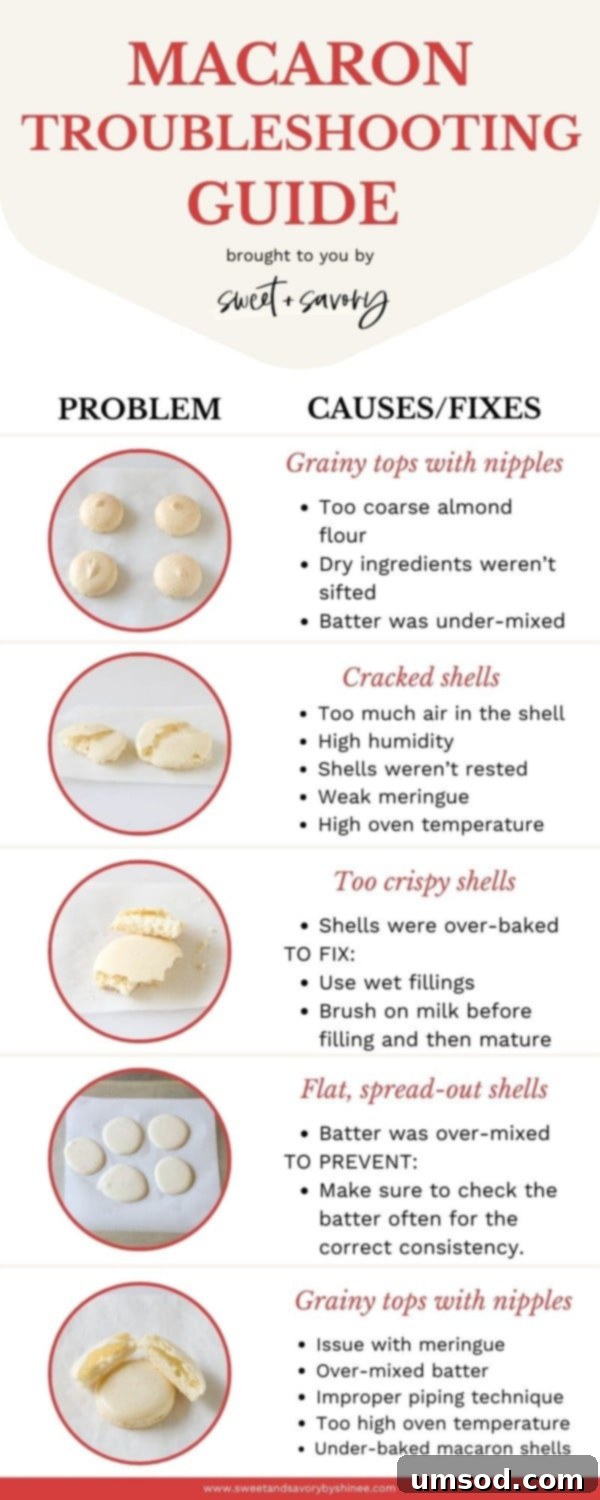
Your Visual Macaron Troubleshooting Guide
Let’s dive into the specifics! Below, we’ll discuss each of the most common macaron issues you might encounter, meticulously detailing their likely causes and providing precise instructions on how to effectively fix or prevent them. Use the visual aids to help identify your specific problem.
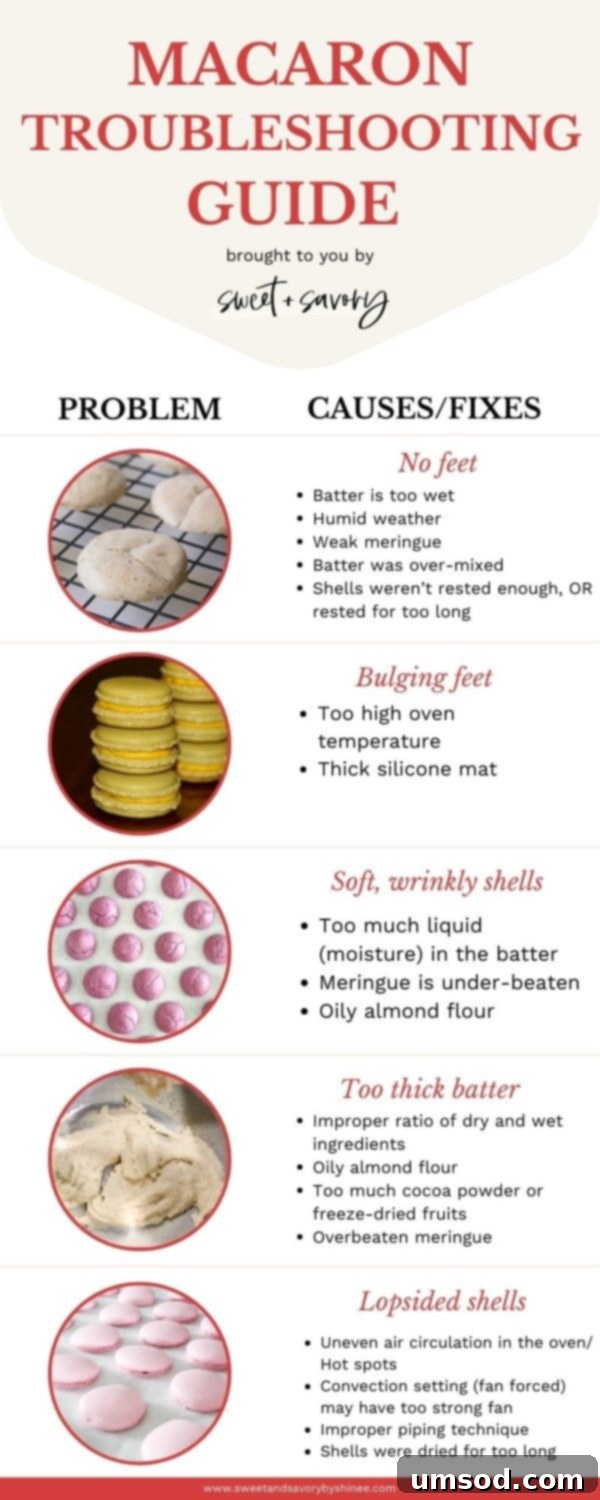
Pin this guide now so you can easily find it later!
Pin It
Uneven, Grainy Macarons with Nipples
This issue manifests as macaron shells that are not perfectly smooth; instead, they appear textured, often with small, pointy peaks or “nipples” that don’t settle back into the batter. This indicates that the batter isn’t as homogeneous as it should be.
Possible causes:
- Too coarse almond flour: Larger particles prevent a smooth surface.
- Dry ingredients weren’t sifted: Lumps of almond flour or powdered sugar remain.
- Batter was under-mixed (under-macaronaged): The dry and wet ingredients haven’t fully emulsified, and air hasn’t been properly knocked out.
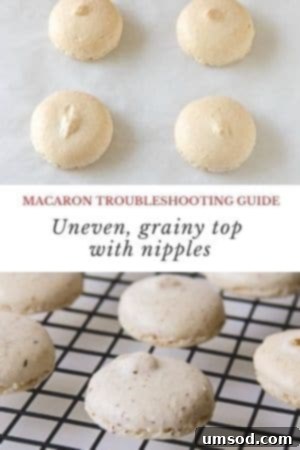
How to Fix Grainy Shells with Nipples:
- Use fine ground almond flour: Always opt for the finest blanched almond flour available. The finer the grind, the smoother your shells will be.
- Double-sift dry ingredients: Don’t skip sifting your almond flour and powdered sugar, and ideally, sift them together multiple times. Discard any large almond pieces left in the sifter; you shouldn’t have more than 1/2 tablespoon of almond bits remaining after sifting.
- Ensure proper macaronage: Under-mixed batter is a primary culprit. When mixed correctly, the batter should slowly flow off your spatula in a ribbon, and any “nipples” from piping should melt back into the batter within 10-15 seconds after tapping the piped shells on the counter. Continue folding gently until this consistency is reached.
Important Tip: Never use wet fingers!
Avoid using wet fingers to push down any pointy nipples. This can introduce moisture and potentially damage the delicate surface, leading to cracks or blemishes during baking. Instead, use a clean toothpick to gently nudge or encourage the batter to even out.
Cracked Shells
Cracked macaron shells are a common and frustrating problem where fissures appear on the top surface of the cookies during baking. This often indicates an issue with moisture release or shell development.
Possible causes:
- Too much air in the shell: Trapped air expands rapidly, breaking the shell.
- High humidity: Prevents the shells from forming a proper “skin.”
- Shells weren’t rested enough: An insufficient skin means steam cannot escape properly.
- Weak meringue: Lacks the stable structure needed to support the shell.
- High oven temperature, or hot spots in the oven: Causes rapid expansion and uneven baking.
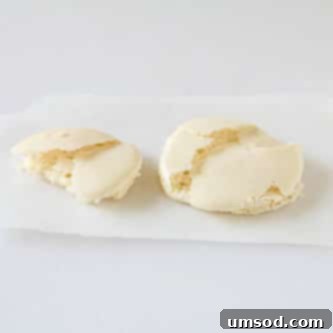
How to Fix Cracked Macarons:
- Properly de-air the batter: Immediately after piping macaron shells, firmly tap the baking sheet against your counter several times. This helps to release trapped air bubbles. Use a toothpick to pop any large, visible air pockets on the surface.
- Control humidity and rest adequately: In humid conditions, shells struggle to develop the necessary dry skin. Aim for a dry environment if possible. Always ensure your shells have rested long enough to form a “skin” on top – they should feel dry to the touch and not stick to your finger when gently brushed. This skin allows steam to escape controlled through the feet, preventing cracks.
- Build a sturdy meringue: A weak meringue cannot support the macaron’s structure. Take your time to whip a stable, stiff-peaked meringue, especially with French meringue method. For detailed guidance, watch my French Meringue 101 video to master the art of creating the most stable meringue.
- Calibrate your oven temperature: An oven that is too hot can cause the macaron shells to rise too quickly and crack. Invest in a reliable oven thermometer to accurately verify the internal temperature, as your oven’s built-in gauge may be inaccurate. This also helps identify and manage potential hot spots.
Erupted Shells (Volcano Macarons)
Erupted shells, often resembling mini volcanoes, occur when a portion of the macaron’s surface bursts open, usually where a “nipple” was previously present or touched. This is almost always due to external interference with a wet surface.
Possible cause:
- Touching the shells with a wet finger to push down a pointy nipple: This introduces moisture and compromises the delicate structure of the developing skin.
How to Prevent Erupted Volcano Macarons:
This issue is entirely preventable by avoiding direct contact with your unbaked macaron shells before they form a skin. As mentioned earlier, never use wet fingers to push down any pointy ends. Instead, ensure you adequately tap the baking sheet to release air bubbles immediately after piping. If, after tapping, a pointy end still doesn’t melt back into the batter, you have a couple of options: you can bake them as they are, acknowledging they might not be perfectly smooth, or you can carefully scrape the batter back into your mixing bowl and give it a few more gentle folds until it reaches the correct, slightly looser consistency where nipples naturally settle.
Too Crispy Interior
Ideally, macarons should have a delicate crisp exterior and a soft, chewy interior. If your macarons are crispy throughout, lacking that characteristic chewiness, it’s typically a sign of excessive moisture loss during baking.
Possible cause:
- Shells were over-baked: Too much time in the oven or too high a temperature can dry out the interior.
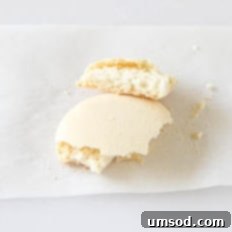
How to Fix Too Crispy Shells:
If you’ve unfortunately over-baked your macaron shells and they’ve turned out super crispy throughout, don’t despair! There are two easy fixes to help soften them:
- Utilize wet fillings: Pair your crispy shells with moist fillings such as fruit jams, rich caramel sauce, or tangy lemon curd. The moisture from these fillings will gradually be absorbed by the shells during maturation.
- Lightly brush with milk: For an extra boost of moisture, gently brush a thin layer of milk onto the bottom interior of the macaron shells before piping your chosen filling. This adds moisture directly where it’s needed to soften the shell.
Don’t Miss This Important Step: Maturation
The most crucial step in achieving perfectly chewy macarons, especially with crispy shells, is allowing them to mature. After filling, refrigerate your macarons in an airtight container for at least 24 hours. During this period, the shells will absorb moisture from the filling, transforming them into that beautifully soft and chewy texture that macarons are known for.
Flat Shells, Spread Out Too Much
Macaron shells that lack height and spread excessively on the baking sheet are a clear indicator of issues with batter consistency. Instead of holding a neat, round shape, they become wide and thin, often without prominent feet.
Possible cause:
- Batter was over-mixed (over-macaronaged): This is the most common reason. Over-mixing deflates the meringue, causing the batter to become too loose and fluid.
An over-mixed batter is too loose and runny, meaning the piped shells cannot hold their shape effectively. Instead of staying mounded, the batter spreads out too much, resulting in thin, flat cookies.
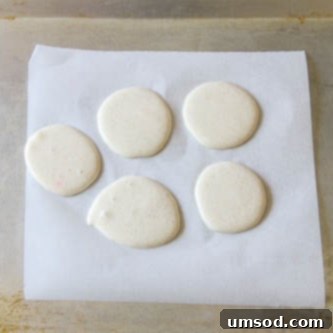
How to Prevent Flat, Spread-Out Macarons:
Unfortunately, once macaron batter is over-mixed and becomes too runny, there’s no way to salvage it for a perfect batch. Therefore, preventing this from happening is paramount. The key lies in careful and attentive macaronage.
Mastering Macaronage: Regularly check the batter for the correct consistency as you fold. The ideal “lava-like” consistency is achieved when the batter slowly runs off your spatula in a continuous ribbon. This ribbon should then smoothly and gradually melt back into the main batter within approximately 10-15 seconds. This is often referred to as the “figure eight” test, where you can draw a figure eight with the ribbon of batter before it fully disappears. Stop folding immediately once this consistency is reached to avoid deflating the meringue.
Hollow Shells
Hollow shells are a common enigma for macaron bakers, where the interior of the cookie shell has a noticeable air gap, leaving only a thin outer crust. While still edible, they lack the satisfying chewy ‘fille’ and structural integrity.
Possible causes:
- Issues with meringue stability: Meringue that is either too weak or over-whipped can contribute to hollowness.
- Over-mixed batter: Reduces the amount of stable air cells needed for a full interior.
- Improper piping technique: Uneven pressure or angle can trap air.
- Too high oven temperature: Causes the shell to set too quickly before the interior can properly expand.
- Under-baked macaron shells: The interior moisture doesn’t fully evaporate and set, leading to collapse upon cooling.
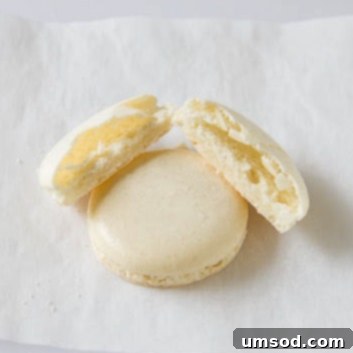
How to Fix Hollow Macaron Shells:
Hollow macarons are notoriously common and can be one of the most persistent issues for bakers. I personally battled with this problem for a significant period. However, with careful adjustments and a deeper understanding of the process, I now consistently achieve full, meaty macarons straight from the oven.
Since this is a complex issue with multiple contributing factors, addressing it effectively requires a comprehensive approach. For an in-depth exploration of the solutions and detailed steps, I’ve dedicated a separate, extensive post on how to fix hollow macarons. I highly recommend consulting that guide for a complete understanding and resolution.
No Feet
The absence of “feet” (pieds) is one of the most disheartening macaron failures. These ruffled edges are a signature characteristic, and without them, macarons often look more like simple cookies rather than the delicate confections they’re meant to be. This issue points to problems with structure, consistency, or baking conditions.
Potential causes:
- Batter is too wet: Excess moisture prevents proper skin formation and lift.
- Humid weather: Inhibits drying and skin development.
- Weak meringue: Lacks the structural integrity to create lift.
- Batter was over-mixed: Too many air bubbles are knocked out, leading to insufficient rise.
- Shells weren’t rested before baking: No dry skin means steam escapes unevenly or not at all.
- Shells were rested for too long: Over-drying can weaken the meringue structure and prevent proper lift.
- Too low oven temperature: Insufficient heat prevents the necessary steam expansion for foot formation.
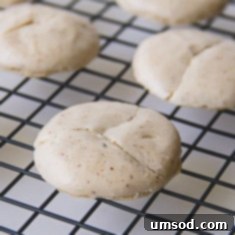
How to Prevent No Feet Macarons:
- Control batter moisture: When the batter is too wet, macarons struggle to develop those iconic ruffled feet. Common culprits for excess moisture include adding too many liquid extracts, fruit juices (like lemon or lime), or excessive amounts of liquid food coloring. Even too much gel food coloring can contribute to this issue. Stick to precise measurements for all liquid additions.
- Address humidity: In particularly humid climates, “aging” egg whites by separating them and letting them sit at room temperature for a few hours (or refrigerating overnight) can be beneficial. This process allows some moisture to evaporate, resulting in more stable egg whites.
- Ensure a stable meringue: If your meringue isn’t whipped to firm, stiff peaks, it won’t possess the robust structure needed to lift the macaron shells and create feet. Refer to my French Meringue 101 video for clear visual cues on achieving proper meringue consistency.
- Avoid over-mixing the batter: When macaron batter is over-mixed, too many precious air bubbles are deflated. These air bubbles are crucial for giving the shells the necessary lift during baking, leading to flat macarons without feet.
- Properly rest the shells: If macarons aren’t rested long enough to form a dry skin before baking, steam cannot escape efficiently, often resulting in no feet or cracked shells. Conversely, if the shells are rested for *too long*, the meringue structure can lose its stability. It’s best to check the shells every 15 minutes; bake them as soon as they no longer feel sticky to the touch.
- Maintain correct oven temperature: If your oven isn’t hot enough, the air bubbles within the meringue won’t expand rapidly enough to properly lift the shells and create those beautiful feet at the base. Consistent, accurate oven temperature is key.
Crucial Tip: Verify Your Oven Accuracy
To ensure precise baking, always use an oven thermometer. This allows you to double-check the actual temperature inside your oven, rather than solely relying on your oven’s often inaccurate display.
Bulging Feet
Bulging feet occur when the ruffled edge of the macaron expands outwards too much, sometimes creating an overhang rather than a neat, vertical rise. While not a structural failure, it can affect the aesthetic appeal for some bakers.
Potential causes:
- Too high oven temperature: Causes a rapid, uncontrolled rise and subsequent collapse.
- Silicone mat usage: Can sometimes trap moisture or affect heat distribution differently than parchment paper.
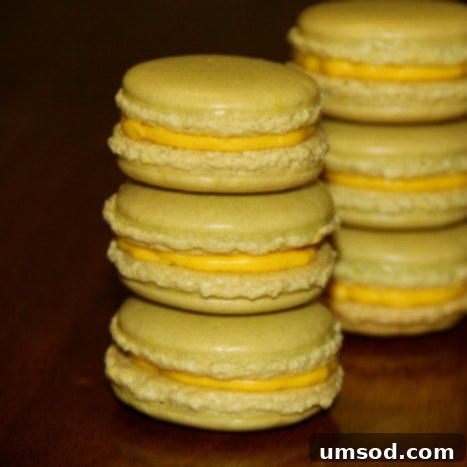
How to Prevent Bulging Feet:
While some bakers don’t mind bulging feet, as they don’t significantly impact the taste or texture, they can be less aesthetically pleasing than neatly ruffled feet. Here’s how to manage them:
- Adjust oven temperature: Bulging feet often occur when the oven temperature is slightly too high. This causes the macarons to rise too rapidly, and then, as the internal structure struggles to set, they may collapse slightly, forcing the feet to bulge outwards instead of rising straight. Try reducing your oven temperature by 5-10°F (2-5°C) and extending the baking time slightly if needed.
- Consider your baking surface: The type of baking mat or paper you use can influence foot development. Silicone mats, while convenient, sometimes contribute to bulging feet as they can retain moisture or affect heat transfer differently compared to parchment paper. While many bakers achieve stunning results with silicone mats, if you consistently face bulging feet, try baking on parchment paper to see if it makes a difference.
Soft, Wrinkly Shells
Soft, wrinkly macaron shells lack the characteristic crispness and smooth, firm surface. They may appear deflated, uneven, or have a texture that resembles a soft brownie rather than a delicate cookie. This issue is typically related to excess moisture or fat.
Possible causes:
- Too much liquid (moisture) in the batter: Alters the delicate balance of ingredients.
- Meringue is under-beaten: Contains too much moisture and insufficient air.
- Oily almond flour: Excess fat can interfere with meringue stability and drying.
- Certain flavor additions: Some powders or extracts can introduce unwanted moisture or fat.
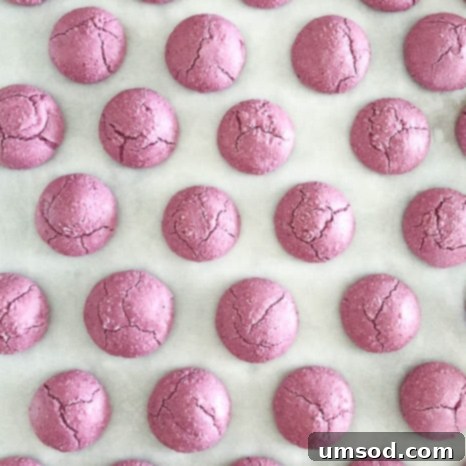
How to Prevent Soft, Wrinkly Shells:
Excess moisture and/or fat are the primary culprits behind soft, wrinkly shells. Understanding and controlling these factors is key to achieving a firm, smooth texture:
- Limit liquid additions: Be very conservative when adding liquid extracts, fruit juices, or liquid food coloring. These can significantly alter the batter’s delicate moisture balance. Opt for gel or powder food colorings and concentrated flavorings when possible.
- Be mindful of added powders: Ingredients like cocoa powder or freeze-dried fruit powders can be tricky. Cocoa powder contains fat, which can soften shells and give them a brownie-like texture. Freeze-dried fruit powders are hygroscopic, meaning they absorb moisture quickly from the air and the batter, potentially leading to soft, wrinkly shells. If using these, adjust recipes accordingly or reduce total liquid content.
- Ensure a properly beaten meringue: An under-beaten meringue still contains too much moisture and not enough stable air. This lack of structure and excess water will result in soft, unstable shells. Whip your meringue until it is firm, glossy, and holds stiff peaks.
- Use fresh, high-quality almond flour: Oily almond flour, or flour that has been opened and exposed to air for too long, can introduce unwanted fat and moisture. Always use fresh, finely ground almond flour.
Proper Almond Flour Storage
To maintain its freshness and prevent it from becoming oily, store opened almond flour in an airtight container in a cool, dark place. For longer-term storage, the freezer is an excellent option, as it significantly extends its shelf life and preserves its quality.
Too Thick Batter
When you initially incorporate dry ingredients into your meringue, the batter will naturally be quite thick, which is perfectly normal. As you proceed with the macaronage process (folding), the batter gradually thins out and becomes runnier. However, in rare instances, the batter may stubbornly remain excessively thick, refusing to loosen to the correct consistency. This can lead to lumpy shells that don’t spread properly.
Possible causes:
- Improper ratio of dry and wet ingredients: Too much dry relative to wet ingredients.
- Oily almond flour: Can absorb liquids differently, making the batter stiff.
- Too much cocoa powder or freeze-dried fruits: These absorb moisture, affecting the overall wet-to-dry balance.
- Overbeaten meringue: Meringue that is over-whipped becomes dry and crumbly, impacting the batter’s fluidity.
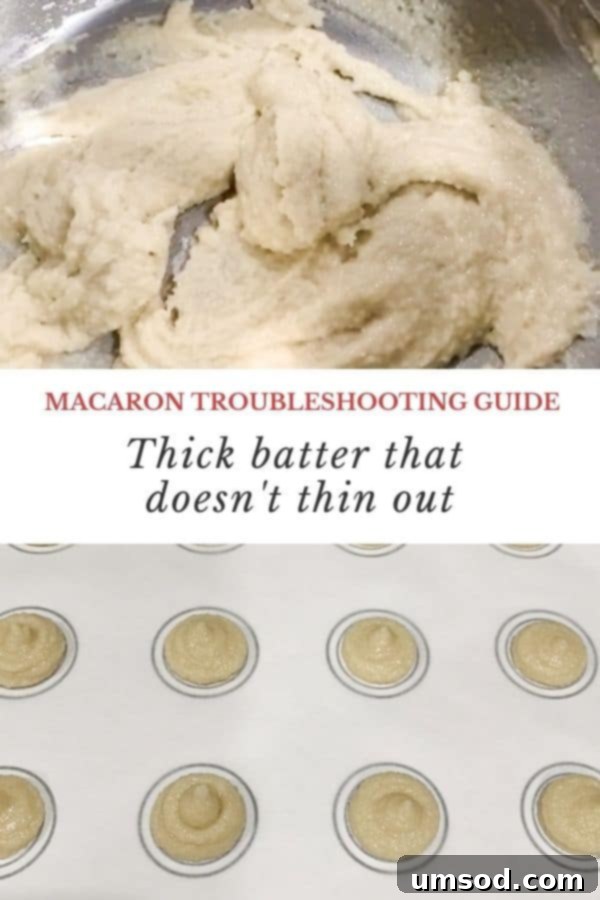
How to Fix and Prevent Thick Batter Issues:
Addressing a thick batter primarily involves precision and ingredient quality:
- Weigh ingredients meticulously: Accuracy is paramount in macaron baking. I strongly recommend using a precise kitchen scale to weigh all ingredients, including egg whites, almond flour, and powdered sugar. Even a slight deviation can throw off the delicate balance and result in a too-thick or too-thin batter.
- Use fresh, non-oily almond flour: Oily almond flour can indeed contribute to a thick, unmanageable batter. Ensure you are using fresh, high-quality almond flour. Avoid processing it further in a food processor unless specified, as this can release oils and alter its texture.
- Balance dry additions carefully: Excessive amounts of absorbent ingredients like cocoa powder or freeze-dried fruit powders can significantly skew the dry-to-wet ratio, making the batter too thick. When incorporating these, consider slightly increasing the liquid component or adjusting other dry ingredients to maintain balance.
- Avoid overbeating meringue: If meringue is over-beaten, it can become dry, grainy, and difficult to fold into the almond flour mixture, leading to a stiff batter. Whip your meringue to stiff, glossy peaks that hold their shape but are still smooth and creamy, not crumbly.
Blotchy Shells
Blotchy shells refer to macarons that develop unsightly greasy stains or darker patches on their surface, making them appear mottled or unevenly colored. While I don’t have a specific photo for this, envision greasy spots marring an otherwise smooth shell.
Possible causes:
- Oily almond flour: Excess oil from the flour can leach out during resting or baking.
- Batter sat out for too long before piping: Especially true for French meringue, the fat from the almond flour can separate.
How to Prevent Blotchy Macarons:
- Test your almond flour for oiliness: To check if your almond flour is too oily, take a small pinch and squeeze it firmly in your hand. If it compresses and holds its shape like wet sand, it may contain too much oil. Opt for fresh, finely ground almond flour that feels dry and powdery.
- Pipe immediately, especially with French meringue: French meringue batter is less stable than Italian or Swiss methods. Therefore, it’s crucial to pipe your shells right away after macaronage. Allowing the batter to sit for too long can cause the oils from the almond flour to separate and rise to the surface, resulting in blotchy shells.
Lopsided Shells
Lopsided shells are macarons that are visibly uneven, with one side higher or more developed than the other. This creates an irregular, asymmetrical appearance that can be frustrating for those aiming for perfect symmetry. It’s often related to environmental or technique issues.
Possible causes:
- Uneven air circulation in the oven/Hot spots: Causes one side to bake faster or rise more.
- Convection setting (fan forced) may have too strong a fan: Creates uneven airflow and drying.
- Improper piping technique: Inconsistent angle or pressure.
- Shells were dried for too long: An excessively thick skin can hinder even expansion.
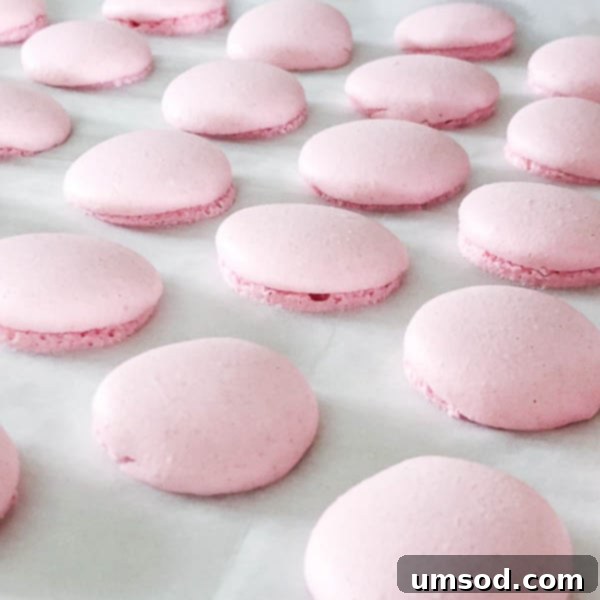
How to Prevent Lopsided Macarons:
The main culprit for lopsided shells is often poor or uneven air circulation and heat distribution within your oven. This can be caused by hot spots or an overly powerful convection fan. Here are several effective strategies to counteract this:
- Flip your baking sheet: Before piping macarons, turn your baking sheet upside down. This removes the raised edges of the sheet, allowing for better and more even heat and air circulation around the macarons.
- Bake one sheet at a time: If possible, bake only one sheet of macarons at a time. This ensures consistent heat exposure for all cookies and prevents overcrowding in the oven.
- Rotate the baking sheet: Halfway through the baking process, carefully open the oven door and rotate your baking sheet 180 degrees. This helps to compensate for any uneven heating within your oven.
- Consider conventional oven settings: If your oven has both conventional (top and bottom heat) and convection (fan-forced) settings, try baking on the conventional setting. Strong convection fans can sometimes create too much turbulent airflow, contributing to lopsidedness.
The next significant reason for lopsided macarons is improper piping technique. Pay close attention to the following details:
- Hold your piping bag correctly: Always hold the piping bag containing your macaron batter perfectly straight, at a 90-degree angle to the baking mat. Apply steady, even pressure from the top of the bag, squeezing the batter onto one spot until the macaron reaches your desired size. Releasing pressure and lifting straight up helps maintain a perfect circle. Watch my macaron piping video for a clearer visual illustration.
- Ensure adequate spacing: Pipe your macaron shells at least half an inch (about 1.25 cm) apart. This provides sufficient room for proper air circulation around each shell, allowing them to bake evenly.
And finally, be cautious not to dry your macarons for too long during the resting phase. An excessively thick or rigid skin can hinder the batter’s ability to rise uniformly, potentially causing lopsided macaron shells.
Concaved (Inverted) Shells or Stuck To Parchment
Concaved or “inverted” shells occur when the top surface of the macaron sinks inwards, creating a dip. Alternatively, shells may stubbornly stick to the baking surface even after cooling. Both issues often point to under-baking or insufficient heat.
Possible causes:
- Low oven temperature / insufficient heat from the bottom: Prevents proper setting of the shell’s internal structure.
- Under-baked shells: The interior hasn’t fully dried and stabilized.
- Not cooling the macarons properly before removing from parchment paper: Attempting to remove them while still warm can cause them to stick or tear.
How to Prevent Concaved or Stuck Macarons:
These issues are closely related to proper baking temperature and doneness. Here’s how to ensure your macarons lift cleanly and have a stable structure:
- Preheat your oven thoroughly: It’s critical that your oven reaches and maintains the correct temperature. Most ovens require a good 30-45 minutes to fully preheat and stabilize. Even if your oven beeps to signal it’s preheated, I highly recommend verifying the actual temperature with an oven thermometer to ensure it’s consistently hot enough. Low oven temperatures, especially from the bottom, prevent the macarons from properly setting and releasing from the surface.
- Ensure macarons are fully baked: Always check your macarons for doneness before removing them from the oven. To perform the “wiggle test,” gently touch the top of one macaron shell with your index finger and try to lightly wiggle it. If it wobbles significantly from side to side, it needs more baking time; return it to the oven for another minute or so. Properly cooked shells should wiggle only ever so slightly and feel firm to the touch. When in doubt, it’s generally better to bake them a minute or two longer; slightly over-baked is often preferable to under-baked, which leads to sticking and structural collapse.
- Cool completely before removal: Patience is key here. After baking, allow the macarons to cool completely on the baking sheet for at least 10-15 minutes before attempting to remove them from the parchment paper or silicone mat. As they cool, their delicate internal structure firms up, allowing them to release cleanly and intact. Attempting to remove them while warm will almost certainly result in them sticking or breaking apart.
Macaron 101: A Comprehensive Guide
Unlock your potential in French macaron baking and develop your unique flavor creations!
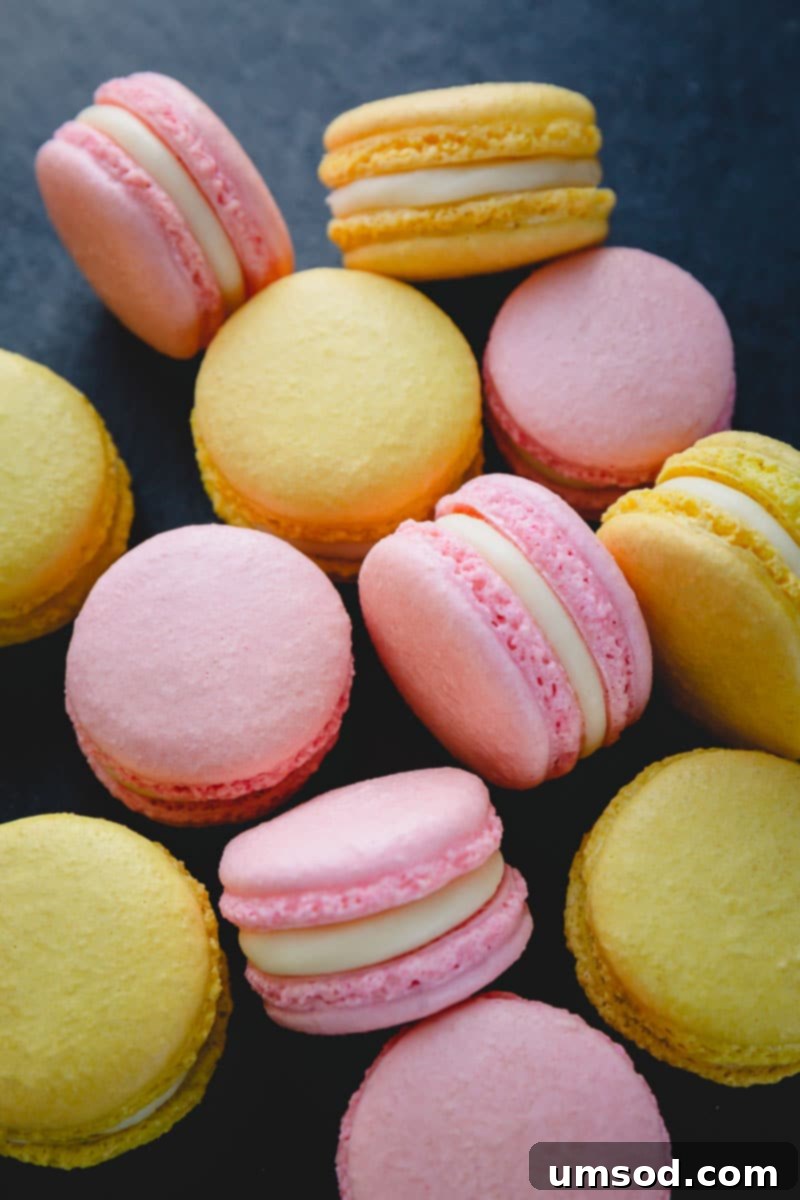
Whew, if you’ve made it this far, thank you! Your dedication to mastering macarons is truly commendable. I sincerely hope this comprehensive macaron troubleshooting guide has provided valuable insights, answered your questions, and empowered you to refine your macaron baking skills. Remember, every batch, whether perfect or problematic, is a learning opportunity on your path to becoming a macaron expert.
If there are any macaron issues I haven’t covered, or if you have unique challenges you’ve faced, please don’t hesitate to leave a comment below. I believe in the power of community, and I’d love for us, fellow macaron-lovers, to connect, share experiences, and discuss the various triumphs and tribulations we encounter in our macaron-baking adventures. Let’s get this discussion started and conquer these delightful, yet sometimes daunting, confections together!