Embark on a culinary journey into the world of baking science, where even the smallest ingredients wield immense power. This comprehensive guide unravels the mysteries of two fundamental leavening agents: baking soda and baking powder. Discover their distinct compositions, understand the chemical reactions that make your treats rise, learn precisely when to use each, and master the art of ensuring they’re still active for flawless results every time. We’ve distilled everything you need to know into a simple, engaging, and easy-to-understand resource!
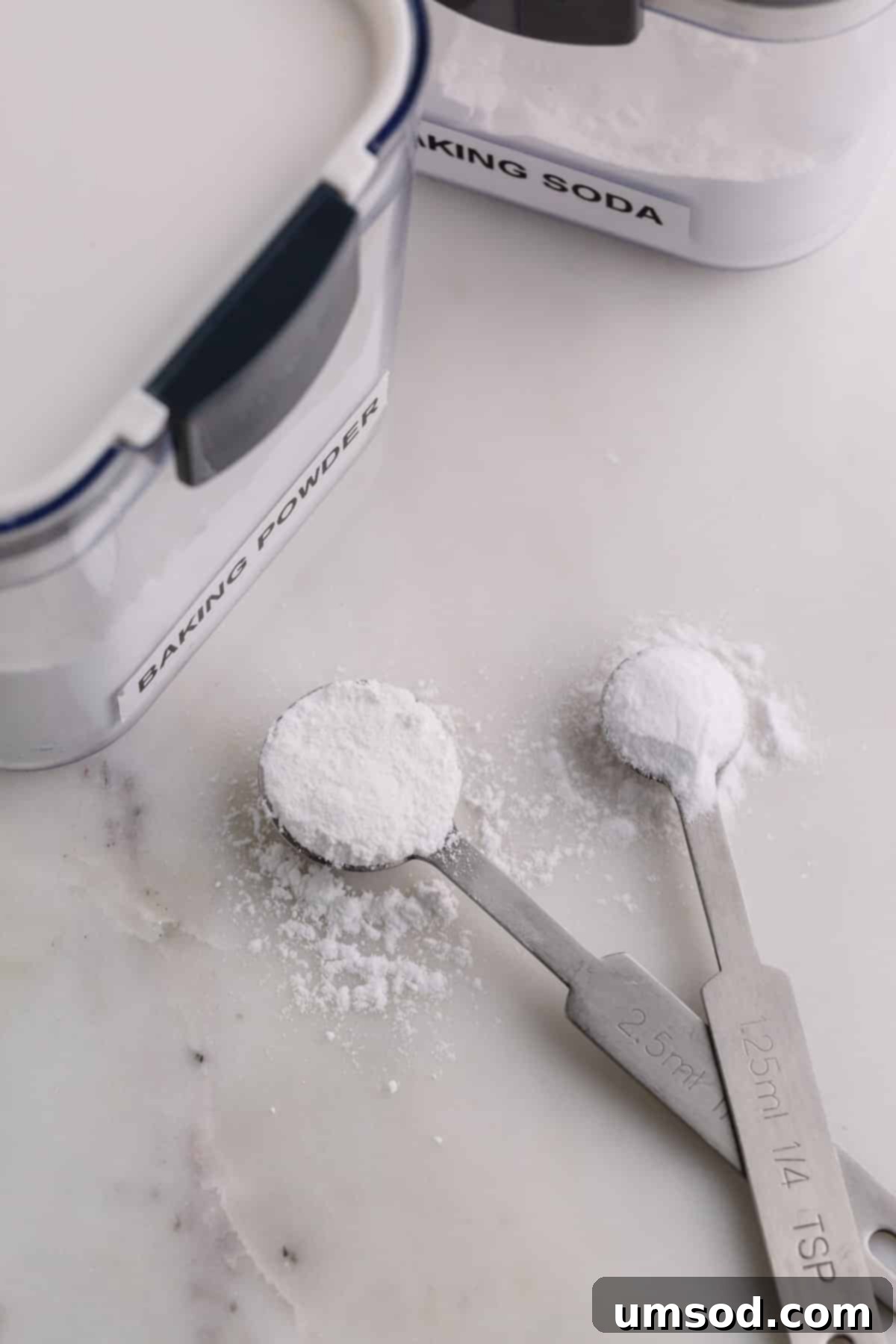
Baking Soda vs. Baking Powder: Understanding the Leavening Essentials
While whipping up a decadent, triple-layer red velvet cake might feel like pure indulgence, it’s crucial to remember that baking is far more than just fun – it’s a precise science! Every ingredient, from flour and sugar to that minuscule pinch of leavening agent, plays an indispensable role in the final outcome of your recipe. Mastering the differences between baking soda and baking powder is a cornerstone of successful baking, ensuring your creations achieve the desired texture, rise, and flavor.
Delve deeper with us to explore the fascinating world of baking soda and baking powder: what they are, how their unique properties dictate their use, and why they are vital to the chemistry of your baked goods. A little knowledge about these powerhouses can transform your baking from good to extraordinary!
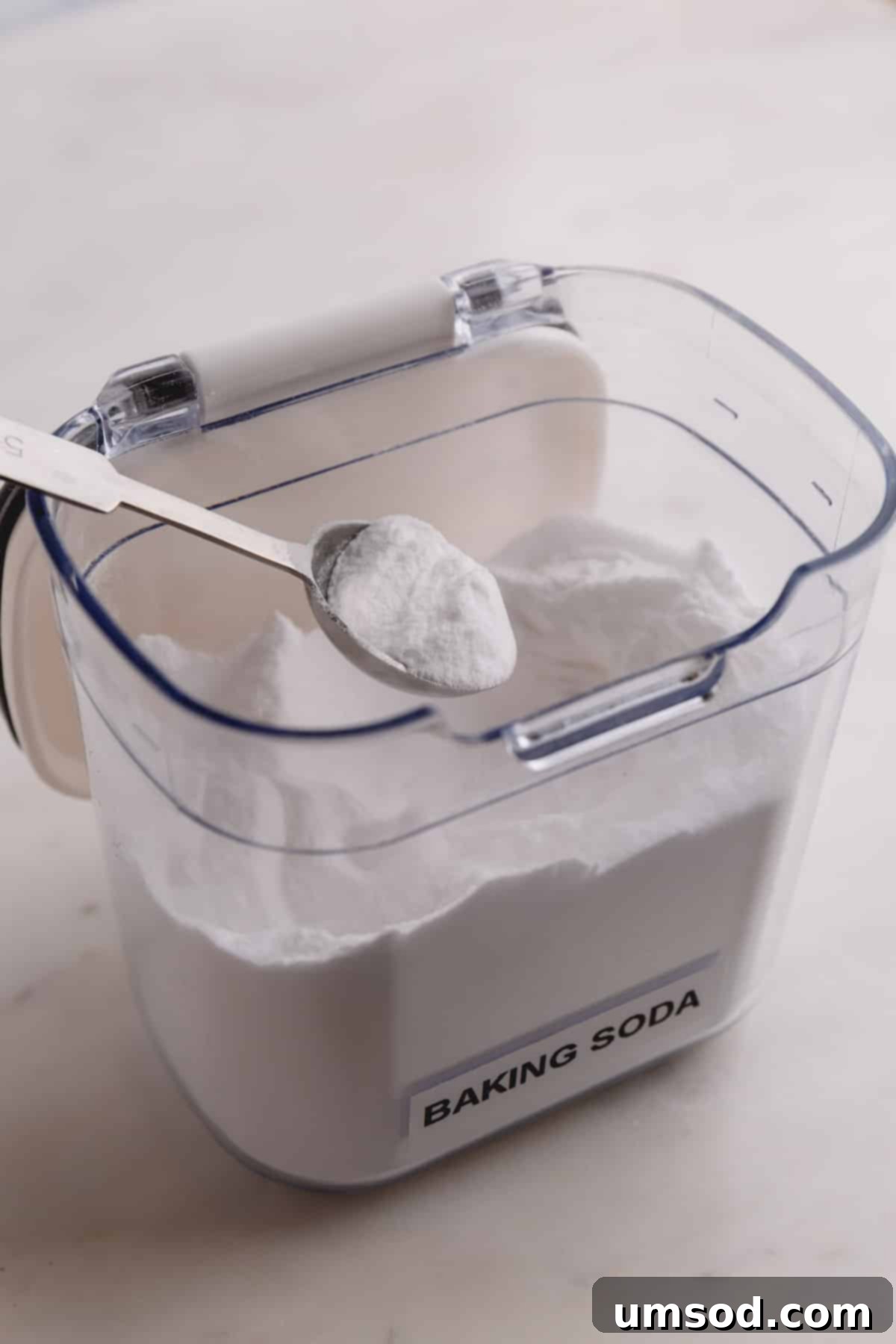
What is Baking Soda? The Acid-Activated Leavener
Baking soda, chemically known as sodium bicarbonate (NaHCO₃), is a pure alkaline compound used as a powerful leavening agent. Its magic unfolds when it comes into contact with an acidic ingredient and moisture. Upon this interaction, a chemical reaction occurs, producing carbon dioxide (CO₂) gas.
This release of carbon dioxide forms countless tiny air pockets throughout your batter or dough, which then expand rapidly when exposed to the heat of the oven. This expansion is what gives baked goods their characteristic light, airy, and fluffy texture. Because baking soda reacts immediately upon contact with an acid, recipes utilizing it often require quick action – mixing and getting the item into the oven without delay to capture all that precious rise!
Common acidic ingredients that activate baking soda include lemon juice, vinegar, buttermilk, yogurt, sour cream, molasses, brown sugar, honey, chocolate, cocoa powder, and various fruit purées or juices. You’ll typically find baking soda in recipes for quick breads, pancakes, and muffins, especially those containing one or more of these acidic components. Beyond leavening, baking soda also influences the final product’s color and helps promote browning, contributing to a more appealing crust.
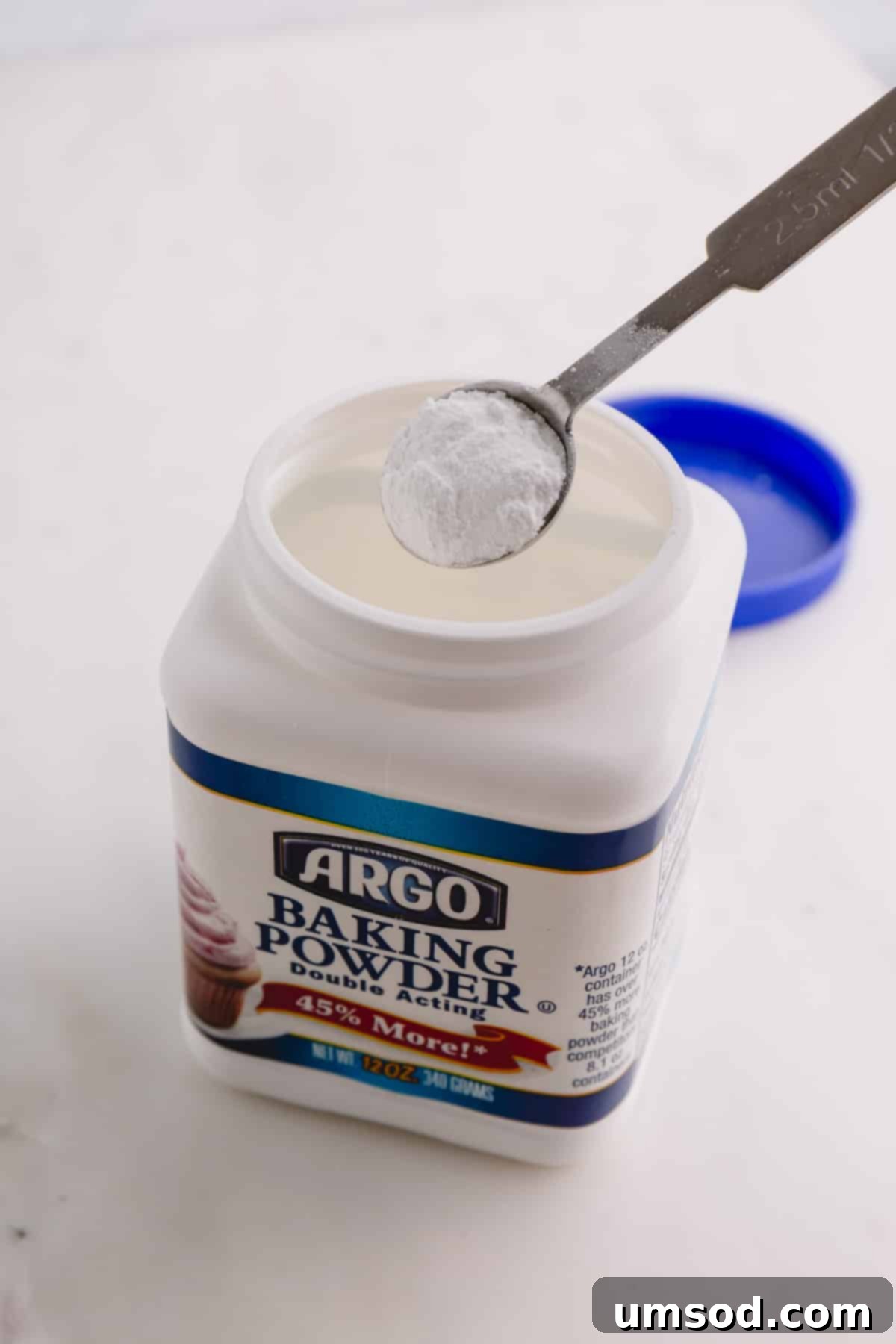
What is Baking Powder? The Self-Contained Leavening System
Baking powder is a complete leavening agent, a pre-mixed combination that includes sodium bicarbonate (baking soda), one or more powdered acids (such as cream of tartar or sodium aluminum sulfate), and a starch (like cornstarch) to absorb moisture and prevent premature activation. This ingenious blend means baking powder doesn’t require an additional acidic ingredient in your recipe to perform its magic.
The majority of baking powders available in grocery stores today are “double-acting.” This means they produce carbon dioxide gas in two distinct stages: first, when they are mixed with liquid at room temperature, and a second, more powerful burst of gas when they are heated in the oven. This two-stage activation provides a sustained and reliable rise, giving bakers a bit more flexibility and confidence that their baked goods will reach their full potential. This controlled release is particularly beneficial for recipes where the batter might sit for a short period before baking.
Baking powder is typically used in recipes that do not contain sufficient acidic ingredients to activate baking soda, or where a neutral flavor profile is desired. Think light and fluffy cakes, delicate cookies, or biscuits that need a consistent lift without the tangy notes that might come from an acid-activated baking soda reaction. Since baking powder already contains its own acid, it only needs moisture and heat to release the essential CO₂ gas that creates a light and tender crumb.
Baking Soda vs. Baking Powder: Key Distinctions and Similarities
Understanding the fundamental differences between baking soda and baking powder is crucial for achieving consistent baking success. While both are powerful leavening agents essential for a light, airy texture, their chemical makeup and activation mechanisms set them apart.
- Composition: The Core Difference
- Baking Soda (Sodium Bicarbonate): This is a pure chemical compound, 100% sodium bicarbonate. It is an alkaline base that requires an external acidic ingredient to react and produce carbon dioxide gas.
- Baking Powder: This is a mixture, a complete leavening system in itself. It contains sodium bicarbonate, one or more powdered acids (like cream of tartar, sodium aluminum sulfate, or monocalcium phosphate), and a starch (such as cornstarch) to keep the ingredients dry and prevent premature reactions.
- Activation Mechanism: When the Magic Happens
- Baking Soda: Reacts immediately and vigorously when combined with an acid and moisture. This rapid reaction means batters with baking soda often need to be baked quickly to prevent the gas from escaping before it can leaven the product.
- Baking Powder: Most commonly, it is “double-acting.” This means it produces CO₂ gas in two stages: once when mixed with liquid, and again when exposed to the heat of the oven. This two-stage activation provides a more prolonged and reliable lift, offering a buffer if your batter sits for a few minutes before baking.
- Impact on Flavor and pH: More Than Just Rise
- Baking Soda: Being alkaline, it helps neutralize acidic flavors in a recipe. If too much baking soda is used without enough acid to balance it, it can leave a metallic or soapy aftertaste. It also contributes to browning.
- Baking Powder: Since it contains its own acid, it is generally pH neutral when fully reacted. It typically does not significantly alter the flavor profile of a baked good, leading to a more neutral taste.
- How They Are Similar: The Shared Goal
- Both baking soda and baking powder serve the same primary purpose: to act as leavening agents. They achieve this by producing carbon dioxide gas, which gets trapped in the batter, expanding during baking to create a light, porous texture and help baked goods rise.
Is My Baking Soda and Baking Powder Still Active? The Freshness Test
If your muffins lack that perfect domed top, or your pancakes turn out disappointingly flat, don’t blame your baking skills just yet. The culprit might be inactive baking soda or baking powder! These essential leavening agents lose their potency over time, becoming virtually useless once they’re past their prime. Using expired or inactive leaveners is a common pitfall that can lead to dense, heavy baked goods.
It’s crucial to test their freshness periodically, especially if you haven’t baked in a while or can’t recall when you purchased them. Here’s how to easily tell if they’re still ready to make your bakes rise:
- Testing Baking Soda: The Volcano Experiment
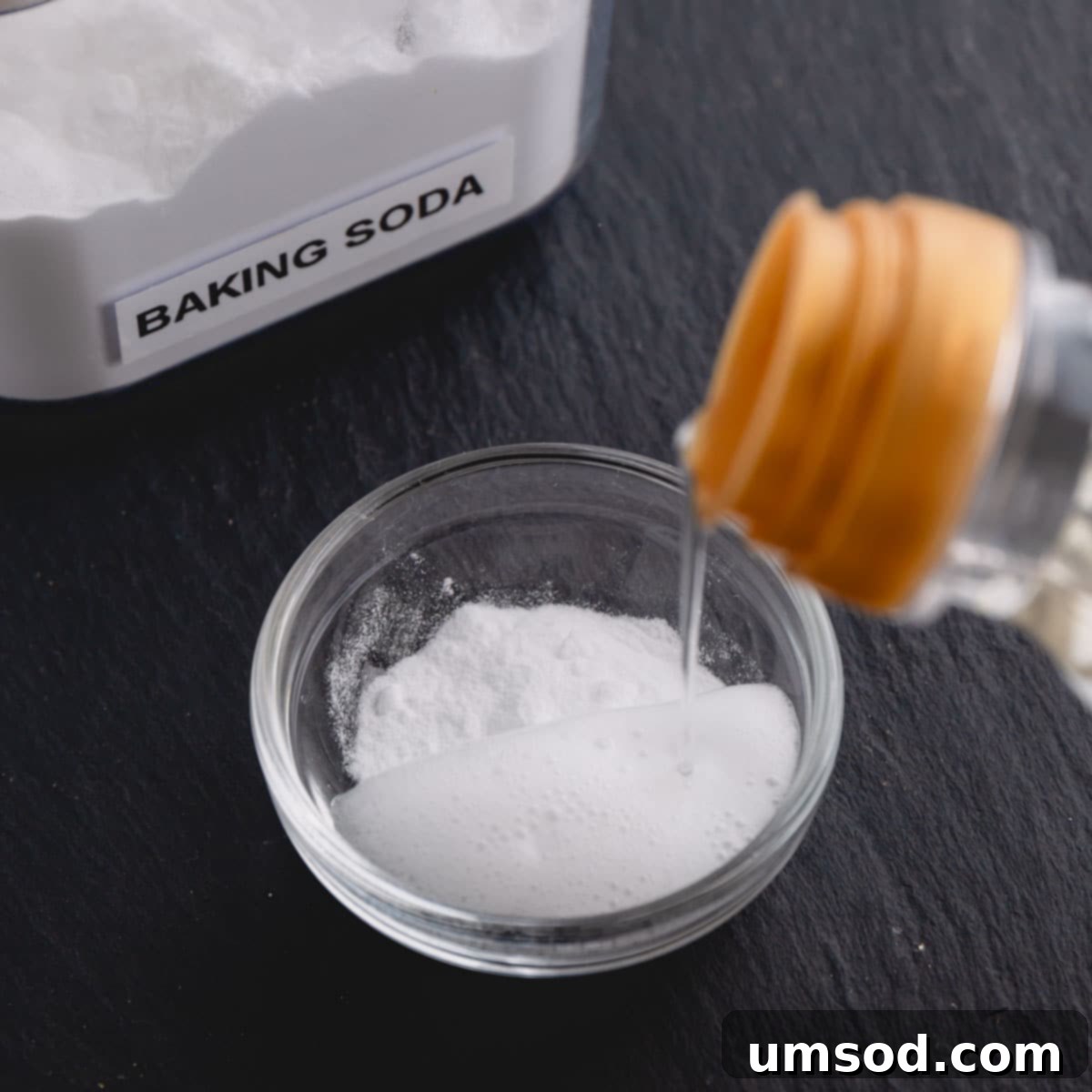
Remember those exciting volcano science experiments from elementary school? They’re actually the perfect method to test your baking soda! Place a teaspoon of baking soda into a small bowl or glass. Add 2 teaspoons of white vinegar or lemon juice to it. If the mixture vigorously bubbles and fizzes like a miniature volcano, your baking soda is still active and potent. If you see only a weak fizz or no reaction at all, it’s time to replace it.
- Testing Baking Powder: The Warm Water Test
To check the freshness of your baking powder, measure a teaspoon of baking powder into a small bowl. Pour about ⅓ cup of hot tap water (not boiling) over it. If the mixture immediately produces bubbles and fizzes energetically, your baking powder is still fresh and effective. A lack of bubbles or a very weak reaction indicates that it has lost its leavening power and should be discarded.
Bubbles Are Your Best Friend!
When performing these freshness tests for baking soda and baking powder, remember that visible, energetic bubbles or fizz are the indicators of an active product. A strong reaction means your leaveners are ready to do their job and give your baked goods the lift they deserve.
Proper Storage for Maximized Potency
To extend the shelf life of your leavening agents, proper storage is key. Both baking soda and baking powder should be stored in airtight containers in a cool, dry place at room temperature. The cardboard boxes that baking soda often comes in are not ideal for maintaining freshness, as they allow moisture and odors to seep in. It’s best to transfer baking soda to a ziplock plastic bag, a tightly sealed glass jar, or another airtight container. Baking powder usually comes in a metal can, which offers better protection, but ensuring the lid is always tightly sealed is still important. Properly stored, baking soda can last up to 2 years, while baking powder typically lasts 6-12 months.
How to Choose the Right Leavener: Recipe Analysis is Key
The choice between baking soda and baking powder isn’t arbitrary; it fundamentally depends on the other ingredients in your recipe and the desired outcome in terms of texture and flavor. It all comes down to the presence, or absence, of acidic components.
- When to Use Baking Soda: The Acid Test
Typically, baking soda is the correct choice when your recipe includes an acidic ingredient that can activate it. Common acidic components in baking include buttermilk, yogurt, sour cream, lemon juice, vinegar, molasses, brown sugar, honey, chocolate, and natural cocoa powder (not Dutch-processed). The baking soda will react with these acids, not only creating rise but also neutralizing some of the tang, leading to a softer crumb and often a deeper brown color. - When to Use Baking Powder: The Neutral Zone
If your recipe contains no significant acidic ingredients, or only a small amount, baking powder is the standard option. Ingredients like milk, water, and Dutch-processed cocoa powder are generally neutral, and therefore require the self-contained leavening power of baking powder. It provides a consistent, gentle rise and a neutral flavor profile, making it perfect for many cakes, cookies, and biscuits where a balanced pH is desired.
It’s important to note that developing or adapting a recipe often involves several rounds of trial and error. While these guidelines provide a strong starting point, the exact balance of leavening agents can be fine-tuned to achieve specific textures and flavors, making baking both a science and an art.
Why Use Both Baking Soda and Baking Powder? The Synergistic Approach
You might encounter recipes, such as this delicious vanilla bean cake or these indulgent chocolate cupcakes, that call for both baking soda and baking powder. This strategic combination isn’t a mistake; it’s a deliberate technique employed by bakers for several important reasons, leveraging the unique strengths of each leavener to achieve optimal results.
- Achieving Maximum Rise with Acidic Ingredients: When a recipe contains acidic ingredients, baking soda is essential to react with them. However, sometimes the amount of acid present isn’t enough to fully activate the quantity of baking soda required for the desired rise. In such cases, baking powder steps in to provide the additional leavening needed. The baking soda reacts with the available acid, and the baking powder provides its own lift, ensuring a light and airy texture without leaving excess unreacted baking soda that could cause a soapy taste.
- Balancing Flavor and Texture: Baking soda is an alkaline ingredient that neutralizes acids. While this can be beneficial, sometimes you want to retain a subtle tang from acidic ingredients like buttermilk or sour cream. By using both leaveners, the baking soda can neutralize *some* of the acid for a tender crumb, while the baking powder ensures a sufficient rise without over-neutralizing the flavor. This allows for a more complex and nuanced flavor profile, preventing an overly bitter or soapy taste from too much unreacted baking soda, and preserving desirable tangy notes.
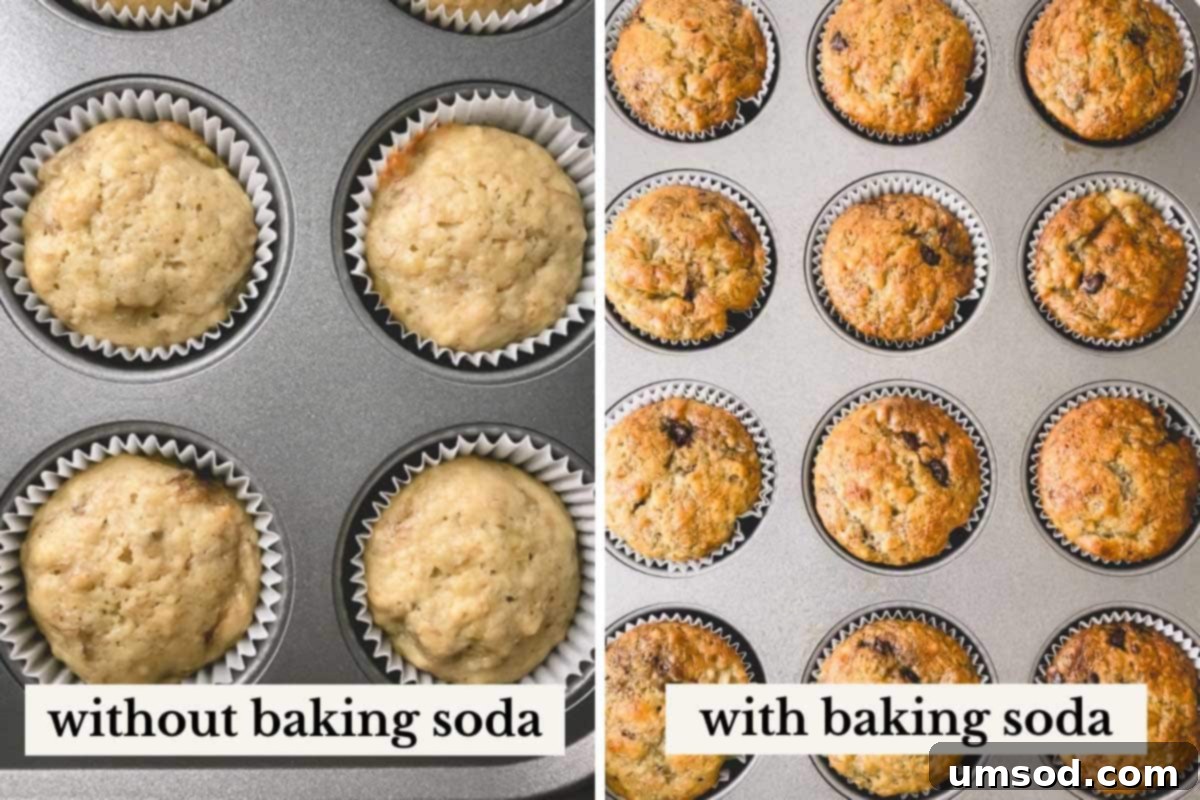
- Enhancing Color and Browning: Beyond just leavening, baking soda plays a crucial role in the browning of baked goods. Its alkalinity raises the pH of the batter, which accelerates the Maillard reaction—the chemical process responsible for those beautiful golden-brown crusts and rich flavors. Without baking soda, baked items can often come out pale, as evidenced by my banana muffins comparison where those without baking soda lacked that appetizing golden hue. This principle isn’t limited to baked goods; adding a small amount of baking soda (about a teaspoon for every 3 lbs of meat) can also help with browning roasted meats, burgers, and even french fries!
Is Cream of Tartar the Same as Baking Soda? Understanding Tartaric Acid
Cream of tartar, also known as potassium bitartrate or powdered tartaric acid, often sits next to baking soda in the spice aisle and might even look similar, but it is actually a distinct ingredient with entirely different properties. While baking soda is an alkaline (a base), cream of tartar is, as its name suggests, an acid.
On its own, cream of tartar is primarily used to stabilize whipped egg whites in preparations like meringue, macarons, and pavlova, helping them hold their airy structure. It also prevents sugar from crystallizing in candies and syrups, and it’s the ingredient that gives classic Snickerdoodle cookies their characteristic tangy flavor.
However, when cream of tartar is combined with baking soda, it creates a powerful leavening reaction. In fact, cream of tartar is one of the primary powdered acids used to formulate commercial baking powder. So, while not the same, it is the acidic component that can activate baking soda to produce carbon dioxide, making things rise and puff up beautifully when used in the correct proportions.
How to Substitute Baking Soda and Baking Powder: Proceed with Caution
Substituting baking soda for baking powder, or vice versa, can be a complex endeavor. These leavening agents are not interchangeable one-for-one due to their differing compositions and activation requirements. While substitutions are possible in a pinch, it’s crucial to understand that they can significantly alter the recipe’s flavor, texture, and rise. Always approach substitutions with extreme caution, and be prepared for potential variations from the original recipe’s intended outcome.
- Substituting Baking Powder for Baking Soda:
If your recipe calls for baking soda but you only have baking powder, you will need to use a significantly larger quantity of baking powder. The general rule of thumb is to use a 3:1 ratio: for every 1 teaspoon of baking soda, substitute with 3 teaspoons (1 tablespoon) of baking powder. This is because baking powder contains both the soda and the acid, and usually in a less concentrated form for leavening purposes when compared to pure baking soda. Keep in mind that this substitution will introduce additional acidic components into your recipe, which could subtly alter the flavor. If the original recipe relied on baking soda to neutralize a strong acid (like buttermilk), substituting with baking powder might result in a less tangy, more neutral flavor. Also, ensure the recipe doesn’t rely heavily on the browning properties that baking soda provides.
- Substituting Baking Soda for Baking Powder:
This substitution is trickier because baking soda requires an acid to activate, which baking powder already contains. If your recipe calls for baking powder, and you only have baking soda, you’ll need to use a smaller amount of baking soda and simultaneously introduce an acidic ingredient to the recipe. Use a 1:3 ratio for the baking soda (or ⅓ teaspoon of baking soda for every 1 teaspoon of baking powder). Crucially, you must then add enough acid to the recipe to activate the baking soda. For every ⅓ teaspoon of baking soda you add, you will also need to incorporate approximately 1 cup of buttermilk (replacing some of the liquid in the recipe), ½ teaspoon of cream of tartar, or 1 tablespoon of lemon juice/vinegar. Without this added acid, your baked goods simply will not rise, and you might end up with a metallic or soapy taste from the unreacted baking soda. This substitution is best for recipes where you can easily swap out a neutral liquid for an acidic one without disrupting the overall balance too much.
Ultimately, while these guidelines offer a lifeline, the best practice is to use the leavening agent specified in the recipe. Stocking both baking soda and baking powder in your pantry ensures you’re always prepared for any baking adventure!
Frequently Asked Questions About Baking Soda and Baking Powder:
As the name implies, double-acting baking powder creates carbon dioxide bubbles in two stages. The first reaction occurs when the dry powder is mixed with liquid at room temperature. The second, more significant reaction is triggered when the mixture is heated in the oven. This two-stage activation provides a more consistent and reliable rise, which is why the majority of baking powder sold in grocery stores today is double-acting, offering bakers a forgiving margin for error.
Both baking powder and baking soda should be stored in airtight containers in a cool, dry place, away from humidity and direct sunlight. Baking soda, often sold in a cardboard box, is best transferred to a ziplock plastic bag or a tightly sealed glass jar to maintain its freshness and prevent it from absorbing moisture or odors. Baking powder typically comes in a metal can, which offers good protection, but ensure the lid is always securely fastened after use. Proper storage maximizes their potency and shelf life.
No, absolutely not. Expired baking soda and baking powder belong in the trash. Once they lose their potency, they can no longer produce sufficient carbon dioxide gas to leaven your baked goods effectively. Using inactive leaveners will result in dense, flat, and disappointing results. It’s far better to discard them and purchase fresh products than to risk wasting time and ingredients on an entire cake or batch of cookies that won’t rise.
Using too much leavening agent can have adverse effects. Too much baking soda, especially if not adequately neutralized by acid, can impart a metallic, soapy, or bitter taste to your baked goods and lead to excessive browning. Too much baking powder can cause your batter to rise too quickly and then collapse, resulting in a coarse, crumbly texture, or a peak that sinks in the middle. It can also leave a slightly bitter or chalky aftertaste. Precision is key in baking!
Using too little leavening agent is a common cause of dense, heavy, or flat baked goods. Without enough carbon dioxide gas production, your batter won’t rise sufficiently, resulting in a compact texture rather than the desired light and airy crumb. The final product will lack volume and could be tough or chewy. Always measure your leaveners carefully!
Yes, both baking soda and baking powder are naturally vegan! Their ingredients are mineral-based and do not come from animal sources. For recipes where you want to ensure no animal products are used, these are safe choices for leavening. Some brands might use bone char in sugar processing, but the leavening agents themselves are typically vegan. For acidic components in vegan baking, lemon juice, vinegar, or apple cider vinegar are commonly used with baking soda.
More Essential Baking Basics to Know:
- How to Measure Flour Correctly
- Mastering Egg White Separation
- Tips for Softening Brown Sugar
- The Best Way to Soften Butter