The Ultimate Guide to Softening Butter: Achieving Perfect Room Temperature for Baking Success
Every passionate baker understands the critical role of butter in creating culinary masterpieces. From light and airy cakes to tender, flaky cookies, the consistency of your butter can make or break a recipe. While waiting for butter to naturally soften at room temperature can be a test of patience, often requiring hours of foresight, this comprehensive guide will unveil a reliable and quick way to bring butter to room temperature in mere seconds. Say goodbye to dense bakes and hello to consistent perfection with these expert tips and a revolutionary 30-second microwave method.
Why Achieving Perfect Room Temperature Butter is Crucial for Baking Success
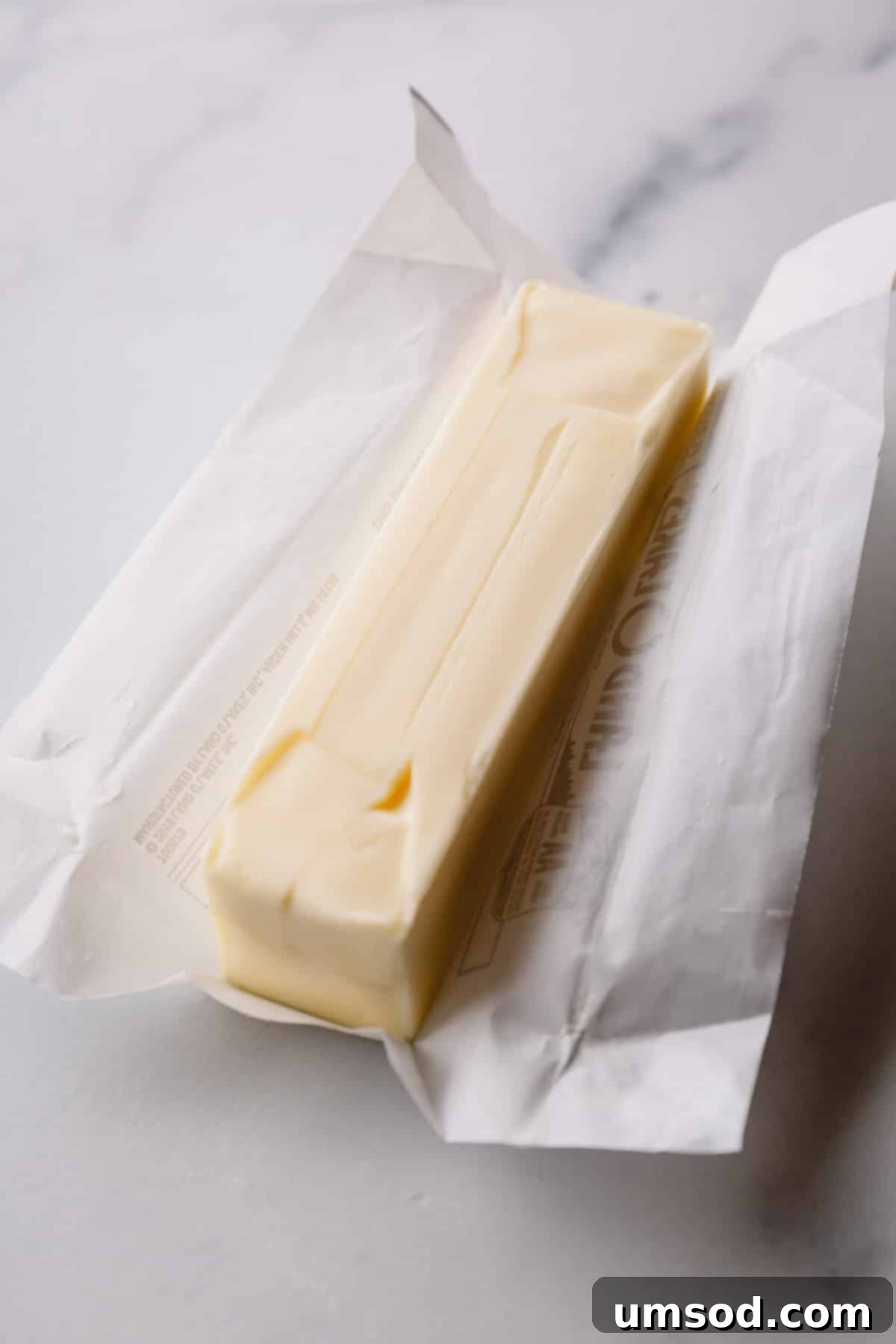
The temperature of your butter is not just a suggestion; it’s a fundamental principle for many baking techniques. Understanding its importance will elevate your baking from good to consistently great. When butter is at the optimal room temperature, its unique structure allows for ideal interaction with other ingredients, leading to superior texture, emulsification, and flavor distribution.
- The Creaming Method & Air Incorporation: Most recipes, especially for cakes and cookies, rely on the “creaming method.” This involves beating softened butter with sugar. The sugar crystals create countless tiny air pockets within the butter, which are then trapped. During baking, these air pockets expand, giving your baked goods a light, airy, and tender crumb. If butter is too cold, it won’t cream properly, resulting in a dense and heavy texture.
- Seamless Emulsification for Smooth Batters: Room temperature butter integrates smoothly with other liquids like eggs and milk. This creates a stable emulsion, preventing your batter from separating or curdling. A well-emulsified batter ensures an even distribution of moisture and flavor throughout your final product, yielding a consistent and delightful bite. Cold butter can lead to a lumpy, unattractive batter.
- Controlled Spreading for Perfect Cookies: For cookies that maintain their shape and spread just the right amount, butter consistency is paramount. Butter that is too cold will result in cookies that don’t spread enough, often being thick and cakey. Conversely, butter that is too soft or partially melted will cause cookies to spread excessively, leading to thin, greasy, and potentially burnt edges. The ideal consistency ensures a beautiful, even spread.
- Enhanced Flavor & Texture: Properly softened butter contributes significantly to the richness and mouthfeel of baked goods. It helps to develop and distribute flavors more effectively, creating a tender, melt-in-your-mouth texture that is undeniably satisfying.
Traditionally, bakers are advised to take butter out of the refrigerator 1-2 hours before starting a recipe. This timeframe is highly variable, depending on the ambient room temperature in your kitchen and the initial temperature of the butter. In a standard kitchen kept at approximately 70°F (21°C), a single stick of butter might indeed reach the ideal consistency in about an hour. However, this method requires foresight and patience – qualities not always available in a busy kitchen or when a sudden baking craving strikes. Furthermore, if your butter is frozen, it will require an even longer thawing process before it can even begin to soften to the right temperature.
The Fastest Way to Soften Butter: Your 30-Second Microwave Method
Gone are the days of impatiently waiting for butter to soften! This powerful microwave technique will transform cold butter into the perfect pliable consistency in under 30 seconds. While incredibly efficient, this method requires a touch of precision and familiarity with your appliance to prevent accidental melting. The secret lies in using very short bursts at a low power setting to gently warm the butter without compromising its structure.
Essential Prep: Knowing Your Microwave’s Wattage
Before you begin, it’s critical to determine the wattage of your microwave. Microwaves typically range from 600 to 1200 Watts, with 1000 Watts being a common average for household models. This information is usually found on a sticker located on the side, back, or inside the door frame of your microwave. Knowing your wattage allows you to accurately adjust the power settings and time, minimizing the risk of melting your butter.
Step-by-Step Guide to Microwave Butter Softening:
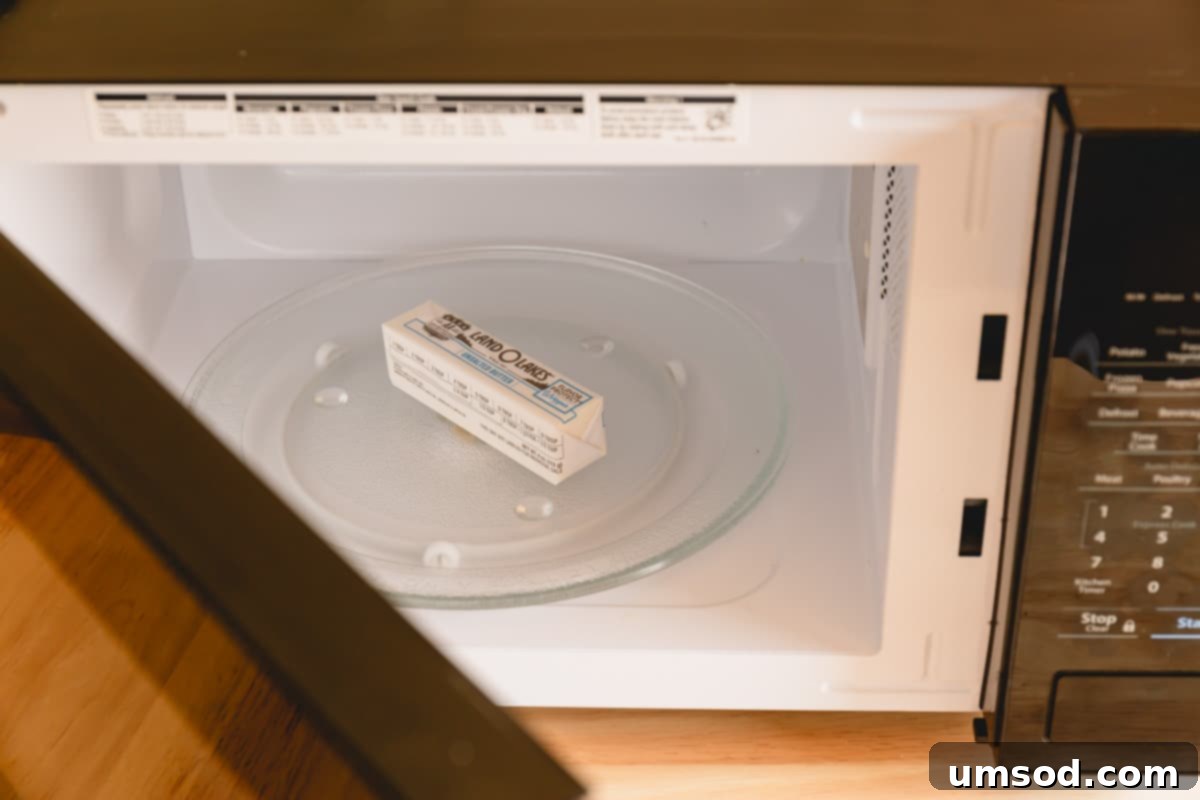
- Position the Butter: Place a full stick of butter, still in its original wrapper, seam-side down, in the center of your microwave. The wrapper acts as a protective barrier and helps distribute heat more evenly.
- First 10-Second Burst: Set your microwave to 40% power (this recommendation is calibrated for a 1000-Watt microwave). Microwave the butter for exactly 10 seconds. For microwaves with higher wattage (e.g., 1200W), consider reducing the time slightly (e.g., 8 seconds) or reducing the power to 30%. For lower wattage (e.g., 800W), you might need an extra 2-3 seconds.
- Flip and Second 10-Second Burst: Carefully remove the butter, turn it over to the opposite side (seam-side up), and return it to the microwave. Microwave for another 10 seconds at the same 40% power setting. Flipping ensures that both sides receive even heat exposure.
- Check for Perfection: After the second burst, gently press your finger into the butter. It should yield with slight resistance, leaving a clear indentation. If it feels too firm, microwave for an additional 5 seconds at an even lower power setting (e.g., 20-30%), checking its consistency immediately afterward. The goal is soft, pliable butter, NOT shiny or greasy butter that indicates melting.
This method truly is a game-changer once you get a feel for your microwave. A little practice will quickly make you a master of instant room temperature butter.
3 Definitive Signs of Perfectly Room Temperature Butter
Identifying truly “room temperature” butter is a skill that separates average bakers from exceptional ones. It’s crucial to distinguish this ideal state from simply “softened” or, worse, “partially melted” butter. Using butter that is too soft will compromise the structure of your baked goods, leading to undesirable results like flat cookies or dense cakes. Always aim for that sweet spot of pliability without oiliness.
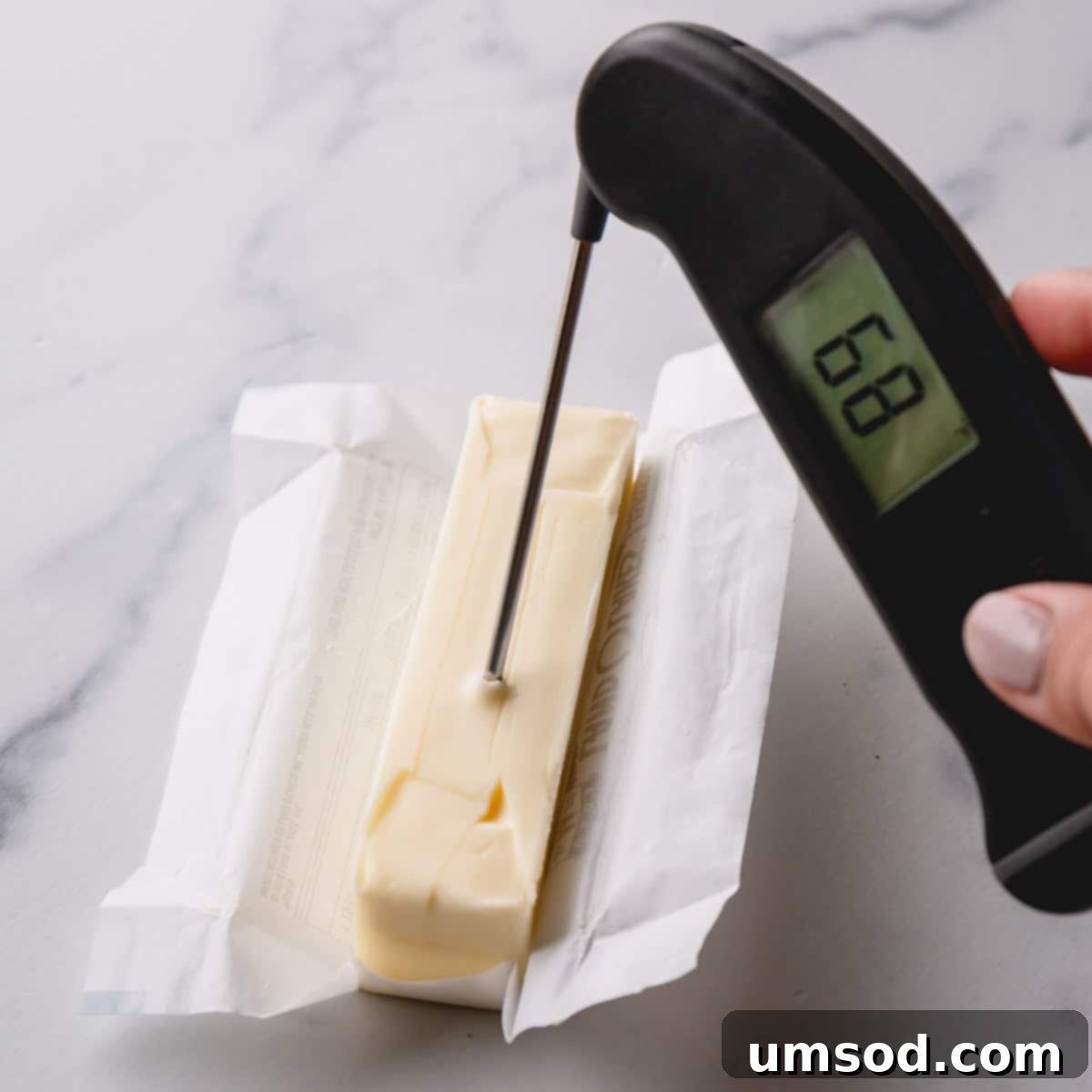
- Cool to the Touch, Within a Specific Temperature Range: Your perfectly softened butter should still feel cool, not warm, to your touch. The optimal internal temperature for butter destined for creaming is precisely between 65-68°F (18-20°C). For absolute accuracy, an instant-read thermometer is your best tool. Butter colder than this range won’t cream effectively, while warmer butter risks premature fat melting in your batter, disrupting the delicate balance required for a stable emulsion.
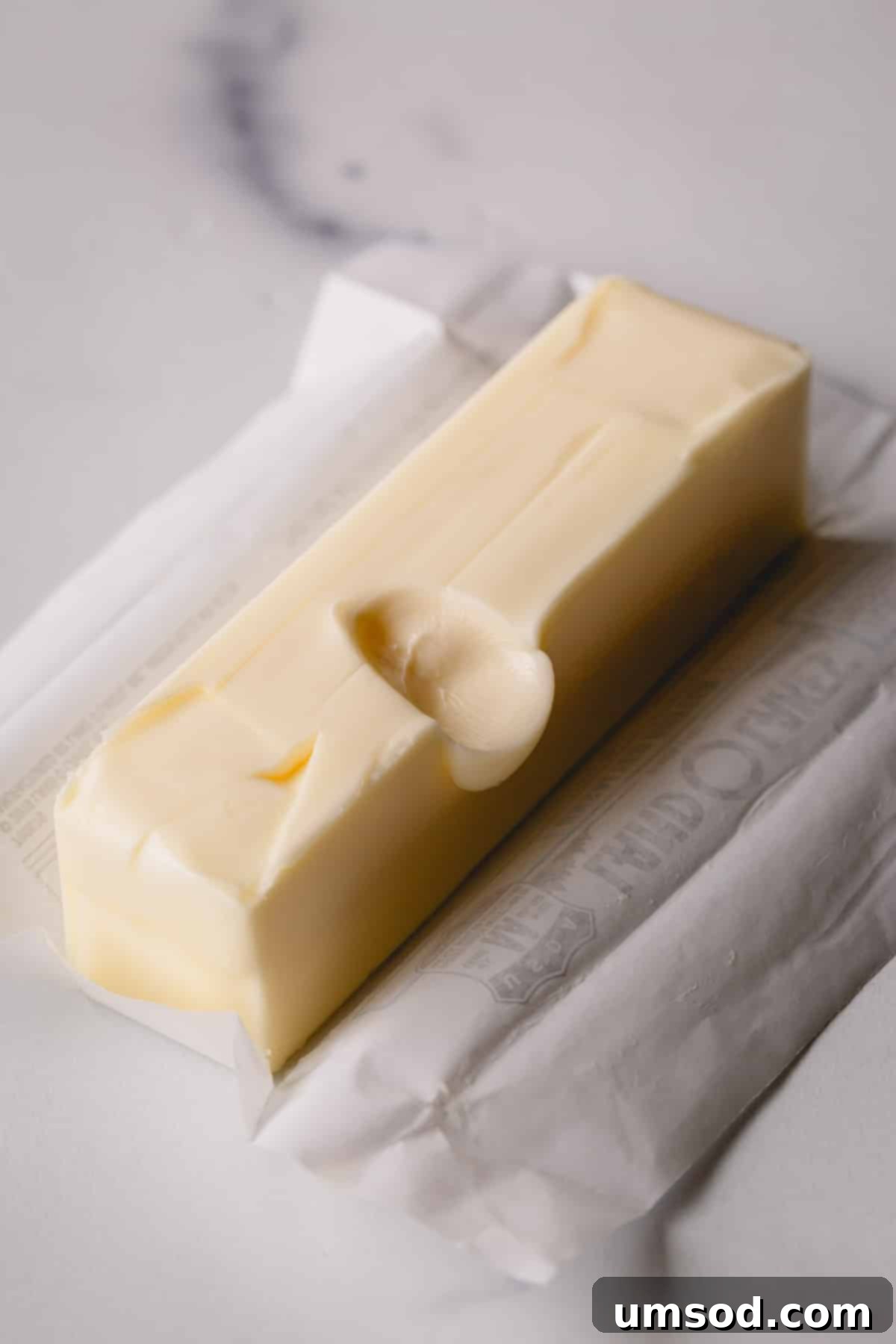
- Dents with Slight Resistance: This is the classic “finger test.” When you gently press your finger into the butter, it should leave a distinct indentation. Crucially, your finger should meet a slight resistance, indicating that the butter is pliable but still firm. If your finger sinks through effortlessly, leaving a mushy or oily trail, the butter is too soft. If it’s too hard and barely makes a mark, it’s still too cold. The perfect dent shows readiness to incorporate air without collapsing.
- Maintains an Opaque, Non-Greasy Appearance: A vital visual indicator is the butter’s surface. Perfectly room temperature butter will retain its opaque, matte, and uniform color. It should never appear shiny, glossy, or greasy on the surface. These visual cues are tell-tale signs that the butter has started to warm too much, causing its fat to separate or melt. Using shiny, greasy butter will result in baked goods with a dense texture, excessive spreading, and an unpleasantly oily mouthfeel instead of a light and tender crumb.
By diligently observing these three signs, you will significantly improve the outcome of your baking endeavors. Whether you’re striving for no-spread sugar cookies with crisp edges or aiming for fluffy and tender cupcakes, consistent butter temperature is your key to success.
Beyond the Microwave: Alternative Quick Softening Methods
While the microwave method is incredibly efficient, it might not be for everyone, or perhaps you simply don’t have a microwave available. Fret not! There are several other clever techniques to quickly bring butter to the perfect temperature without melting it:
- The Warm Water Bath Technique: Fill a medium-sized bowl with warm (not hot!) water. Place your stick of butter, still sealed in its original wrapper or a watertight plastic bag, into the water. Let it submerge for about 5-10 minutes, checking its softness frequently. The warm water will gently transfer heat to the butter. Be cautious not to use hot water, as this can quickly melt the outer layers of the butter while leaving the center cold.
- The Grating Method for Instant Softness: For nearly instant room-temperature butter, grate your cold butter using a box grater directly into a bowl. The act of grating creates small shreds of butter with a much larger surface area, allowing them to warm up and become pliable almost immediately. This method is particularly useful when you’re in a real hurry.
- The Rolling Pin Pounding Method: Place the cold stick of butter between two sheets of parchment paper or plastic wrap. Using a rolling pin, gently pound and then roll the butter until it flattens into a thin, even sheet. The pressure and friction will warm the butter quickly, making it pliable and ready for use. This method is also a great stress reliever!
Essential Butter Tips for Baking Mastery
Mastering butter consistency is a significant step towards baking excellence, but there’s more to know about this versatile ingredient. Here are additional expert tips to ensure your baking always shines:
- Salted vs. Unsalted Butter: The Baker’s Choice: Most professional baking recipes specify unsalted butter. This is because it gives you precise control over the salt content in your recipe, allowing for consistent results every time. Salt levels can vary significantly between brands of salted butter, potentially throwing off the delicate balance of your sweet creations. If you only have salted butter, remember to reduce the amount of added salt in your recipe by approximately 1/4 teaspoon per stick (113g) of butter.
- Invest in Quality Butter: While any butter will technically work, investing in higher-quality butter can make a noticeable difference in your baked goods. European-style butters, often boasting a higher fat content (around 82% compared to 80% in American-style), contribute to a richer flavor and more tender texture. Dive deeper into the world of dairy with our comprehensive Butter 101 guide.
- Accurate Measuring is Key: Precision is paramount in baking, and butter is no exception. For stick butter, the measurements on the wrapper are generally reliable. For block butter or when greater accuracy is needed, a kitchen scale is an invaluable tool for consistent results.
- Proper Butter Storage: To maintain its freshness and prevent it from absorbing fridge odors, store butter in its original packaging or an airtight container in the refrigerator for several weeks. For longer preservation, butter can be safely frozen for up to six months.
- When to Use Cold Butter (Yes, Seriously!): Not every recipe calls for softened butter! For flaky pastries like pie crusts, biscuits, and scones, very cold butter is absolutely essential. The cold butter melts slowly in the oven, releasing steam that creates distinct pockets and layers, resulting in that desirable flaky texture.
- Unlock New Flavors with Brown Butter: For an additional layer of nutty, complex aroma and taste, learn how to brown butter. This simple technique transforms standard butter into a rich, aromatic ingredient that can elevate cookies, cakes, and even savory dishes.
How to Soften Butter (in 30 seconds)
By Shinee Davaakhuu
Discover the quick and easy microwave method to bring cold butter to perfect room temperature for all your baking recipes in less than 30 seconds.
Ingredients
- 1 stick (115 g) cold butter Note 1
Equipment
- Microwave
- Instant-Read Thermometer (optional, for precision)
Instructions
- Determine Microwave Wattage: Before placing butter in the microwave, identify its power level. Most microwaves are around 1000 Watts, and this information is typically found on a label on the side, back, or inside the door frame. Knowing your wattage helps prevent accidental melting.
- Initial Microwave: Place the stick of butter, still in its wrapper and seam-side down, into the microwave.
- First Burst: Microwave for 10 seconds at 40% power (calibrated for a 1000-Watt microwave). Adjust time/power slightly for different wattage microwaves.
- Flip and Second Burst: Turn the butter over to the opposite side and microwave for another 10 seconds at the same 40% power setting.
- Check and Adjust: Gently press your finger into the butter. It should leave a slight indentation with a little resistance. If it needs to be softer, microwave for an additional 5 seconds at 20-30% power, checking after each burst. Be vigilant to avoid melting!
⭐️ Did you make this recipe?
Please leave a review and let us know how you liked it!
Tips & Notes
Note 1: This tutorial is specifically for cold butter taken directly from the refrigerator. If your butter is frozen, it will require a significantly longer thawing process (e.g., overnight in the fridge) before this quick softening technique can be effectively applied.
Found this guide helpful?
Your feedback means the world to us! Leave a rating and your comments below. Thank you!
Conclusion: Elevate Your Baking with Confidently Softened Butter
Achieving perfectly softened butter is a fundamental skill that significantly impacts the quality and consistency of your baked goods. No longer will you be hindered by the clock or the uncertainty of butter’s temperature. With the powerful 30-second microwave method and a clear understanding of what true “room temperature butter” looks, feels, and measures like, you are now equipped to tackle any recipe with confidence.
Embrace these techniques, pay close attention to the visual and tactile cues, and watch as your baking confidence—and the deliciousness of your creations—soars to new heights. Happy baking!