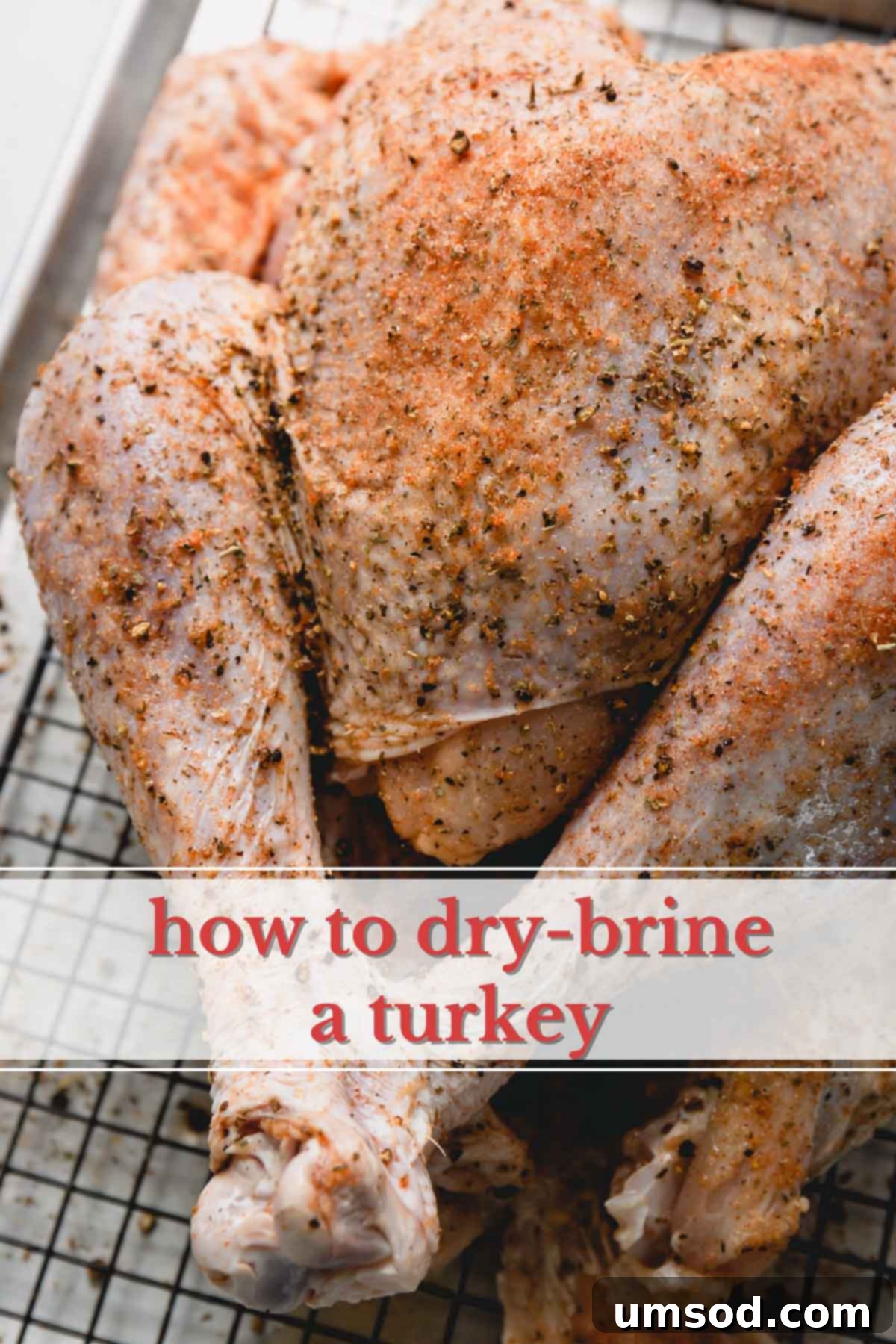
Master the Art of Dry Brining Your Thanksgiving Turkey for Unforgettable Flavor and Juiciness
Prepare to revolutionize your holiday meal with the easiest and most effective method for seasoning a turkey: dry brining. This technique guarantees a Thanksgiving turkey that is incredibly juicy, bursting with flavor, and boasts irresistibly crispy skin. Say goodbye to bland, dry birds and hello to your best turkey yet!
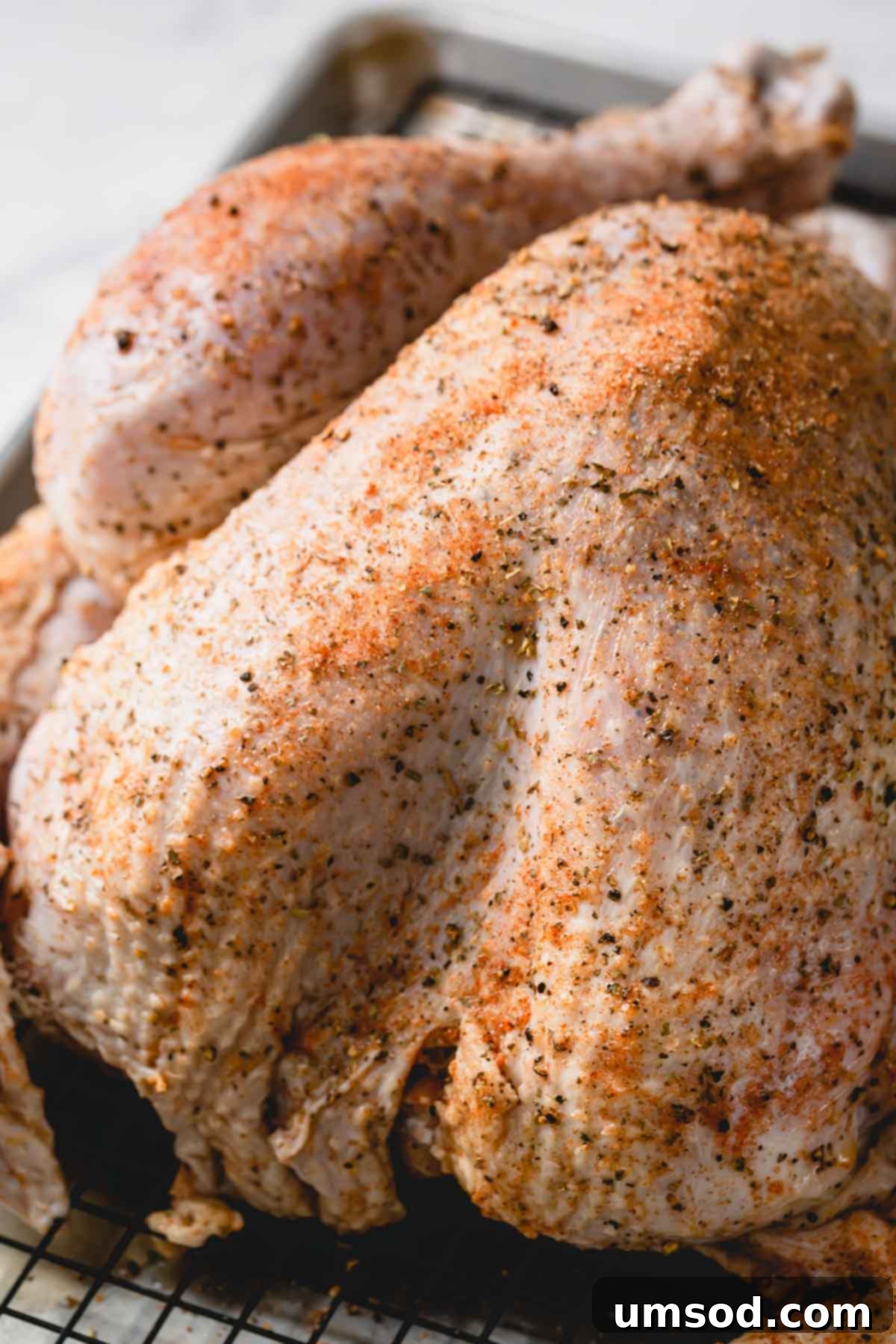
What is Dry Brining? The Science Behind the Succulence
Dry brining, at its core, is a simple yet incredibly powerful method of seasoning meat by applying salt and sometimes other aromatics directly to its surface 1 to 3 days before cooking. Unlike traditional seasoning that merely coats the exterior, dry brining allows the salt to work its magic deep within the muscle fibers of the turkey.
Here’s how it works: When salt is applied to the turkey, it initially draws out moisture from the surface through osmosis. This moisture then mixes with the salt, creating a highly concentrated brine solution. Over time, this salty liquid is reabsorbed back into the meat, carrying the salt and any added flavors with it. This process achieves two critical things:
- Enhanced Moisture Retention: The salt helps to denature the protein strands within the meat, causing them to loosen and unravel. As the salted liquid is reabsorbed, these proteins tighten around the moisture, essentially trapping it within the turkey. This means less moisture loss during the high-heat roasting process, resulting in a noticeably juicier bird.
- Deep Flavor Penetration: The salt doesn’t just make the turkey salty; it carries the flavors of any added herbs and spices deep into the meat, ensuring every bite is seasoned from the inside out. No more bland interiors!
This “pre-seasoning” step is a game-changer for holiday roasts, transforming an ordinary turkey into an extraordinary culinary masterpiece.
Dry Brining vs. Wet Brining: Why Dry Brining Reigns Supreme
For years, wet brining was considered the gold standard for achieving a moist turkey. However, dry brining has emerged as a superior method, offering numerous advantages that make it a clear winner for home cooks. If you’ve ever wrestled with a massive bucket of salty liquid, you’ll immediately appreciate the benefits of going dry.
Here’s why dry brining is unequivocally better than wet brining:
- Unmatched Crispy Skin: This is arguably the biggest advantage. Wet brining introduces a lot of excess moisture into the turkey, making it incredibly difficult to achieve that coveted golden, crackling skin. Dry brining, conversely, allows the turkey’s skin to air-dry in the refrigerator for days. This process dehydrates the skin, ensuring it renders beautifully and becomes incredibly crispy during roasting – a truly satisfying crunch with every slice!
- Superior Flavor Concentration: With wet brining, the turkey absorbs water along with the salt and seasonings, which can dilute the natural turkey flavor. Dry brining concentrates the turkey’s natural flavors while infusing it with aromatic spices, leading to a much more intense and authentic taste.
- No Mess, No Fuss, Less Space: Wet brining requires a large container, gallons of brine, and a dedicated space in your refrigerator (often a challenge around the holidays!). It’s messy to prepare, store, and dispose of. Dry brining simply requires a baking sheet with a wire rack, saving valuable refrigerator space and eliminating sticky clean-up.
- Enhanced Texture: While wet brining can add moisture, it can sometimes lead to a slightly “puffy” texture due to the excessive water absorption. Dry brining enhances moisture retention without altering the natural texture of the meat, resulting in a firm yet tender bite.
- Effortless Application: Applying a dry brine is as simple as rubbing a spice mixture onto the turkey. There’s no need to boil liquid, wait for it to cool, or worry about submerged birds.
Considering these significant advantages, embracing dry brining is a straightforward choice for anyone seeking to elevate their turkey game.
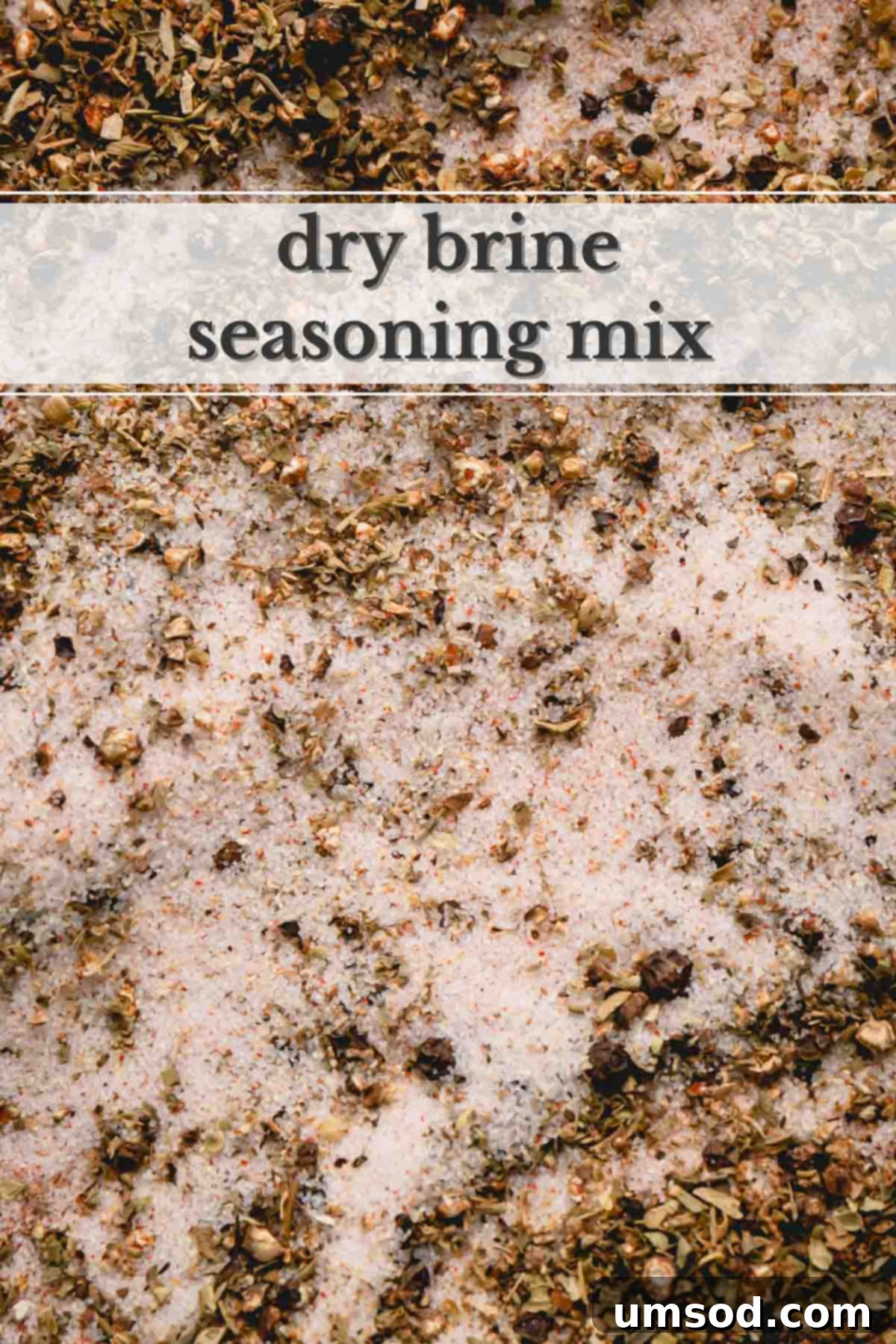
Essential Ingredients for Your Perfect Dry Brine
While the fundamental ingredient for a successful dry brine is salt, incorporating a thoughtful blend of herbs and spices will imbue your turkey with layers of complex flavor. These aromatics will infuse the meat during the brining process and release their fragrant notes beautifully during roasting.
- Kosher Salt: The Cornerstone
For dry brining, kosher salt is the absolute best choice. Its larger, flaky granules and irregular shape are ideal because they distribute more evenly across the turkey’s surface, adhere better to the meat, and dissolve at a perfect rate for optimal penetration. If kosher salt isn’t available, you can substitute with fine table salt, but remember to reduce the amount by half as table salt is denser and saltier by volume.
- Freshly Cracked Black Peppercorns
Using whole black peppercorns and crushing them just before mixing provides an unparalleled fresh, pungent aroma and flavor that pre-ground pepper simply can’t match. A mortar and pestle or a spice grinder works wonders here.
- Aromatic Dried Herbs and Spices
This is where you can truly customize your brine. The following blend offers a classic, savory profile that complements turkey beautifully, but feel free to experiment with your favorites:
- Dried Oregano: Adds a warm, earthy, slightly bitter note.
- Dried Sage: A quintessential turkey herb, offering a robust, aromatic, and slightly peppery flavor.
- Dried Thyme: Contributes a delicate, earthy, and minty undertone.
- Garlic Powder: Provides a pungent, savory depth without the moisture of fresh garlic.
- Smoked Paprika: Delivers a beautiful reddish hue to the skin and a subtle, smoky sweetness that enhances the overall flavor.
Pro Tip: Consider adding other complementary flavors like rosemary, bay leaf (crushed), onion powder, or a hint of citrus zest for an extra bright note. The goal is to build a complex flavor profile that will permeate every inch of your turkey.
How to Dry Brine a Turkey: A Step-by-Step Guide
Follow these straightforward steps to achieve a perfectly seasoned and incredibly juicy turkey with irresistibly crispy skin. This process is simple, but each step is crucial for optimal results.
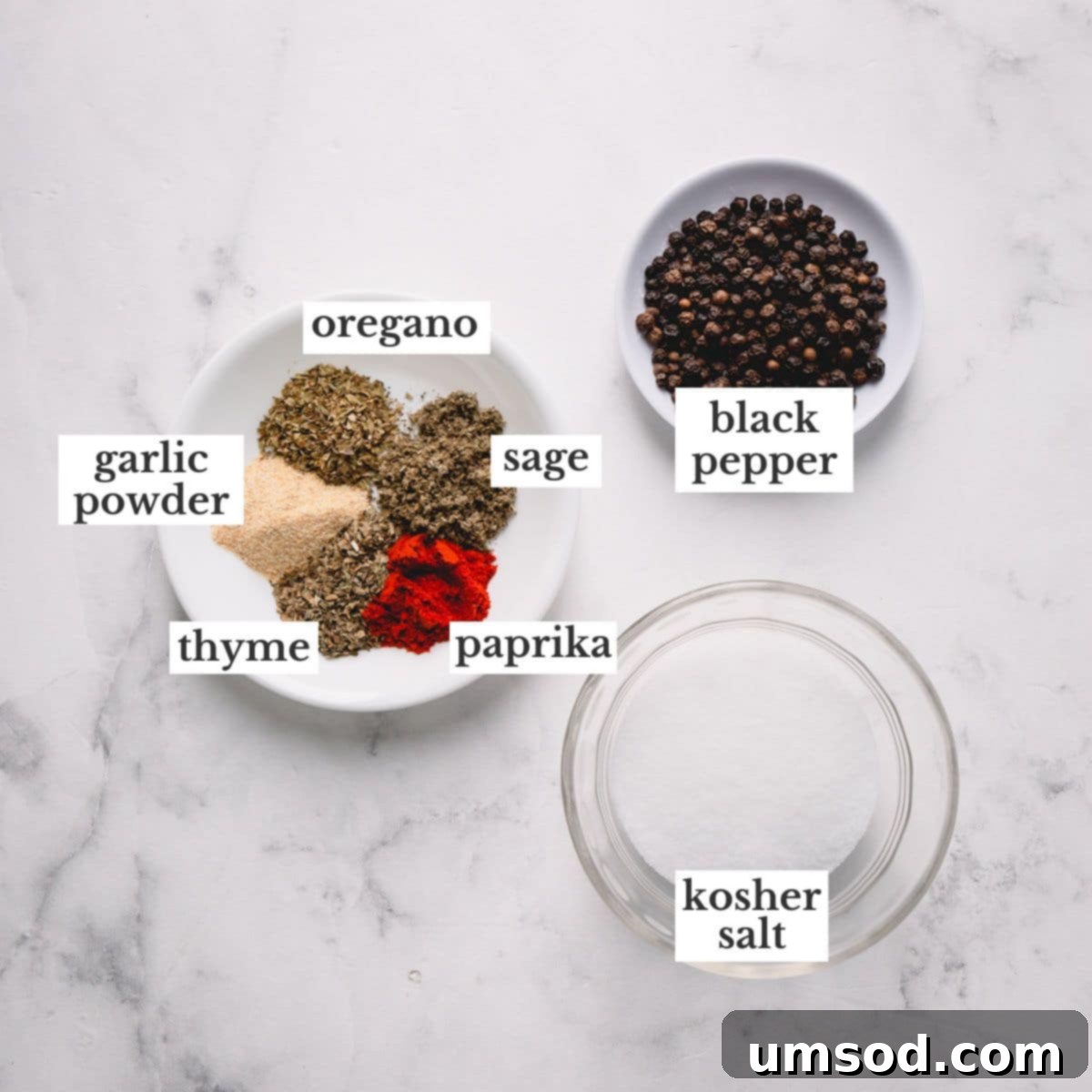
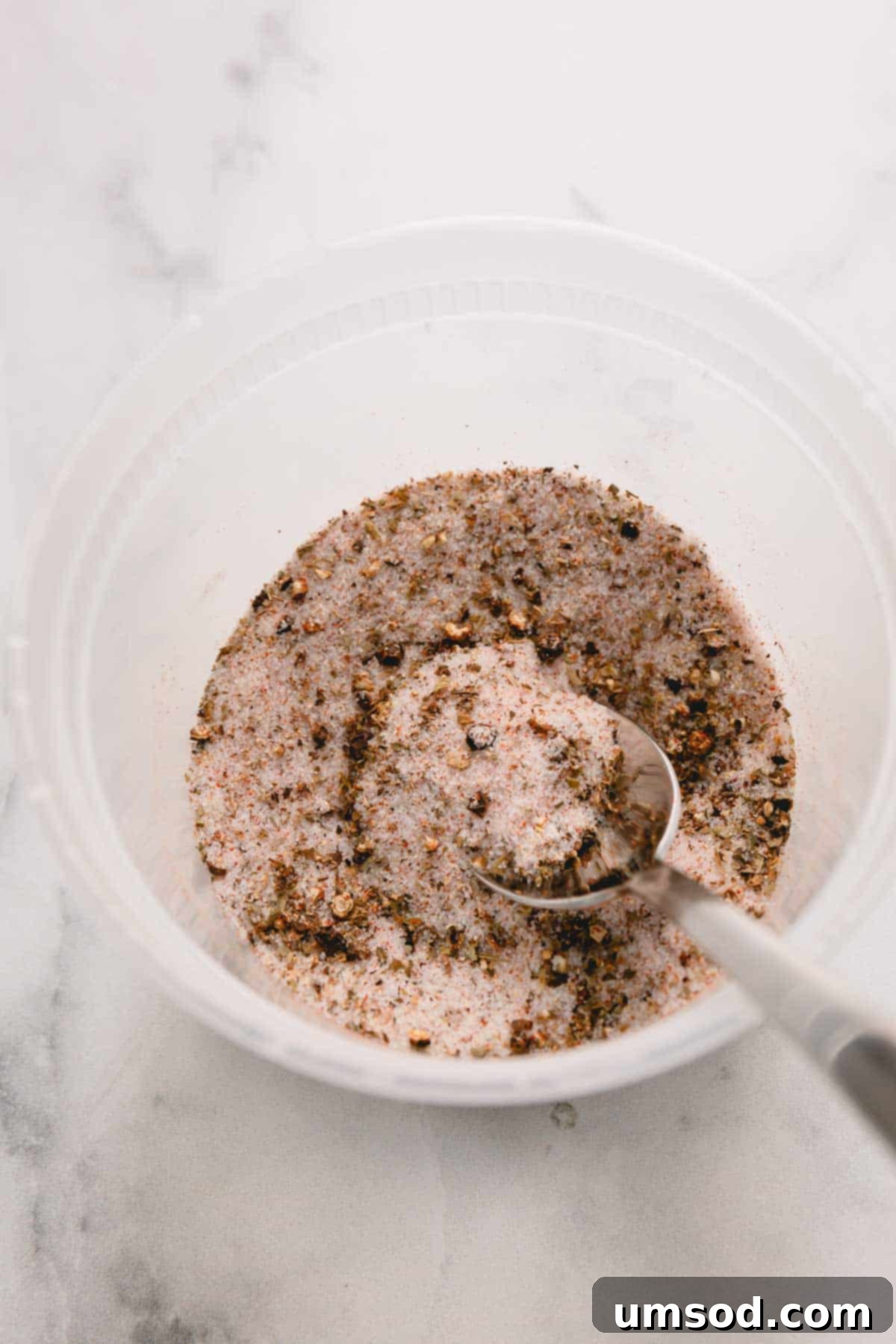
- Prepare Your Brine Mixture: In a medium bowl, combine all the dry brine ingredients (kosher salt, black peppercorns, dried oregano, garlic powder, dried sage, dried thyme, and smoked paprika). If using whole peppercorns, crush them in a mortar and pestle or a spice grinder first to release their full aroma and flavor, then add them to the other spices. Mix thoroughly until all ingredients are evenly distributed.
- Prepare the Turkey: Place your thawed or semi-thawed whole turkey on a sturdy baking sheet fitted with a wire rack. This setup allows air to circulate around the turkey and catches any drips. Using paper towels, thoroughly pat the entire surface of the turkey dry, inside and out. The drier the skin, the crispier it will become. Gently slide your hand under the breast skin to separate it from the meat, creating a pocket for seasoning.
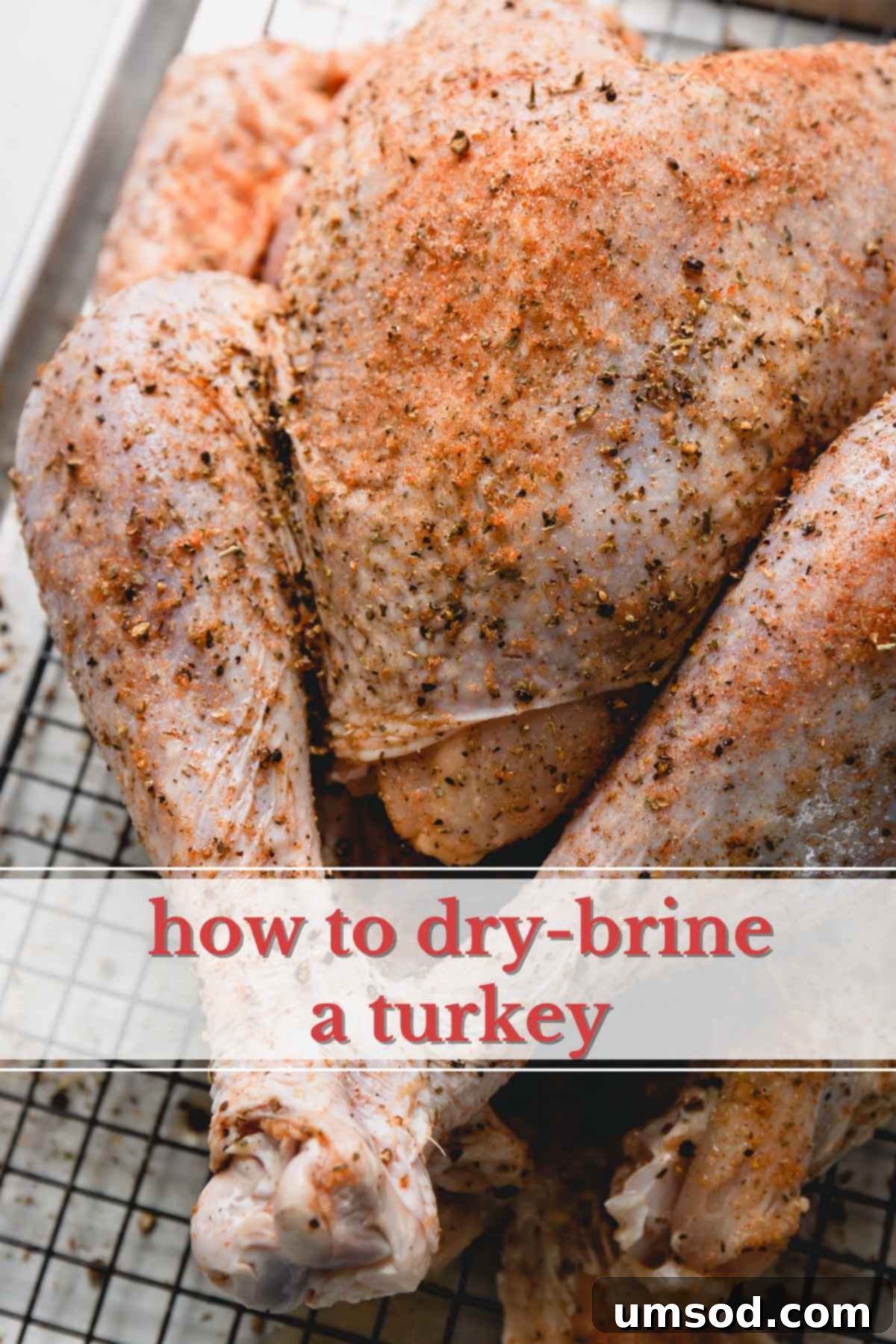
- Apply the Dry Brine: Generously rub the seasoning mix evenly all over the turkey. Be sure to get it everywhere – over the skin, inside the cavity, and crucially, under the breast skin, directly onto the meat. Pay special attention to the breast and thigh areas, as these are thicker and benefit most from direct seasoning.
- Refrigerate, Uncovered: Place the seasoned turkey back on the wire rack over the baking sheet in your refrigerator. Leave it uncovered. This critical step allows the turkey’s skin to air-dry, which is essential for achieving that sought-after crispy skin during roasting. Brine the turkey for a minimum of 24 hours, but for the best results, aim for 48 to 72 hours. The longer it brines (up to 3 days), the deeper the flavor penetration and the juicier the meat will be.
- Ready for Roasting (No Rinsing!): When you’re ready to roast your turkey, there’s absolutely no need to rinse it. Rinsing would wash away the dry, seasoned skin you worked hard to achieve, compromising the crispiness. Simply remove the turkey from the refrigerator, pat it dry one last time if there’s any surface moisture, and proceed with your favorite roasting method. You can rub it with olive oil, melted butter, or a compound butter before it goes into the oven to promote browning and add an extra layer of richness.
Top Tips for Dry Brining Success
To ensure your dry-brined turkey turns out perfect every time, keep these expert tips in mind:
- Choose the Right Turkey: Not all turkeys are created equal when it comes to brining. Always check the label! Avoid turkeys that are already “pre-brined,” “basted,” “self-basted,” “enhanced with a sodium solution,” or “kosher.” These turkeys have already been treated with salt or a saline solution, and adding more salt would result in an overly salty bird. Look for a fresh or frozen turkey with only turkey listed as an ingredient.
- Thaw Your Turkey Properly: While a semi-thawed turkey can work in a pinch, it’s best to dry brine a fully thawed turkey. This ensures the salt can penetrate the meat evenly. If your turkey is still partially frozen, make sure to use a deeper roasting pan to catch any additional moisture released during the final thawing process in the fridge. Allow adequate time for thawing in the refrigerator (approximately 24 hours per 4-5 pounds).
- Stick with Kosher Salt (or Adjust Carefully): As mentioned, kosher salt is ideal due to its crystal structure. If you absolutely must use table salt, be precise and reduce the quantity by half to prevent over-salting. Using the correct type and amount of salt is paramount for flavor and moisture retention.
- Embrace the Uncovered Refrigeration: Do not cover your turkey with plastic wrap or foil during the dry brining period. Allowing the turkey to air-dry in the refrigerator is the secret to achieving that wonderfully crispy, golden skin that is the hallmark of a perfectly roasted bird. Ensure good air circulation around the turkey.
- Patience is a Virtue: While a minimum of 24 hours will yield good results, dry brining for 48 to 72 hours (2 to 3 days) will give you the most profound flavor penetration and superior juiciness. Plan ahead to allow ample time for the salt to work its magic.
- Don’t Rinse! This cannot be stressed enough. Rinsing the turkey before roasting will not only wash away the delicious brine and surface flavor but also re-introduce moisture to the skin, undoing all your efforts for crispiness. Furthermore, the USDA recommends against washing raw poultry due to the risk of spreading bacteria.
Frequently Asked Questions About Dry Brining a Turkey
How long should you dry brine a turkey?
For optimal results, it’s best to dry brine a turkey for 3 days (72 hours). This allows sufficient time for the salt and flavors to fully penetrate the meat. If time is limited, a minimum of 24 hours will still yield a noticeable improvement in flavor and moisture.
Do you rinse off dry brine on turkey?
Absolutely not! Rinsing off the dry brine would negate the primary benefit of the method – achieving perfectly air-dried, crispy skin. The salt is meant to be absorbed, not washed away. Additionally, the USDA does not recommend washing raw turkey due to the risk of spreading bacteria in your kitchen.
What kind of turkey should you brine?
Ideal turkeys for brining are fresh or frozen birds that have not been pre-treated with saline or sodium solutions. Always check the label and avoid turkeys labeled as “pre-salted,” “basted,” “self-basted,” “enhanced,” or “kosher,” as these have already been seasoned, and adding more salt could make them unpleasantly salty. If the ingredient list specifies anything other than just “turkey,” it’s likely pre-seasoned.
How much turkey does this dry brine recipe cover?
This dry brine mix is perfectly proportioned for a 14-16 lb (6.3-7.2 kg) whole turkey. If you are preparing a larger bird, simply double the recipe for the dry brine mix to ensure adequate coverage and seasoning.
Can I use different herbs and spices in my dry brine?
Absolutely! The beauty of dry brining is its flexibility. Feel free to customize the spice blend with your favorite herbs and seasonings. Popular additions include rosemary, marjoram, ground fennel, a pinch of cayenne for a subtle kick, or even a touch of brown sugar to aid in browning and balance the saltiness (though use sparingly as it can burn).
How to Dry Brine a Turkey
By Shinee Davaakhuu
Dry brining is the easiest way to season a turkey for the juiciest and most flavorful Thanksgiving turkey! Here’s everything you need to know about dry brining!
Brine Time: 2-3 days
Total Time: 2 days 10 mins
Servings: 8-10
Comment
Print Recipe
Ingredients
- 3 tablespoons kosher salt (Note 1)
- 2 tablespoons black peppercorns (Note 2)
- 1 teaspoon dried oregano (Note 3)
- 1 teaspoon garlic powder
- 1 teaspoon dried sage
- 1 teaspoon dried thyme
- 1 teaspoon smoked paprika
- 1 whole turkey, thawed or semi-thawed (Note 4)
Instructions
- Mix all the seasoning in a bowl. (If using whole peppercorns, crush them in a mortar and pestle first to enhance flavor.)
- Place thawed or semi-thawed turkey on a baking sheet with a wire rack. Thoroughly pat the turkey dry with paper towels. Gently run your hand under the breast skin to separate it from the meat.
- Rub the seasoning mix evenly all over the turkey, including under the breast skin directly over the meat, and inside the cavity.
- Refrigerate the turkey, uncovered, for at least 24 hours or up to 72 hours.
- When ready to roast, there is no need to rinse the turkey! You may rub olive oil or compound butter over the turkey and roast it according to your preferred method.
⭐️ Did you make this recipe?
Please leave a review and let us know how you liked it!
Tips & Notes
Note 1: Kosher salt is superior for dry brining due to its large granules and unique shape, allowing for even distribution, better adhesion, and quicker dissolution. Diamond Crystal kosher salt is recommended. If substituting with table salt, reduce the amount by half (e.g., 1.5 tablespoons table salt for this recipe).
Note 2: Crushing fresh black peppercorns in a mortar and pestle maximizes their aroma and flavor. If using pre-ground black pepper, use about 1 tablespoon.
Note 3: The listed spices (dried oregano, sage, thyme, paprika, and garlic powder) are commonly available and create a delicious profile. Feel free to adapt this blend with your favorite herbs and spices.
Note 4: This dry brine amount is ideal for a 14-16 lb turkey. For larger birds, simply double the recipe for the dry mix.