Matcha 101: Your Complete Guide to Japanese Green Tea Powder, Benefits, and Brewing
Welcome to the definitive Matcha 101 guide! Are you curious about the vibrant green tea powder that has taken the world by storm? In this comprehensive article, we’ll dive deep into everything you need to know about matcha, from its rich history and unique cultivation to its incredible health benefits and how to brew the perfect cup. Whether you’re a seasoned tea enthusiast or a curious newcomer, prepare to unlock the secrets of this revered Japanese elixir and elevate your tea experience.
What is Matcha? Understanding This Unique Japanese Green Tea
Matcha is far more than just green tea; it’s a finely ground powder made from specially cultivated and processed green tea leaves. Originating in Japan, its name literally translates to “powdered tea.” Unlike traditional green teas, where leaves are steeped in hot water and then discarded, with matcha, you consume the entire tea leaf, finely powdered and suspended in water. This unique consumption method means you ingest a higher concentration of the tea’s beneficial compounds, leading to its distinctive flavor profile and potent health benefits.
The journey of matcha begins several weeks before harvest when tea bushes are covered to protect them from direct sunlight. This shading process is crucial, as it significantly boosts the chlorophyll content in the leaves, which gives matcha its vibrant emerald green color. It also increases the production of amino acids, particularly L-Theanine, which contributes to matcha’s unique umami flavor and its signature calming yet alert effect. Once harvested, the leaves are steamed to prevent oxidation, dried, and then meticulously stone-ground into the ultra-fine powder we know as matcha. This ancient preparation method ensures that every sip delivers a concentrated burst of flavor and nutrition, making matcha a truly distinct beverage.
Matcha has been an integral component of traditional Japanese tea ceremonies for centuries, deeply rooted in Zen Buddhist practices. These ceremonies, known as “Chanoyu,” emphasize harmony, respect, purity, and tranquility. While still cherished for its cultural significance, in recent years, matcha has become incredibly popular around the world, particularly in Western countries. Its versatility, vibrant color, and perceived health benefits have propelled it into mainstream culture, appearing in everything from lattes and smoothies to desserts and baked goods.
What Does Matcha Tea Taste Like? Exploring its Flavor Profile
The flavor of matcha is complex and often surprising to those unfamiliar with it. High-quality matcha typically offers a harmonious blend of vegetal, earthy, and slightly sweet notes, often described as having a pleasant “umami” richness. Umami, the fifth basic taste, translates to “savoriness” and adds a delightful depth to matcha’s profile. You might detect hints of fresh grass, spinach, or even marine notes like seaweed, all balanced by a subtle natural sweetness and a creamy, smooth mouthfeel. The presence of L-Theanine significantly reduces astringency, contributing to a much smoother, less bitter experience than many expect from green tea.
Factors influencing matcha’s taste include its grade, freshness, and preparation method. Ceremonial grade matcha, made from the youngest leaves, tends to be sweeter and less astringent, with a more pronounced umami character. Culinary grade, while still delicious, often possesses a stronger, bolder flavor profile that stands up well to other ingredients in recipes. The key is to seek out fresh, high-quality matcha to truly appreciate its nuanced and delicious taste.
Bitterness: A Key Indicator of Quality and Preparation
If your matcha tea tastes excessively bitter, it’s often an indicator of lower quality powder or improper preparation. High-quality ceremonial grade matcha should be smooth and only mildly bitter, if at all, especially when prepared correctly. Common culprits for bitterness include using water that is too hot (boiling water scalds the delicate tea leaves), using too much powder for the amount of water, or insufficient whisking that leaves clumps. Always aim for a balanced, harmonious flavor by paying attention to both the quality of your matcha and your brewing technique.
Types of Matcha: Exploring Grades and Their Best Uses
Just like fine wine or coffee, not all matcha powder is created equal. Matcha is typically categorized into different grades, primarily based on the age of the tea leaves, the part of the leaf used, and the specific processing methods. Understanding these distinctions is key to selecting the right matcha for your needs, ensuring optimal flavor and performance in your chosen application.
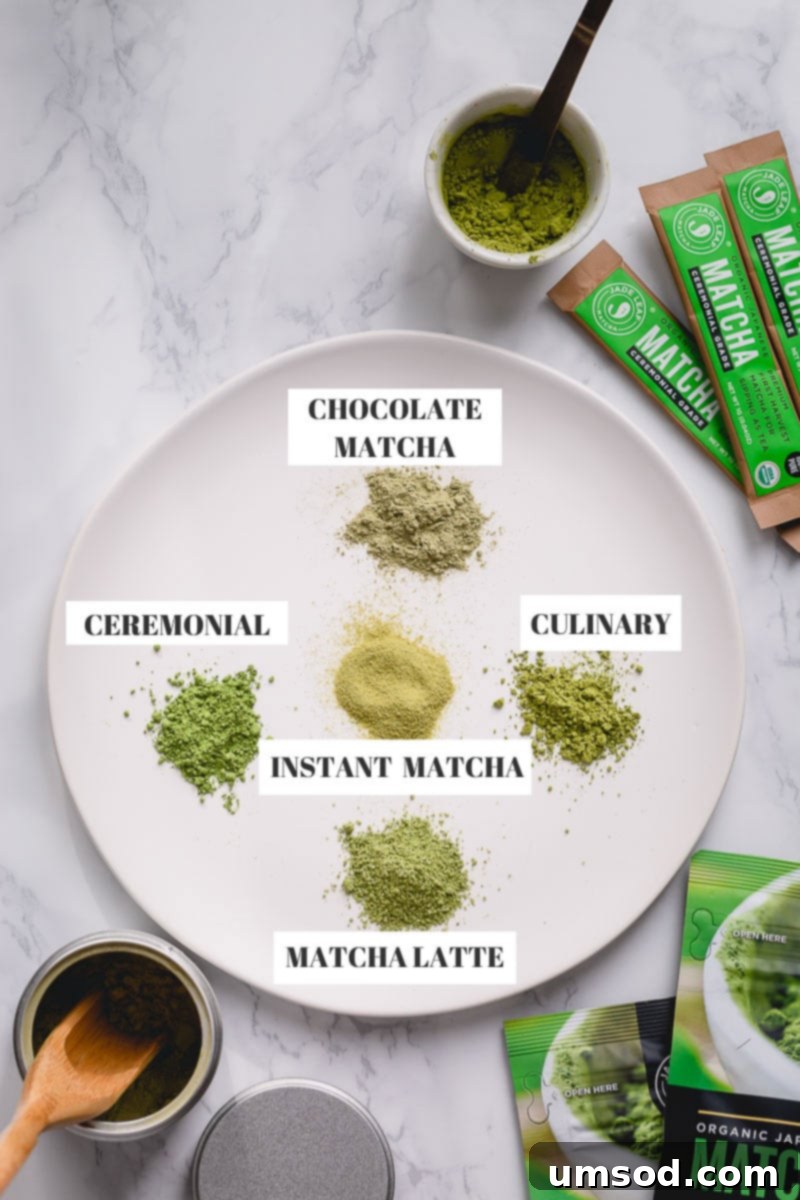
- Ceremonial Grade Matcha: This is the pinnacle of matcha quality, crafted from the youngest, most tender tea leaves picked during the first harvest (ichiban-cha) of the spring. These delicate leaves are meticulously destemmed and deveined (removing all veins and stems to create ‘tencha’) before being stone-ground into an exceptionally fine, talc-like powder. Ceremonial matcha boasts a vibrant, bright emerald green color, a remarkably smooth texture, and a naturally sweet, delicate flavor with prominent umami notes and minimal bitterness. It is specifically intended for traditional preparation as a pure tea, enjoyed on its own to appreciate its nuanced flavor profile. This is the grade used in authentic Japanese tea ceremonies and is ideal for brewing as a pure tea or for high-end culinary applications where flavor and color are paramount, such as in my matcha latte and morning boost green smoothie, ensuring a truly premium experience.
- Culinary Grade Matcha: While still a high-quality product, culinary matcha is typically made from slightly older tea leaves or leaves from later harvests (nibancha, sanbancha). It undergoes a similar shading and processing method but is designed to be combined with other ingredients. Culinary grade matcha has a stronger, more robust flavor profile, often with a slightly more astringent or bitter edge compared to ceremonial grade. Its color can range from a forest green to a yellowish-green, which is generally acceptable when mixed with other ingredients. This grade is perfect for baking, cooking, and mixing into beverages like smoothies or lattes, where its distinct flavor needs to shine through other components. It is often more affordable and readily available than ceremonial grade, making it a practical choice for everyday culinary use. Although culinary-grade matcha is widely recommended for baking, its stronger flavor and sometimes less vibrant color can result in baked goods having a brownish-green tint or a less refined matcha taste. That’s why I often prefer using ceremonial-grade matcha for delicate recipes like my strawberry matcha roll cake and matcha sponge cake, to achieve both a vivid color and superior, balanced flavor.
Beyond these primary distinctions, some brands also offer “Premium Grade” (often a step between ceremonial and culinary, suitable for daily drinking) or “Latte Grade” (typically a culinary grade specifically blended for lattes). Always check the description and sourcing to ensure you’re getting the right matcha for your intended use, as quality can vary significantly even within grades.
Other Matcha Products and Varieties
The growing popularity of matcha has led to an explosion of different matcha-infused products and convenient alternatives. While traditional matcha is pure ground tea leaves, these variations offer different uses and flavor experiences:
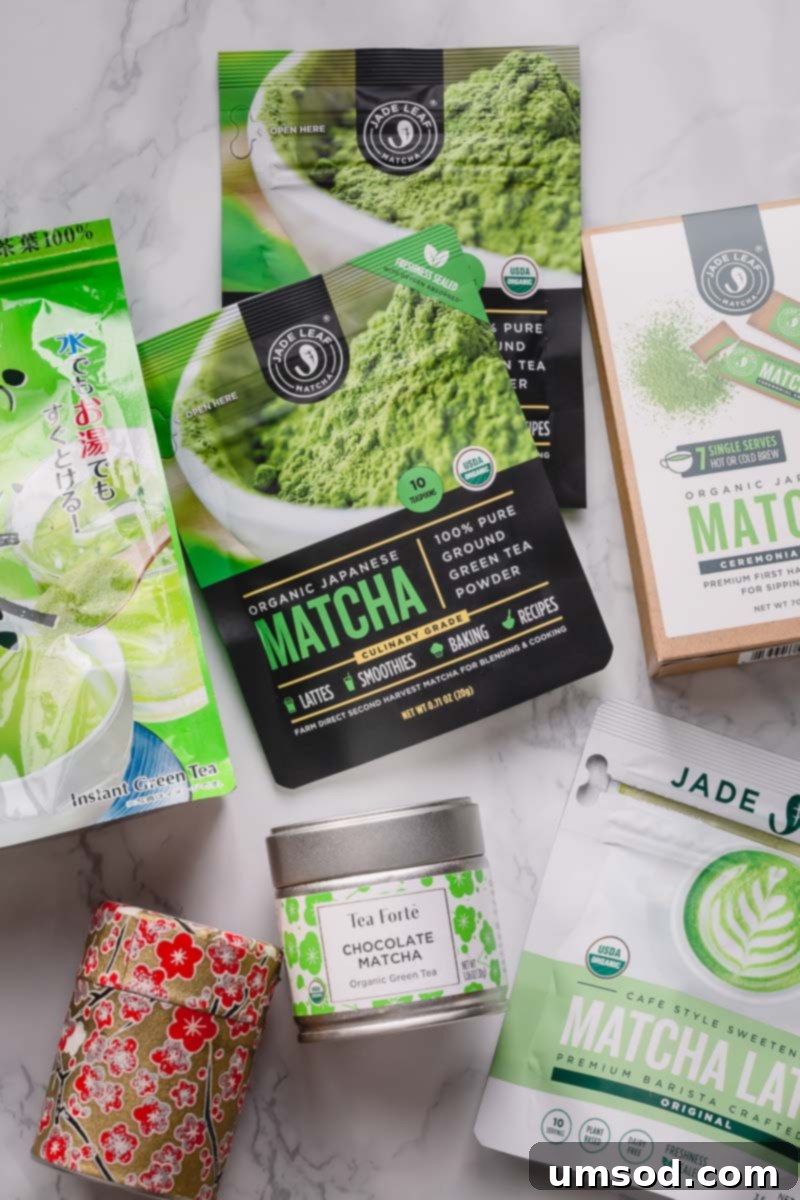
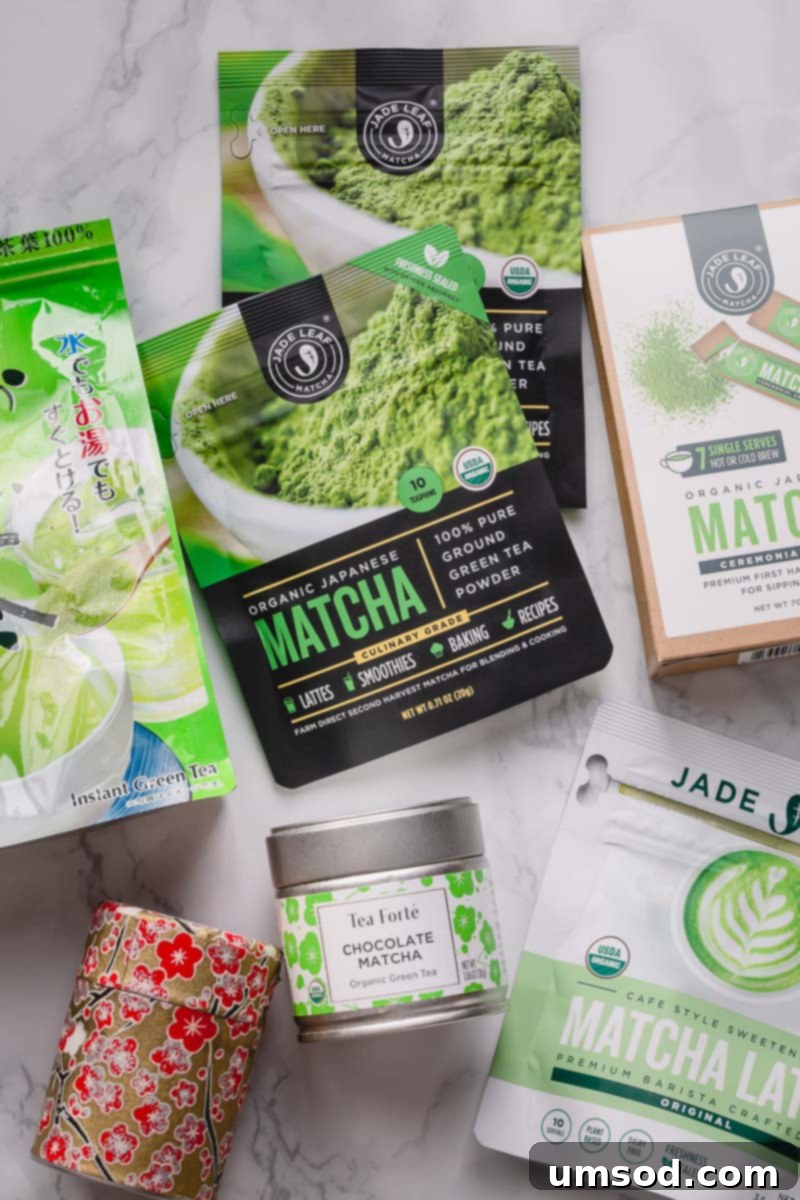
- Flavored Matcha Powders: These are matcha powders blended with natural flavorings like chocolate, vanilla, coconut, or various fruits. They offer a quick and delicious way to enjoy matcha with a twist, especially if you’re new to the taste or prefer a sweeter, more approachable profile. Flavored options, such as the Tea Forte chocolate and coconut flavors, are two of my absolute favorites for their delightful convenience and unique taste combinations. They can be a great gateway for those exploring matcha.
- Matcha Latte Mixes: Designed for ultimate convenience, these pre-mixed powders often contain matcha, a sweetener (like sugar or stevia), and sometimes milk powder. They are formulated to create quick, creamy homemade lattes with minimal effort, simply by adding hot water or milk. While undeniably convenient, always check the ingredient list to avoid excessive sugars, artificial additives, or low-quality matcha, which can diminish the health benefits and taste.
- Instant Green Tea Powder: It’s important to note that instant green tea powder is not the same as true matcha. While both are powdered green teas, instant green tea powder is typically made from lower-grade green tea leaves that are brewed, then dehydrated and often maltodextrin is added. It dissolves quickly and is usually cheaper, often used for iced drinks or recipes where the robust flavor and vibrant color of traditional matcha aren’t the primary focus. It’s a convenient option for quick drinks but generally lacks the depth, umami, and concentrated health benefits of genuine stone-ground matcha.
Finding Your Perfect Matcha Flavor Experience
If your past experiences with matcha have left you unimpressed due to a grassy or overly bitter taste, I highly encourage you to try a ceremonial-grade variety. The difference in smoothness, natural sweetness, and vibrant color can be truly surprising and might completely change your perception. Alternatively, explore flavored matcha teas, like those from Tea Forte, which can offer a more approachable entry point into the world of matcha’s unique profile. However, always make it a habit to carefully read the ingredient list for any matcha product. Many pre-mixed or flavored powders contain excessive added sugar, milk powder, or other artificial ingredients that can significantly alter the taste and nutritional value. Opt for pure matcha or those with minimal, natural additions to truly appreciate its unique characteristics and health benefits.
The Remarkable Health Benefits of Matcha Tea
Beyond its captivating flavor and cultural significance, matcha is celebrated for its impressive array of health benefits. Because you consume the entire tea leaf, matcha delivers a more concentrated dose of nutrients and antioxidants compared to traditional green tea. This makes it a true superfood packed with compounds that support overall well-being. Here are some of the key benefits you can gain from incorporating matcha into your daily routine:
- Rich in Powerful Antioxidants: Matcha is exceptionally rich in catechins, a type of plant compound with potent antioxidant properties. The most prominent catechin is epigallocatechin gallate (EGCG), which has been extensively studied for its ability to combat free radicals in the body, protect cells from oxidative damage, and reduce the risk of chronic diseases such as heart disease and certain cancers. The concentration of EGCG in matcha is significantly higher than in regular green tea.
- Boosts Brain Function and Promotes Calm Alertness: The unique combination of caffeine and L-Theanine in matcha provides a distinct type of energy and mental clarity. While caffeine offers a gentle stimulant effect, L-Theanine, an amino acid, promotes a state of relaxed alertness. It can improve focus, attention, memory, and reaction time without the jitteriness, anxiety, or crash often associated with coffee. L-Theanine also enhances alpha brain wave activity, which is linked to a calm, meditative state, fostering both productivity and tranquility.
- Enhances Metabolism and Aids in Weight Management: Studies suggest that matcha can help boost metabolism and increase fat oxidation, potentially aiding in weight management when combined with a healthy diet and regular exercise. Its thermogenic properties can slightly increase the body’s energy expenditure, making it a natural and healthy addition for those looking to support their fitness goals.
- Powerful Detoxifier: The intense shade-growing process significantly increases the chlorophyll content in matcha leaves, which is responsible for its vibrant green color. Chlorophyll is known for its powerful detoxifying properties, helping to eliminate heavy metals, toxins, and harmful chemicals from the body, thereby supporting liver function and overall internal cleansing.
- Supports Heart Health: Regular consumption of matcha may contribute to better cardiovascular health. Its catechins can help lower levels of “bad” LDL cholesterol and triglycerides, while preventing the oxidation of LDL cholesterol, a key factor in the development of heart disease. Matcha may also help maintain healthy blood pressure levels.
- Strengthens the Immune System: The catechins in matcha possess antibiotic properties that can help protect against various infections. Additionally, matcha is a source of several vitamins and minerals, including Vitamin C, selenium, chromium, zinc, and magnesium, all of which play crucial roles in supporting a robust immune system and overall cellular health.
With its impressive nutritional profile and synergistic compounds, incorporating matcha into your daily routine is a delicious and easy way to support your overall well-being and harness the power of this ancient superfood.
My Favorite Matcha Brands for Quality and Flavor
Finding a quality matcha brand can significantly impact your enjoyment and the health benefits you receive. Over the years, I’ve explored numerous brands, from those discovered during travels to Mongolia via Narita airport, to those readily available online. As my matcha consumption has grown, I’ve settled on a few trusted online brands that consistently deliver exceptional quality and flavor. These brands ensure a smooth, vibrant, and authentic matcha experience, making them perfect for both daily consumption and special occasions:
- My absolute favorite brand on Amazon – it’s incredibly smooth, intensely vibrant, and offers a perfect balance of sweetness and umami, making it ideal for daily drinking and a truly delightful ritual.
- This one is my second favorite on Amazon, consistently offering a beautiful balance of flavor and color, great for those who appreciate a rich yet subtle matcha experience.
- Another great quality matcha on Amazon that consistently provides a rich and satisfying cup, perfect for both beginners and seasoned matcha drinkers looking for reliable quality.
You truly can’t go wrong with any of these recommendations. Investing in good quality matcha is essential for savoring its true taste, maximizing its health benefits, and ensuring a consistently enjoyable brewing experience. Always look for brands that specify ceremonial grade if you plan to drink it pure.
How to Make Matcha Green Tea: A Simple Traditional Preparation
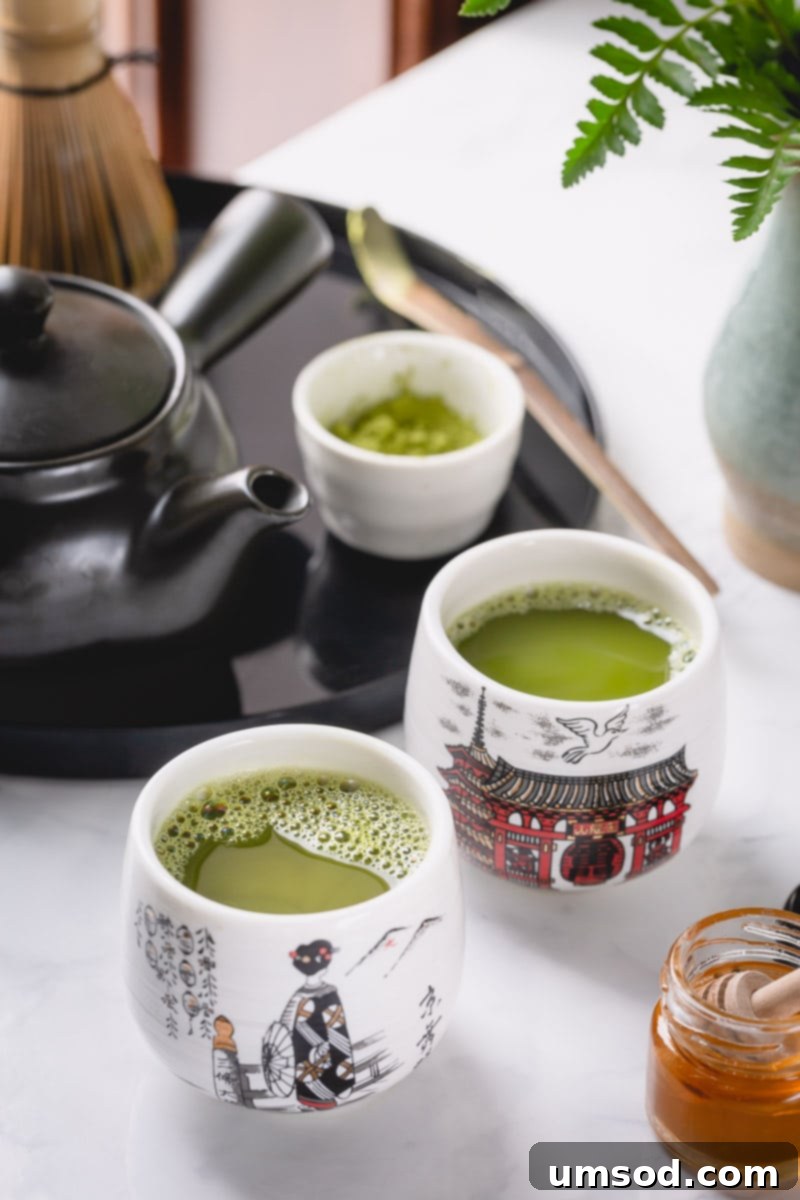
Brewing a perfect cup of matcha tea is a simple yet mindful process that can become a calming daily ritual. While it doesn’t require overly complex techniques, a few key steps and the right tools ensure a smooth, delicious, and lump-free beverage, allowing you to fully appreciate matcha’s unique qualities. Here’s a step-by-step guide to preparing traditional matcha:
- Gather Your Tools: For an authentic experience, you’ll ideally need a matcha bowl (chawan), a bamboo whisk (chasen), and a bamboo scoop (chashaku). A fine-mesh sifter is also highly recommended to prevent clumps, and a thermometer can be helpful for precise water temperature.
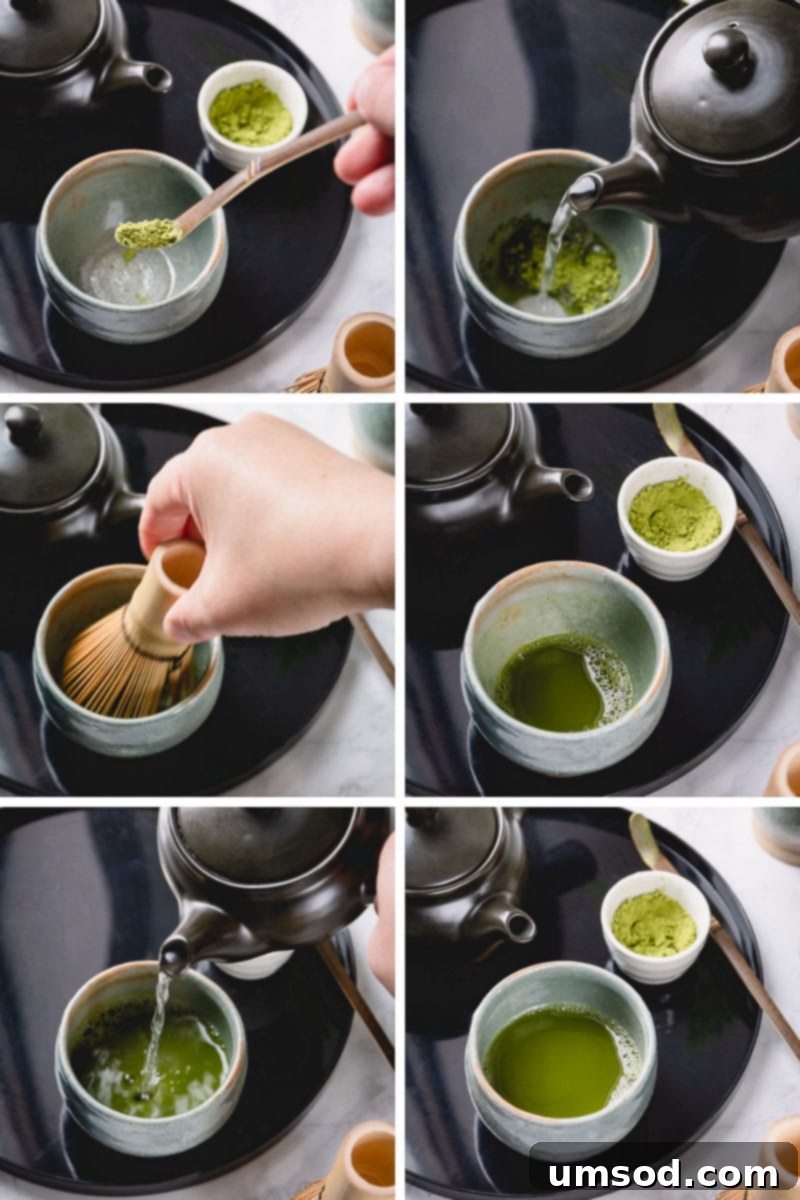
- Heat the Water to the Perfect Temperature: Boil fresh, filtered water and then allow it to cool for a few minutes. The ideal water temperature for making matcha tea is crucial and should be between 160°F and 175°F (70°C to 80°C). Using boiling water will scorch the delicate tea powder, resulting in an unpleasant bitter taste and destroying some of its beneficial compounds. You can pour the water into a tea kettle or another cup to help it cool slightly, or use an electric kettle with temperature control.
- Sift the Matcha Powder: Using a bamboo scoop (chashaku) or a regular teaspoon, measure 1-2 teaspoons (about 2-4 grams) of ceremonial grade matcha powder into a fine-mesh sifter placed over your matcha bowl. Gently sift the powder into the bowl. This crucial step removes any tiny clumps and ensures a smooth, velvety tea without a gritty texture, which is essential for a pleasant drinking experience.
- Create a Smooth Paste (Koicha Method): Add about 1 tablespoon (15ml) of the perfectly heated water to the sifted matcha powder. Using your bamboo whisk (chasen), gently work the powder and water into a smooth, thick paste. This initial whisking helps to fully dissolve the matcha and prevents lumps from forming when you add more water.
- Whisk Until Frothy (Usucha Method): Now, add the remaining hot water (about 3-4 ounces or 90-120ml, depending on your preferred strength) to the paste in your bowl. Using the bamboo whisk, rapidly whisk the mixture in a brisk “W” or “M” motion from your wrist (not your arm) for about 15-30 seconds. The goal is to create a fine, vibrant green froth with tiny, evenly distributed bubbles on the surface. Lift the whisk gently at the end to break any larger bubbles.
- Sweeten and Enjoy: If desired, add a touch of honey, maple syrup, agave, or your preferred natural sweetener and whisk briefly to combine. Sip immediately to fully appreciate the fresh, earthy, umami, and subtly sweet flavors of your freshly prepared matcha tea. Enjoy the moment of calm it brings!
Achieving Smooth and Delicious Matcha Tea Every Time
Remember, the primary keys to preventing bitter tea and achieving that coveted smooth texture are twofold: first, do NOT use boiling water! The ideal water temperature is paramount for preserving the delicate flavors and preventing scalding. Second, always sift your matcha powder to eliminate clumps and whisk thoroughly with a bamboo whisk (chasen) to create a beautiful, even froth. These small details in preparation make a significant difference in elevating your matcha experience from good to truly exceptional!
Matcha Tea FAQs: Your Common Questions Answered
The ideal ratio of matcha powder to water largely depends on your personal preference for strength and flavor, as well as the specific grade of matcha you’re using. A general rule of thumb for a standard cup of matcha (usucha) is to use 4-7 ounces (approximately 120-200ml) of hot water for every teaspoon (about 2 grams) of matcha powder. If you prefer a stronger, more concentrated tea (koicha), you might use less water, around 2-3 ounces per teaspoon. For a lighter, frothier tea, more water is typically used. Experiment with different ratios to find the perfect balance that suits your taste buds. Keep in mind that ceremonial grade matcha generally allows for a higher concentration due to its inherently smoother and less bitter taste.
Making matcha taste truly enjoyable involves a few key factors that enhance its natural sweetness and umami while minimizing bitterness. First, always invest in high-quality ceremonial grade matcha; this is the most critical step to ensure a smooth, less bitter flavor. Second, pay close attention to your water temperature, keeping it between 160°F and 175°F (70°C to 80°C), as boiling water will scorch the delicate tea. Third, sift your matcha powder thoroughly to prevent clumps and whisk it vigorously with a bamboo whisk until a smooth, frothy layer forms. Finally, don’t be afraid to experiment with natural sweeteners like a small amount of honey, maple syrup, or agave, especially when first getting acquainted with its unique flavor profile. You can also try making a matcha latte with your favorite milk for a creamier, milder taste. Matcha can be an acquired taste, so persist with different preparation methods and concentrations until you discover what you like best – whether it’s a pure tea, a creamy latte, or a blended smoothie.
Matcha powder is a delicate product that is best enjoyed fresh to preserve its vibrant color, delicate flavor, and potent nutrients. Once opened, it begins to oxidize and degrade relatively quickly. For optimal taste and freshness, it’s generally recommended to consume opened matcha powder within one month. Unopened, sealed packages can last much longer, typically 6-12 months, depending on the packaging and specific storage conditions. To preserve its quality and extend its shelf life, always store matcha in an airtight, opaque container, away from direct sunlight, heat, and moisture. Refrigeration (in an airtight container) can also extend its freshness, but be cautious of moisture condensation when taking it in and out of the fridge.
Matcha typically contains less caffeine than coffee, but its effects are often perceived differently due to the presence of L-Theanine. A standard serving (1 teaspoon or 2 grams) of matcha usually contains between 30-70 mg of caffeine, whereas a typical cup of brewed coffee can range from 95-200 mg. The L-Theanine in matcha plays a crucial role by slowing down the absorption of caffeine, leading to a more sustained, calm, and focused energy boost without the sharp jitters, anxiety, or sudden crash often associated with coffee. This makes matcha an excellent alternative for those sensitive to high caffeine intake or seeking a smoother, more prolonged alertness.
The primary difference between matcha and regular green tea lies in their cultivation, processing, and consumption methods, all of which significantly impact their flavor, nutrient profile, and health benefits. Regular green tea leaves are steeped in hot water, and the leaves are then discarded after brewing, meaning you only consume the infusion. Matcha, however, involves consuming the entire finely ground tea leaf. Matcha plants are shade-grown for several weeks before harvest, which boosts their chlorophyll and L-Theanine content. This results in matcha’s distinct vibrant emerald green color, unique umami flavor, and a much higher concentration of antioxidants, amino acids, and other beneficial compounds, offering more potent health benefits and a different kind of caffeine release compared to regular steeped green tea.
More Helpful Ingredient Guides
Expand your culinary knowledge and master essential ingredients with these additional comprehensive guides:
- Thickening Agents 101: Your Guide to Perfect Texture
- Sugar 101: 13 Most Common Types of Sugar and Their Uses
- Types of Cocoa Powder and How to Use Them for Best Results
- Types of Yeast and When to Use Them for Perfect Bakes
How to Make Matcha Tea
Shinee Davaakhuu
1
serving
Comment
Print Recipe
Ingredients
-
1 cup
water -
1-2 teaspoons
ceremonial grade matcha powder -
1 teaspoon
honey if desired
Instructions
- Prepare Water: Boil a pot of fresh water and then let it cool for a few minutes. The ideal water temperature for making matcha tea is between 160°F and 175°F (70°C to 80°C). This specific temperature is crucial to avoid burning the delicate tea powder, which would result in an unpleasantly bitter taste.
- Sift Matcha & Create Paste: In a small tea cup or traditional matcha bowl (chawan), sift 1-2 teaspoons of ceremonial grade matcha powder into the bowl. Add 1 tablespoon of the cooled, hot water to the sifted powder. Using a bamboo whisk (chasen), whisk vigorously in a circular motion until a smooth, lump-free paste forms. This initial step helps to fully dissolve the matcha and ensures a silky texture for your final tea.
- Add Water & Whisk to Combine: Now, add the remaining water (approximately 3-4 ounces or 90-120ml, adjusting for preferred strength) and any desired sweetener, such as honey, to the paste in the bowl. Continue to whisk rapidly in a “W” or “M” motion using the chasen until the tea is well combined and a fine, frothy layer appears on top. Enjoy your freshly prepared matcha immediately!
⭐️ Did you make this recipe?
Please leave a review and let us know how you liked it!
Tips & Notes
Did you make this?
Leave a rating and your feedback. Thank you!