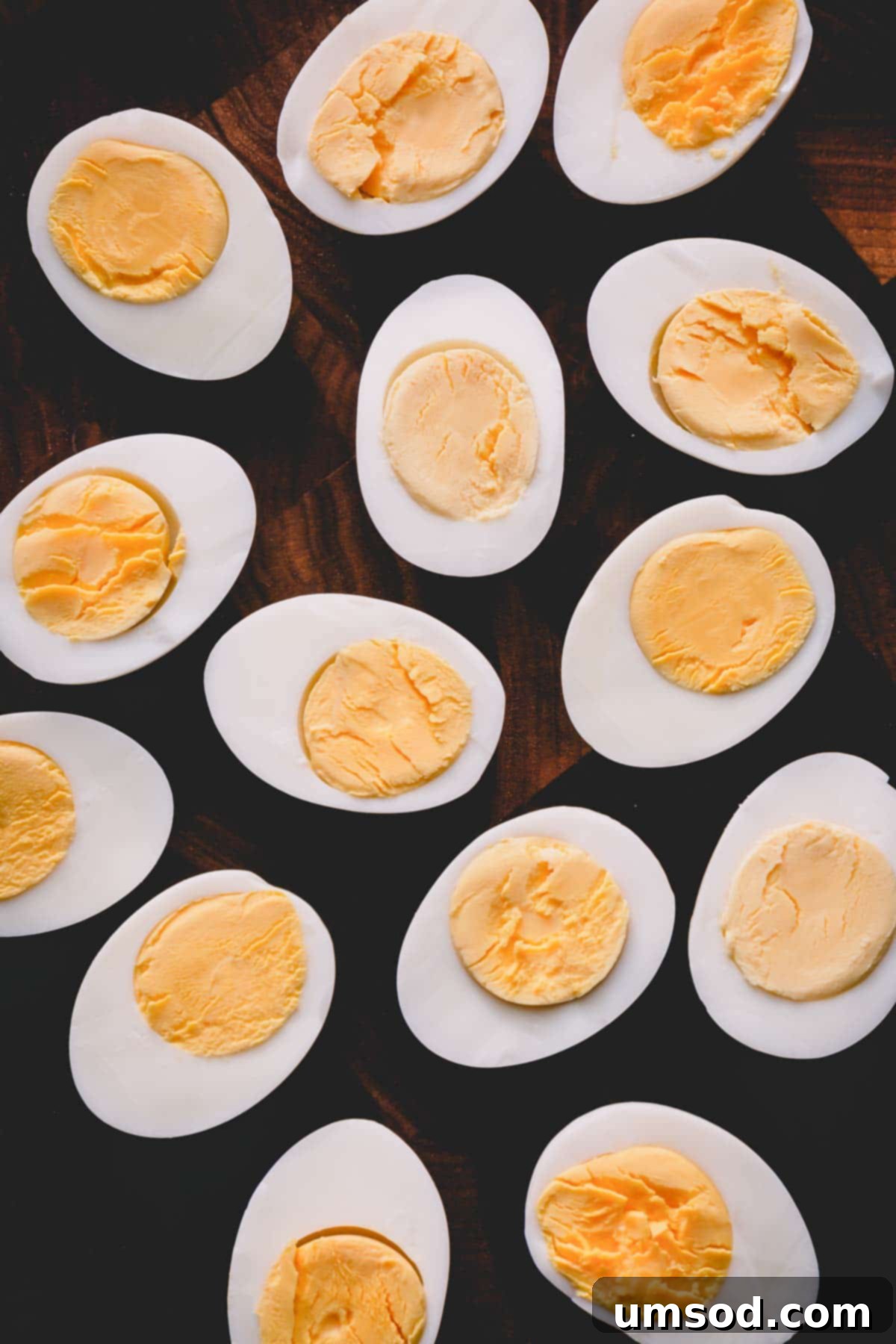
Are you tired of rubbery egg whites, chalky yolks, or that unappetizing grayish-green ring around your hard-boiled eggs? Do you dread the peeling process, especially with fresh eggs that stubbornly cling to their shells? This ultimate guide reveals a foolproof method that guarantees perfect, easy-to-peel hard-boiled eggs every single time, even with the freshest farm-laid eggs!
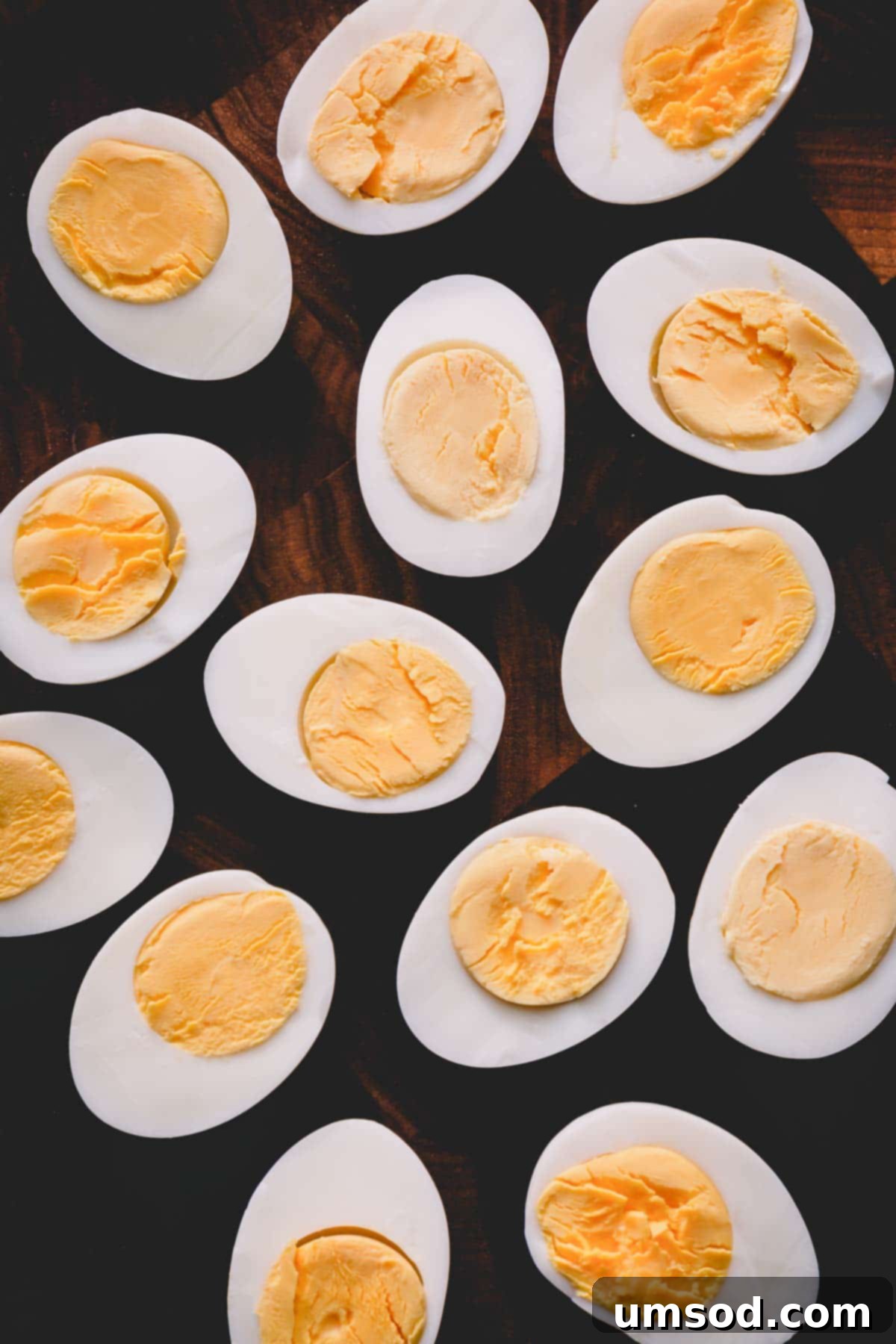
Hard-boiled eggs are a marvel of culinary simplicity and nutritional power. They’re an incredibly versatile and satisfying snack, packed with protein and essential nutrients. Most days, I love to keep it simple: just slice them in half, sprinkle with a dash of salt and freshly ground black pepper, and savor the creamy goodness.
But when the mood strikes for something a little more elegant or festive, these perfectly cooked eggs become the star of more elaborate dishes, like classic deviled eggs. The key to unlocking their full potential in any recipe lies in cooking them just right, and that’s where this method truly shines.
Why You’ll Fall in Love with This Steaming Method for Hard-Boiled Eggs
We’ve all been there: biting into a seemingly innocent hard-boiled egg only to discover a disappointing texture and appearance. Rubbery, tough whites, dry and crumbly yolks, or the dreaded sulfurous smell accompanied by a grayish-green ring – these are the hallmarks of poorly cooked eggs. This method ensures you avoid those common pitfalls and achieve consistently excellent results.
Imagine eggs with:
- Silky Smooth Egg Whites: Tender and firm, never rubbery or tough.
- Velvety, Creamy Yolks: Cooked to your desired level of doneness, from gently set to perfectly firm, always retaining a rich, vibrant yellow hue.
- No Unappealing Grayish-Green Ring: This unsightly discoloration is a sign of overcooking, which this method expertly prevents.
- Effortless Peeling: This is perhaps the most celebrated benefit! The shells slide off with remarkable ease, leaving behind perfectly smooth, unmarred egg whites.
The single most significant advantage of this cooking technique is its unparalleled ability to deliver easy-to-peel hard-boiled eggs, regardless of their age. Yes, you read that correctly – even notoriously difficult-to-peel farm fresh eggs will surrender their shells without a struggle!
My mother-in-law graciously supplies us with fresh eggs from her chickens every week, and for years, peeling them was a frustrating chore. That all changed with this method. Now, every egg emerges flawlessly, a testament to the power of steaming.

Mastering the Art: How to Cook Hard-Boiled Eggs with Steam
The secret weapon, the game-changer I’ve been hinting at, is none other than steaming! Forget everything you thought you knew about boiling eggs – no more guessing games about cold water versus hot water starts, or worrying about the exact age of your eggs. This method simplifies the entire process and delivers superior results every time.
The Simple Steaming Steps:
- Prepare the Steamer: In a medium-sized saucepan, add about one inch of water. Bring the water to a rolling boil over high heat. Once boiling, carefully place a steamer basket into the saucepan.
- Add the Eggs: Gently arrange your eggs in a single layer within the steamer basket. Avoid overcrowding, as this can hinder even cooking.
- Steam to Perfection: Cover the saucepan tightly with a lid and let the eggs steam for 8-10 minutes for a standard hard-boiled egg with a firm yolk. For very firm yolks, ideal for dishes like deviled eggs where a completely set yolk is desired, turn off the heat after the initial steaming time and let the eggs sit, still covered, for an additional 5 minutes. This gentle residual heat ensures thorough cooking without overdoing it.
- The Essential Ice Bath: Immediately after steaming, use tongs or a slotted spoon to transfer the cooked eggs into a large bowl filled with ice water. Allow the eggs to cool in the ice bath for 5-10 minutes. This crucial step not only halts the cooking process but also helps the egg contract slightly, making peeling significantly easier.
This gentle steaming process, followed by a rapid cool-down, is the key to perfectly cooked eggs with easy-to-remove shells. The steam provides a consistent, even heat that cooks the egg gently, preventing the whites from becoming rubbery and minimizing the chances of cracks.

Hard-Boiled Egg Time Chart: Achieve Your Desired Doneness
One of the beauties of the steaming method is the precision it offers, allowing you to achieve various levels of doneness for your eggs, perfectly suited for any culinary application or personal preference. The times below are for steaming eggs after the water has come to a boil and the lid is on, followed by an immediate ice bath:
- 6 minutes: For a delightful soft-boiled egg with a completely runny yolk and tender whites, perfect for dipping toast.
- 8 minutes: Yields a soft-boiled egg with a semi-set, jammy yolk – ideal for salads or as a rich topping.
- 10 minutes: Delivers a perfectly hard-boiled egg with a firm yet custardy yolk that is still creamy in texture. This is excellent for general snacking or light preparations.
- 15 minutes: For a thoroughly hard-boiled egg with a firm, completely set yolk, without any trace of green. This is achieved by steaming for 10 minutes, then turning off the heat and letting the eggs sit covered for an additional 5 minutes before transferring to an ice bath. This longer, gentle cooking time is perfect for deviled eggs, egg salad, or slicing.
Experiment with these timings to find your personal sweet spot, and remember that slight variations can occur depending on the size of your eggs and your stove’s heat intensity.

The Secret to Easy Peeling: Flawless Hard-Boiled Eggs Every Time
Once your eggs have had a good cool-down in the ice bath, they are perfectly primed for peeling. The frustration of struggling with sticky shells will be a distant memory with these simple steps:
- Crack the Shell All Over: Gently tap the cooled egg on a hard, flat surface (like your countertop) to create a network of small cracks across the entire shell. This helps to break the bond between the shell and the egg.
- Locate and Tear the Membrane: Once cracked, try to find a small air pocket, usually at the wider end of the egg. Carefully tear a small hole in the thin, delicate membrane that lies just beneath the shell. This membrane is often the culprit for stubborn peeling.
- Submerge for Seepage: Here’s a crucial tip: put the cracked egg back into the bowl of water (or a separate bowl of water) while you crack the remaining eggs. Allowing water to seep in between the shell and the membrane acts as a natural lubricant, further loosening the shell’s grip.
- Peel with Ease: With the shell thoroughly cracked and the membrane lubricated, carefully peel away the shell pieces. You might find it helpful to peel the eggs under a gentle stream of running tap water; the water helps to wash away small shell fragments and continues to assist in separating the membrane.

💡 Tip for Flawless Peeling
The act of soaking cracked eggs in a bowl of water allows moisture to permeate between the egg white and the thin inner membrane, significantly easing the peeling process and ensuring a smooth, beautiful result.
Essential Tips for Hard-Boiled Egg Success
- Don’t Skip the Ice Bath: Transferring the cooked eggs into an ice bath immediately is non-negotiable. It rapidly stops the cooking process, preventing overcooked yolks (and that green ring), and helps the egg shrink slightly, aiding in easy peeling.
- Leverage the Water Soak: For truly effortless peeling, always let your cracked eggs sit in a bowl of water for a few minutes before peeling. Alternatively, peel them under a gentle stream of running tap water.
- Timing is Key for Peeling: Hard-boiled eggs are easiest to peel right after their ice bath. If you plan to make deviled eggs or need perfectly peeled eggs for a recipe, aim to cook and peel them right before you need them.
- Fresh Eggs are Welcome: While fresh eggs are notoriously difficult to peel using traditional boiling methods, the steaming technique completely bypasses this challenge. Feel free to use your freshest farm eggs; they will peel beautifully!
- Avoid Overcrowding: Ensure your steamer basket is not too full. Overcrowding can lead to uneven cooking and potentially longer steaming times. Cook in batches if necessary.
- Proper Equipment: A good steamer basket (either a collapsible one or a fixed insert) is essential. Tongs are also helpful for carefully transferring eggs to and from the hot steamer and ice bath.
Storing Your Perfect Hard-Boiled Eggs
Proper storage is crucial to keep your hard-boiled eggs fresh and safe to eat. Always store them in the refrigerator:
- Peeled Eggs: Once peeled, store your hard-boiled eggs in an airtight container with a damp paper towel to maintain moisture. They will stay fresh for up to 3 days.
- Unpeeled Eggs: Unpeeled hard-boiled eggs, still in their shells, can be stored in the refrigerator for up to 1 week. This makes them a fantastic make-ahead component for healthy meals and snacks.
Frequently Asked Questions About Hard-Boiled Eggs
The grayish-green ring around the yolk of a hard-boiled egg, while harmless, is visually unappealing and often indicates overcooking or boiling at too high a temperature. To prevent this, precisely follow the steaming times provided, and most importantly, immediately transfer the cooked eggs to an ice bath to stop the cooking process.
Absolutely, yes! In fact, this steaming method is particularly celebrated for its effectiveness with farm fresh eggs. Fresh eggs are typically harder to peel due to the stronger bond between the albumen and the inner membrane, but steaming consistently produces easy-to-peel results, making it the preferred method for home cooks who have access to just-laid eggs.
A simple spin test can tell you if an egg is cooked. Place the egg on a flat surface and give it a quick spin. If it spins easily and rapidly, it’s hard-boiled. If it wobbles or spins slowly, it’s likely still raw or only partially cooked.
Hard-boiled eggs are a powerhouse of nutrition! They are an excellent source of high-quality protein, which helps with satiety and muscle repair. They also contain essential vitamins and minerals like Vitamin D, B12, selenium, and choline, which supports brain health. A single large hard-boiled egg typically contains around 70-80 calories, 6 grams of protein, and 5 grams of healthy fats.
Delicious Recipes for Using Your Perfect Hard-Boiled Eggs
Beyond simply enjoying this protein-rich snack with a sprinkle of salt and pepper, perfectly cooked hard-boiled eggs are incredibly versatile and can elevate a multitude of dishes:
- Deviled Eggs: The ultimate party appetizer! Explore variations from classic deviled eggs to gourmet versions like roasted red pepper, smoked salmon, lobster, chicken liver pate, or curry deviled eggs. The possibilities are endless!
- Scotch Eggs: A delicious British classic featuring a hard-boiled egg wrapped in sausage meat and deep-fried.
- Hearty Salads: Add sliced or chopped hard-boiled eggs to Russian Potato Salad, Amish Potato Salad, or a vibrant Spring Cobb Salad for extra protein and texture.
- Creamy Egg Salad: A timeless sandwich filler or topping, made even better with perfectly cooked eggs.
By the way, have you ever tried soft-boiled quail eggs? They make for surprisingly delightful and elegant snacks!
Easy Peel Hard-Boiled Eggs
A foolproof method to cook perfect hard-boiled eggs every time, ensuring easy peeling even with farm-fresh eggs.
Comment
Print Recipe
Ingredients
- 6 large eggs
Instructions
- In a saucepan, bring about an inch of water to a boil.
- Place a steamer basket in and add the eggs. Cover with a lid and let the eggs steam for 8-10 minutes. (Refer to the time chart in the article above for desired doneness.)
- For hard-boiled eggs with very firm yolks, turn off the heat after steaming and let them sit for an additional 5 minutes, still covered.
- Immediately transfer the cooked eggs into a bowl of ice water and let them cool for 5-10 minutes.
To peel the eggs:
- Gently tap the cooled eggs on a hard surface to crack the shell all over. If possible, carefully tear a small hole in the thin membrane under the shell.
- Then, place the cracked egg back into the water while you crack other eggs. This allows water to seep in between the egg and the thin membrane, facilitating easy peeling.
- Carefully peel the shells to reveal flawless hard-boiled eggs. Peeling the eggs under running water can also be very helpful.
⭐️ Did you make this recipe?
Please leave a review and let us know how you liked it!
Tips & Notes
For detailed cooking times for different yolk consistencies and comprehensive storing tips, please refer to the “Hard-Boiled Egg Time Chart” and “Storing Tips” sections earlier in this article.
Nutrition
- Calories:
- 63 kcal
- Carbohydrates:
- 1 g
- Protein:
- 6 g
- Fat:
- 4 g
- Sugar:
- 1 g
- Sodium:
- 62 mg
Did you make this?
Leave a rating and your feedback. Thank you!
This post was originally published on March 22, 2016, and updated on April 11, 2022.