
Welcome to the exquisite world of Sesame Crusted Seared Ahi Tuna, a dish that effortlessly marries sophisticated dining with the ease of a weeknight meal. Imagine serving a restaurant-quality delicacy that takes less than 15 minutes to prepare, yet leaves an unforgettable impression. This recipe isn’t just about cooking; it’s about transforming simple ingredients into a culinary masterpiece, celebrated for its delicate texture, rich flavor, and stunning presentation. Whether you’re a seasoned chef or a home cook looking to impress, this seared Ahi tuna will become a cherished addition to your repertoire.
Why You’ll Adore This Seared Ahi Tuna Recipe
This seared Ahi tuna recipe transcends expectations, offering a symphony of textures and flavors that will captivate your palate. Here are just a few reasons why this dish is an absolute must-try:
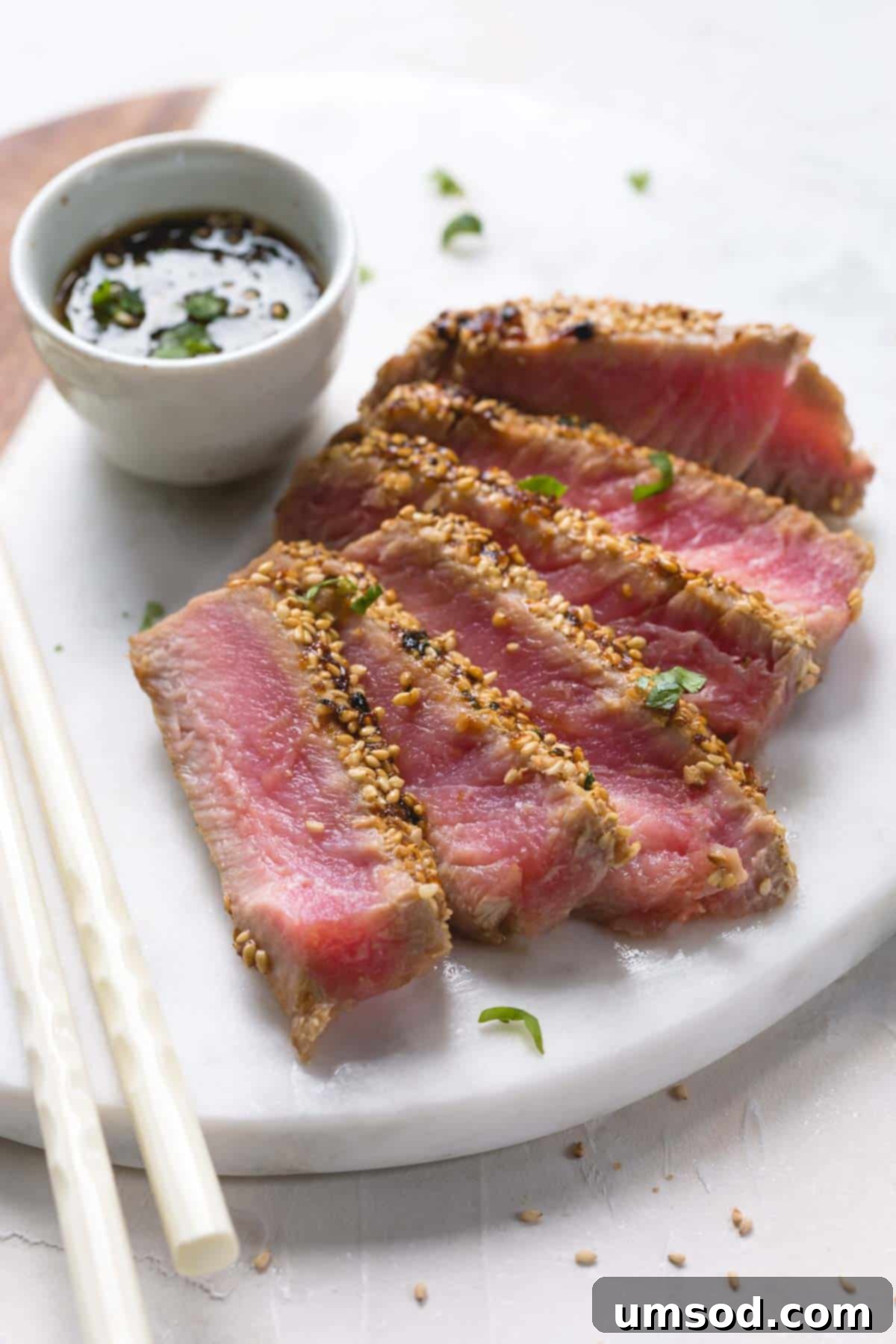
- Silky, Velvety Texture: When cooked to a perfect medium-rare, the inside of the tuna steak boasts a buttery, melt-in-your-mouth tenderness that is simply unparalleled. It’s a sublime experience that highlights the natural richness of the fish.
- Addictively Crispy Sesame Crust: The toasted sesame seeds form a golden, crunchy exterior that provides a delightful textural contrast to the tender tuna. Their nutty aroma and flavor are irresistible, adding depth and complexity to every bite.
- Burst of Flavor from a Simple Dipping Sauce: A thoughtfully crafted dipping sauce elevates this dish from delicious to extraordinary. Its harmonious blend of savory, sweet, and tangy notes perfectly complements the tuna, ensuring a flavorful explosion with each dip.
- Effortlessly Elegant Presentation: Despite its quick preparation, seared Ahi tuna looks incredibly gourmet. The vibrant red interior, contrasting with the golden sesame crust, makes for a visually stunning dish that’s perfect for entertaining or a special weeknight treat.
- Remarkably Quick and Easy: From prep to plate, this recipe comes together in under 15 minutes. It’s the ideal solution for busy evenings when you crave something nutritious, delicious, and hassle-free.
- Healthy and Nutritious: Ahi tuna is a fantastic source of lean protein, omega-3 fatty acids, and essential vitamins and minerals, making this dish a smart choice for a health-conscious lifestyle.
Understanding Ahi Tuna Steak: A Culinary Delight
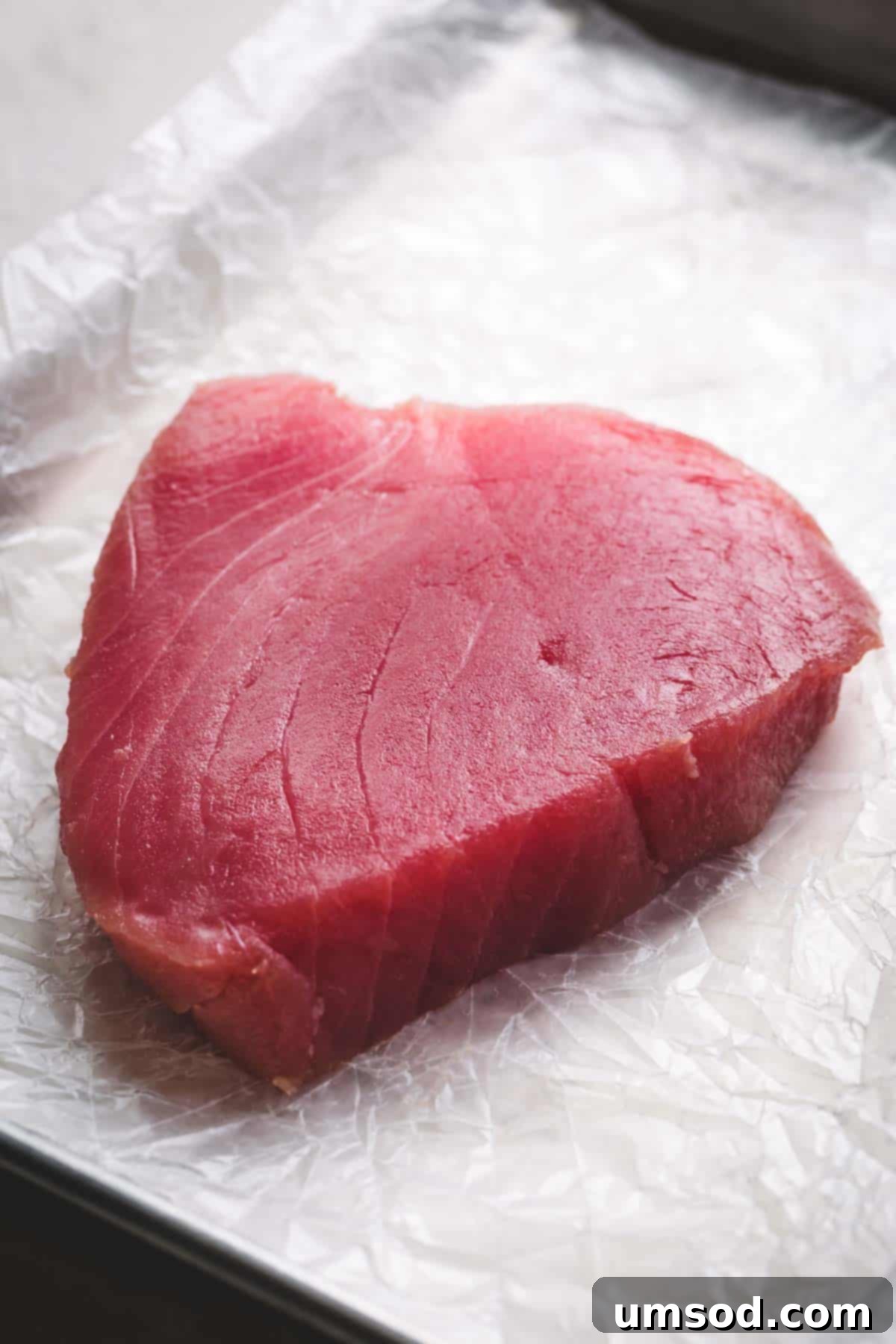
Ahi tuna is a term commonly used in the culinary world, particularly in Hawaiian cuisine, to refer to two distinct species of tuna: yellowfin tuna (Thunnus albacares) and bigeye tuna (Thunnus obesus). While both are prized for their firm texture and rich flavor, they have subtle differences that can influence your dining experience.
Yellowfin Tuna: More widely available in most grocery stores and fish markets, yellowfin tuna typically has a leaner profile and a milder, almost sweet flavor compared to bigeye. Its flesh ranges from pink to deep red, firming up beautifully when seared. It’s a versatile fish that holds up well to various cooking methods, though searing to medium-rare is arguably its most celebrated preparation.
Bigeye Tuna: Often considered the more premium of the two, bigeye tuna is known for its higher fat content, which contributes to an even richer, more buttery flavor and a supremely tender texture. Its flesh is usually a deeper red, similar to beef. While less common than yellowfin, bigeye is highly sought after for sushi and sashimi due to its superior quality.
For this sesame-crusted seared Ahi tuna recipe, both yellowfin and bigeye varieties will yield excellent results. The key is to source high-quality, “sushi-grade” tuna, ensuring it’s safe for consuming rare. This designation typically means the fish has been caught, handled, and flash-frozen according to strict guidelines to eliminate parasites, making it suitable for raw or rare consumption.
Beyond its delicious taste, Ahi tuna is a nutritional powerhouse. It’s packed with protein, making it an excellent choice for muscle building and satiety. It’s also rich in omega-3 fatty acids, which are crucial for heart health, brain function, and reducing inflammation. Additionally, Ahi tuna provides a good source of B vitamins, selenium, and magnesium, contributing to overall well-being. Incorporating this flavorful fish into your diet is a delicious way to boost your nutrient intake.
Preparing Ahi Tuna for a Flawless Sear
Achieving that perfect crust and tender interior starts with proper preparation. Follow these steps carefully to ensure your Ahi tuna steaks are ready for searing:
- Thaw Properly (if frozen): If using frozen tuna, ensure it’s completely thawed using one of the safe methods outlined below. Proper thawing maintains the fish’s texture and prevents bacteria growth.
- Pat Dry Thoroughly: This is a crucial step! Use paper towels to pat the tuna steaks completely dry on all sides. Excess moisture prevents a good sear, resulting in a steamed rather than crispy crust.
- Season Generously: Lightly season both sides of the tuna steaks with coarse kosher salt and freshly ground black pepper. This enhances the natural flavors of the fish.
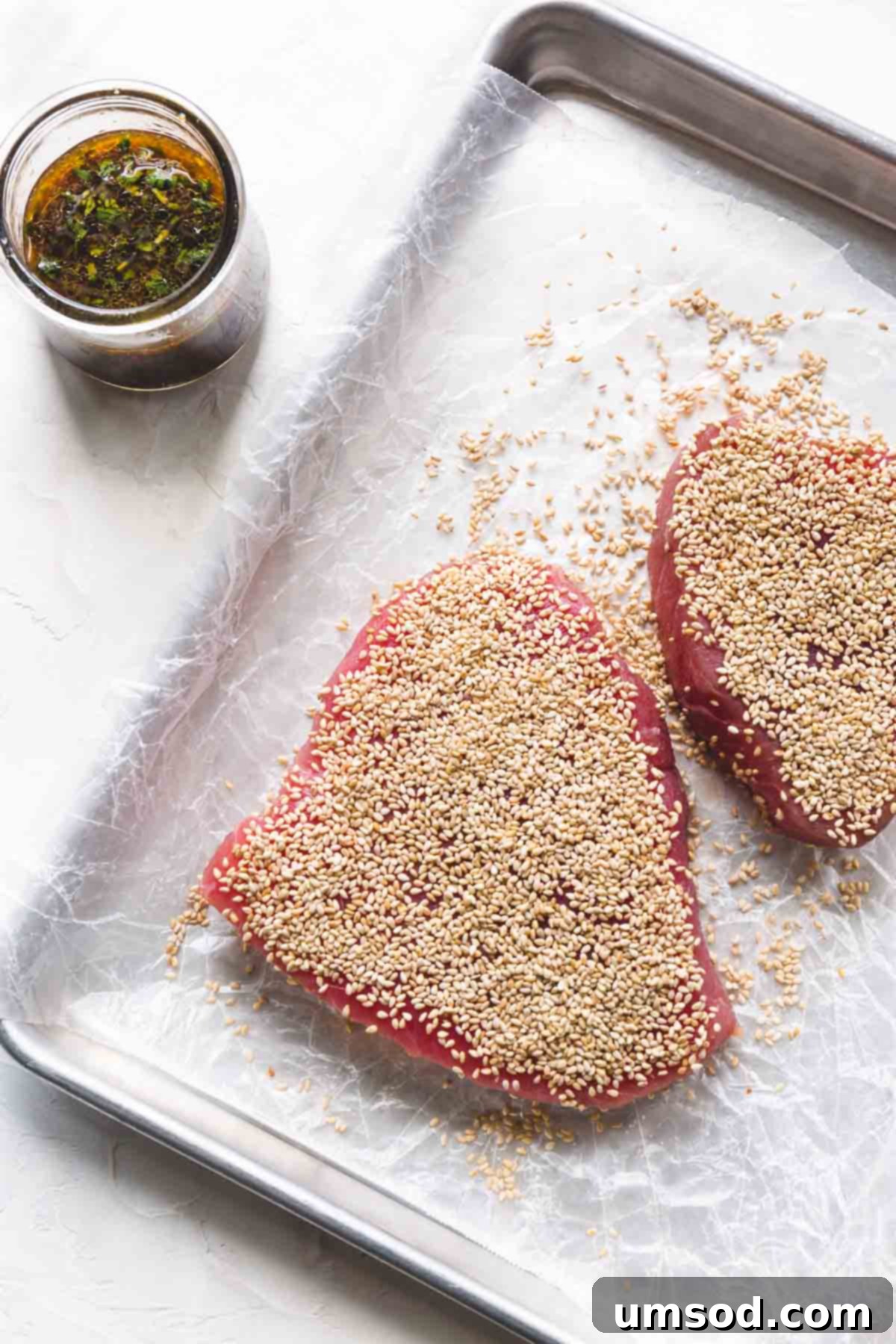
- Create the Sesame Crust: Place your toasted sesame seeds (a mix of white and black sesame seeds adds visual appeal) on a plate or in a shallow dish. Press each side of the tuna steak firmly into the sesame seeds, ensuring an even and thorough coating. The drier the tuna, the better the seeds will adhere.
Mastering the Sear: Achieving Ahi Tuna Perfection
Searing Ahi tuna is an art of speed and heat. The goal is to achieve a beautiful, golden-brown sesame crust while keeping the interior exquisitely rare or medium-rare. Here’s how to master it:
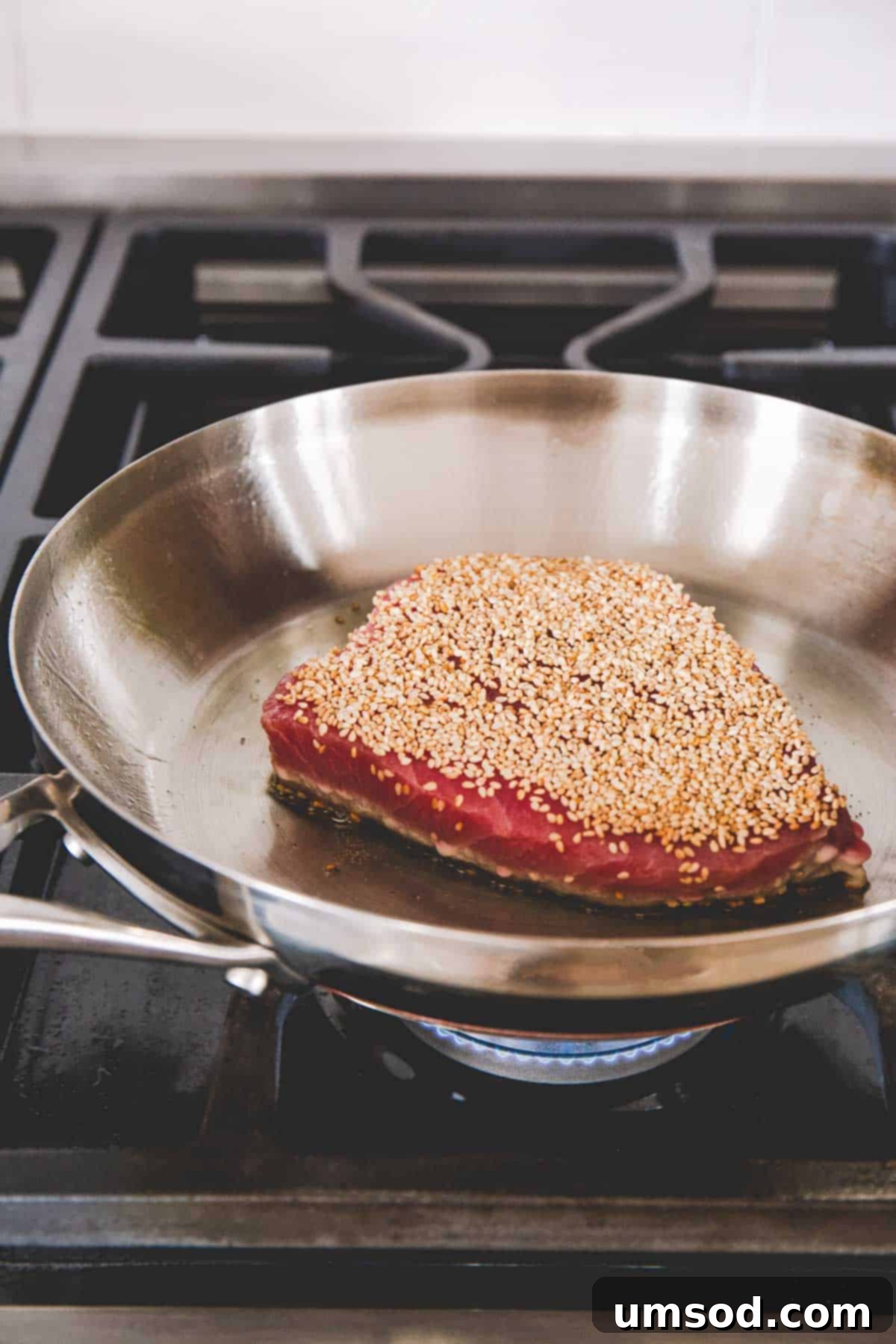
- Heat Your Skillet: Place a heavy-bottomed skillet – ideally stainless steel or cast iron – over medium-high to high heat. Allow the pan to heat thoroughly for 2-3 minutes until it’s very hot.
- Add Oil: Pour 1-2 tablespoons of a high smoke point oil, such as avocado oil or grapeseed oil, into the hot skillet. Swirl it around to coat the bottom. The oil should shimmer and almost smoke, indicating it’s ready for searing.
- Sear the Tuna Steaks: Carefully place the sesame-crusted tuna steaks into the hot oil. You should hear a satisfying sizzle. Sear for approximately 1 to 1.5 minutes per side for a perfect medium-rare finish. For a rare interior, sear for closer to 1 minute per side. If you prefer a more cooked tuna, you can extend the cooking time slightly, but be cautious not to overcook, as tuna can quickly become dry. The edges should show a distinct color change, signaling the doneness.
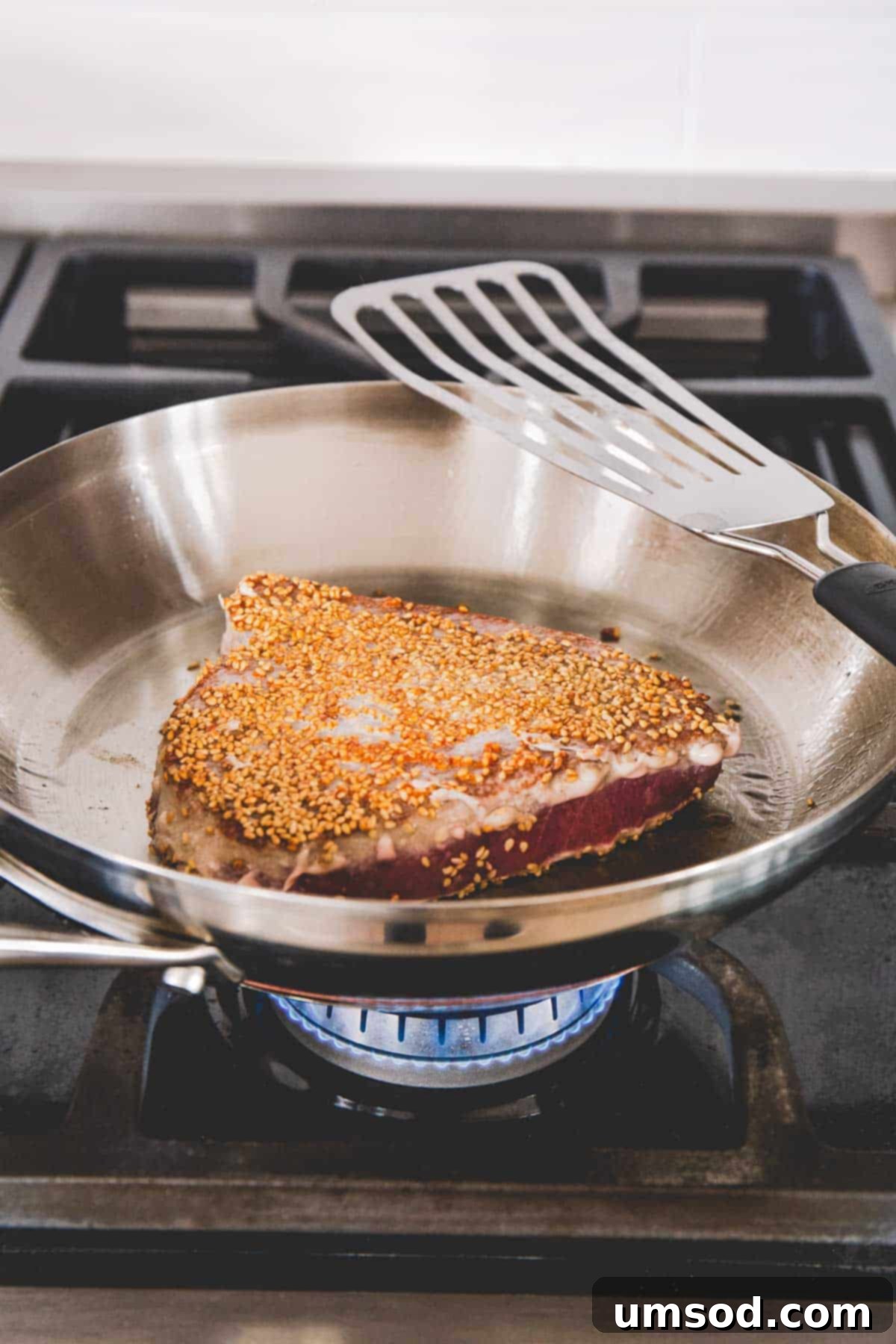
Pro Tip: The Right Pan Matters
For the best searing results, a heavy-duty stainless steel or cast iron skillet is highly recommended. These materials retain heat exceptionally well and distribute it evenly, ensuring a consistent and beautiful crust on your tuna steaks.
- Glaze with Dipping Sauce: In the final 30 seconds of cooking, carefully pour about half of your prepared dipping sauce into the skillet around the tuna steaks. Allow the sauce to bubble and slightly reduce, creating a luscious glaze. Flip the steaks once or twice to coat both sides in this flavorful sauce. This step adds an incredible depth of flavor and a beautiful sheen to your tuna.
- Rest and Serve: Immediately remove the seared tuna steaks from the skillet onto a clean cutting board. While tuna doesn’t require extensive resting like beef, a minute or two allows the juices to redistribute slightly. Slice the tuna against the grain into ½-inch thick pieces and arrange them artfully on a platter. Serve immediately with the remaining dipping sauce on the side.
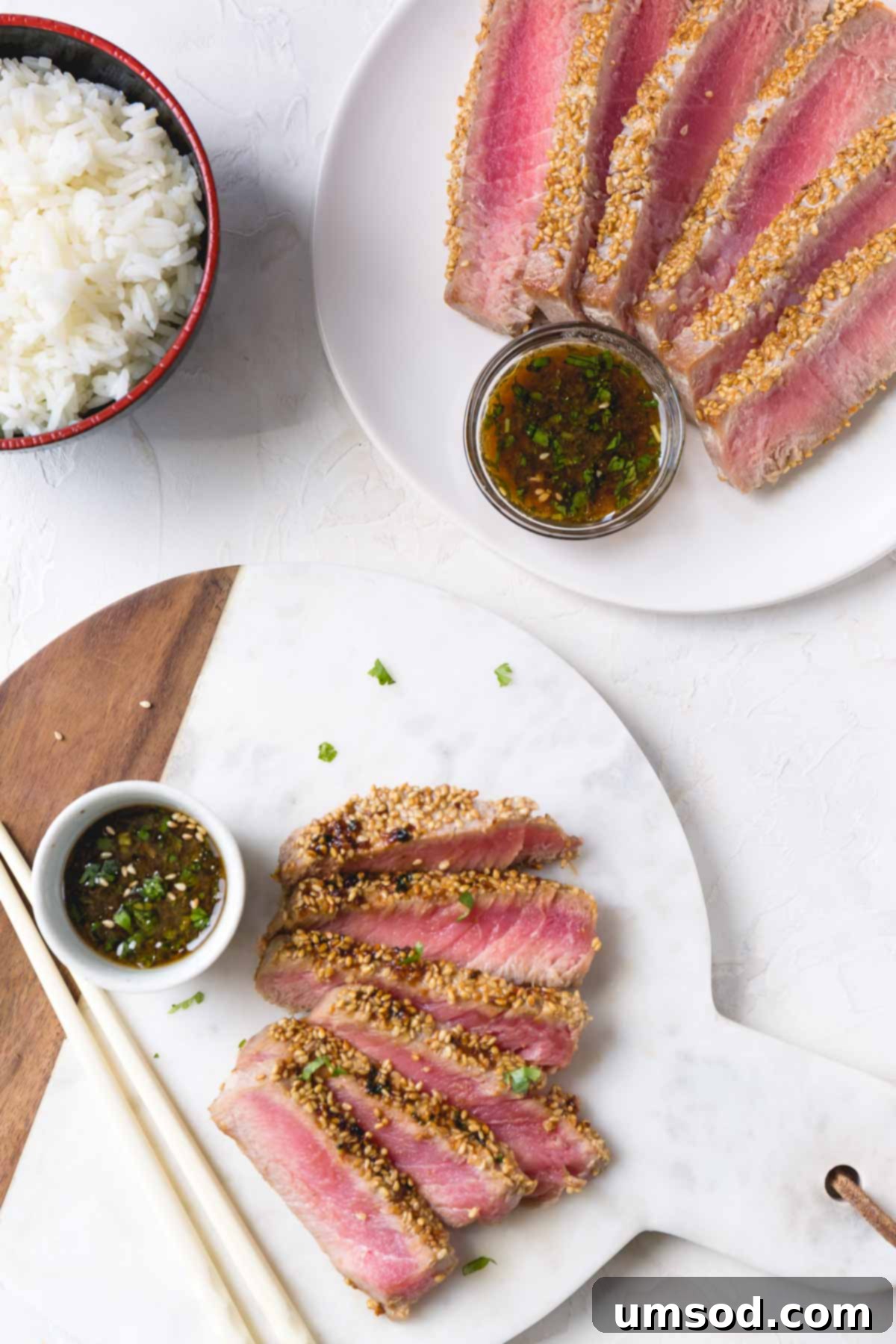
The Irresistible Dipping Sauce: A Symphony of Flavors
No seared Ahi tuna dish is complete without a vibrant and flavorful dipping sauce. This recipe features a simple yet dynamic sauce that perfectly complements the rich tuna and nutty sesame crust. Here’s a breakdown of its components and why they work so well:
- Fresh Cilantro Leaves: Adds a bright, herbaceous, and slightly citrusy note that cuts through the richness of the tuna.
- Fresh Ginger: Provides a warming, spicy, and aromatic kick, offering a traditional Asian-inspired flavor profile.
- Garlic Cloves: Infuses the sauce with a pungent, savory depth that is essential for balance.
- Soy Sauce: The umami backbone of the sauce, delivering savory, salty notes that enhance all other ingredients.
- Water: Thins the sauce slightly, ensuring a pourable consistency and balancing the intensity of the soy sauce.
- Toasted Sesame Oil: Adds a wonderfully nutty, smoky aroma and flavor that ties in beautifully with the sesame crust on the tuna.
- Brown Sugar or Honey: Introduces a touch of sweetness, balancing the salty and pungent elements and creating a well-rounded flavor profile.
To prepare this sauce, simply finely chop the cilantro, grate the ginger and garlic using a microplane for maximum flavor release, and combine all ingredients in a small bowl. Whisk until well combined. The beauty of this sauce lies in its simplicity and the fresh, bold flavors it brings to the table. You can adjust the sweetness or spice level to your preference, making it a truly versatile accompaniment.
Safety First: Enjoying Ahi Tuna Responsibly
When it comes to enjoying raw or rare fish, like our beautifully seared Ahi tuna, understanding and mitigating potential risks is paramount. The primary concerns with consuming raw or undercooked fish revolve around two main issues: parasites and bacteria.
- Parasites: These microscopic organisms can reside in fish flesh and, if consumed, can cause health issues. Fortunately, parasites are effectively neutralized by either thorough cooking or freezing at specific temperatures.
- Bacteria: Various bacteria can be present on raw fish, and improper handling or thawing can lead to their proliferation, potentially causing foodborne illness.
To ensure your Ahi tuna is safe for rare consumption, it’s essential to source “sushi-grade” fish. This designation isn’t regulated by law in all regions, but generally indicates that the fish has been processed specifically for raw consumption. According to FDA guidelines, fish intended to be eaten raw must be frozen at extremely low temperatures to kill parasites. This typically means freezing at -4°F (-20°C) or below for at least 7 days, or at -31°F (-35°C) or below for 15 hours. Most reputable fishmongers or suppliers of sushi-grade tuna will adhere to these standards, often flash-freezing the fish on the boat immediately after it’s caught.
Beyond sourcing, proper handling and thawing are critical to prevent bacterial growth. Always buy your tuna from a trusted source, store it correctly, and follow safe thawing practices to minimize any risks.
How to (Safely) Thaw Frozen Fish: Best Practices
Proper thawing is key to maintaining the quality and safety of your frozen Ahi tuna. Avoid thawing at room temperature, which can encourage bacterial growth on the surface while the center remains frozen. Here are two safe and effective methods:
- Method 1: The Refrigerator Thaw (Safest and Recommended)
This is by far the safest and most recommended method for thawing any frozen fish. Simply transfer your packaged frozen Ahi tuna from the freezer to the refrigerator the night before you plan to cook it. Allow it to slowly thaw overnight in the fridge. This gentle thawing process ensures the fish remains at a consistently cold temperature, minimizing bacterial growth and helping to preserve its delicate texture and flavor.
- Method 2: The Cold Water Thaw (For Last-Minute Planning)
If you’re short on time, this method works well for a quicker thaw. Keep the fish in its original sealed packaging (or place it in a watertight plastic bag). Fill a large bowl with cool tap water and submerge the packaged fish. Change the water every 10-15 minutes to keep it consistently cool. Depending on the thickness of your tuna steaks, this method usually takes about 30 minutes to an hour. Never use hot water, as it can compromise the fish’s texture and safety.
Perfect Pairings: Side Dish Ideas for Seared Ahi Tuna
Seared Ahi tuna, with its rich flavor and delicate texture, pairs beautifully with a variety of side dishes. Here are some ideas to complete your meal:
- Classic White Rice: A simple bowl of perfectly cooked fluffy white rice is a timeless accompaniment, soaking up any delicious sauce and balancing the richness of the tuna.
- Light Miso Soup: A warm bowl of savory miso soup adds a traditional Japanese touch, offering a comforting and complementary flavor profile.
- Fresh Vegetable Salad: A crisp salad with thinly sliced carrots and daikon, shredded lettuce, or thinly sliced cabbage provides a refreshing crunch and a vibrant counterpoint to the seared tuna. A light vinaigrette or a ginger-sesame dressing would be ideal.
- Asian-Inspired Noodle Salads: Cold soba or rice noodle salads with a peanut or sesame dressing offer a delightful texture and complex flavors that harmonize well with Ahi tuna.
- Steamed Asparagus or Green Beans: Lightly steamed or stir-fried green vegetables seasoned with a touch of soy sauce or sesame oil make a healthy and colorful side.
- Edamame: Steamed edamame pods, lightly salted, are a simple, protein-rich, and satisfying snack or side.
And if you’re a fan of sushi, you’ll find that the flavors of this seared Ahi tuna resonate with the best homemade sushi rolls, making it a fantastic addition to an Asian-themed meal.
Frequently Asked Questions About Seared Ahi Tuna
Yes, sushi-grade Ahi tuna steaks are safe to consume rare, provided they are sourced from a reputable and reliable supplier. It’s crucial that the fish has been properly handled and flash-frozen according to FDA guidelines to eliminate parasites. For this recipe, I highly recommend using frozen, individually vacuum-sealed tuna steaks for convenience and safety, ensuring they are thawed correctly before cooking.
While you certainly can cook tuna steaks to a well-done doneness, it’s generally not recommended for Ahi tuna. Tuna cooked beyond medium-rare tends to become very dry, tough, and loses its delicate flavor and silky, tender texture. The beauty of Ahi tuna lies in its rare or medium-rare preparation, which preserves its moisture and rich taste. However, if that is your preference, feel free to cook it a little longer, but be aware of the change in texture.
For searing Ahi tuna, it’s important to use an oil with a high smoke point. Avocado oil, grapeseed oil, or canola oil are excellent choices because they can withstand the high heat required for a proper sear without burning or imparting off-flavors. Olive oil has a lower smoke point and is generally not recommended for high-heat searing.
While Ahi (yellowfin or bigeye) tuna is ideal for its texture and flavor when seared rare, you can use other firm-fleshed fish if Ahi is unavailable. However, adjust cooking times accordingly, as thicker or different types of fish may require more or less time. Always prioritize sourcing high-quality, fresh fish.
Leftover seared Ahi tuna should be stored in an airtight container in the refrigerator and consumed within 1-2 days. While it’s best enjoyed fresh, cold leftovers can be delicious in salads or as part of a poke bowl. Reheating seared tuna is generally not recommended as it can overcook the fish and make it dry. Enjoy it chilled instead!
Watch How to Master This Dish!
Explore More Culinary Delights
If you loved this recipe, be sure to explore other favorites that offer a blend of sweet and savory experiences for every palate. From elegant desserts to hearty main courses, there’s always something new to discover:
- French Macaron Recipe
- Bone-in Prime Rib
- Hearty Oyster Stew Recipe
- White Chocolate Ganache Ratio
- Angel Food Cake with Strawberries Recipe
- How to Make Buttermilk Substitute
Sesame Crusted Seared Ahi Tuna
Shinee Davaakhuu
10 minutes
3 minutes
15 minutes
4 servings
Comment
Print Recipe
Ingredients
For the Dipping Sauce:
-
½ cup
fresh cilantro leaves -
1- inch
fresh ginger -
1-2
garlic cloves -
2 tablespoons
soy sauce -
2 tablespoons
water -
2 teaspoons
toasted sesame oil -
1 teaspoon
brown sugar or honey
For the Tuna Steaks:
-
4
(4-6oz) Ahi tuna steaks Note 1 -
1 teaspoon
coarse kosher salt -
Freshly ground black pepper -
¼ cup
toasted sesame seeds or a mix of white and black sesame seeds -
1-2 tablespoons
avocado oil
Instructions
For the Dipping Sauce:
-
Finely chop the fresh cilantro leaves.
-
Using a microplane or fine grater, grate the fresh ginger and garlic directly into a small mixing bowl.
-
Add the chopped cilantro, soy sauce, water, brown sugar (or honey), and toasted sesame oil to the bowl. Whisk all ingredients vigorously until well combined. Set aside.
For the Tuna Steaks:
-
Pat the Ahi tuna steaks very dry with paper towels. Season both sides generously with coarse kosher salt and freshly ground black pepper. Place the toasted sesame seeds on a plate and firmly press each side of the tuna steaks into the seeds, ensuring they are fully coated.
-
Heat a medium stainless steel or cast iron skillet over medium-high heat until very hot. Add 1-2 tablespoons of avocado oil (or other high smoke point oil) to the heated skillet, swirling to coat the bottom. The oil should shimmer, indicating it’s ready for searing.
-
Carefully place the sesame-crusted tuna steaks into the hot oil. Sear for 1 to 1.5 minutes per side for a medium-rare finish. For a rarer tuna, cook closer to 1 minute per side. (Feel free to cook a little longer to your desired doneness, but be mindful not to overcook).
-
During the last 30 seconds of cooking, pour approximately half of the prepared dipping sauce into the skillet with the tuna steaks. Allow it to bubble and reduce slightly. Cook for a few seconds, then flip the tuna steaks to coat the other side in the sauce, searing for another couple of seconds to create a glaze.
-
Immediately remove the seared steaks from the skillet onto a clean plate or cutting board. Let them rest for 1-2 minutes before slicing against the grain into ½-inch thick pieces. Serve warm with the remaining dipping sauce on the side. Enjoy your perfectly seared Ahi tuna!
⭐️ Made this incredible recipe?
We’d love to hear from you! Please leave a review and share how much you enjoyed it!
Video Tutorial
Tips & Notes
Nutrition Information
1 tuna steak
359kcal
4g
42g
19g
1g
1153mg
Appetizer, Main Course
Hawaiian
Did you make this?
Leave a rating and your feedback. Thank you!