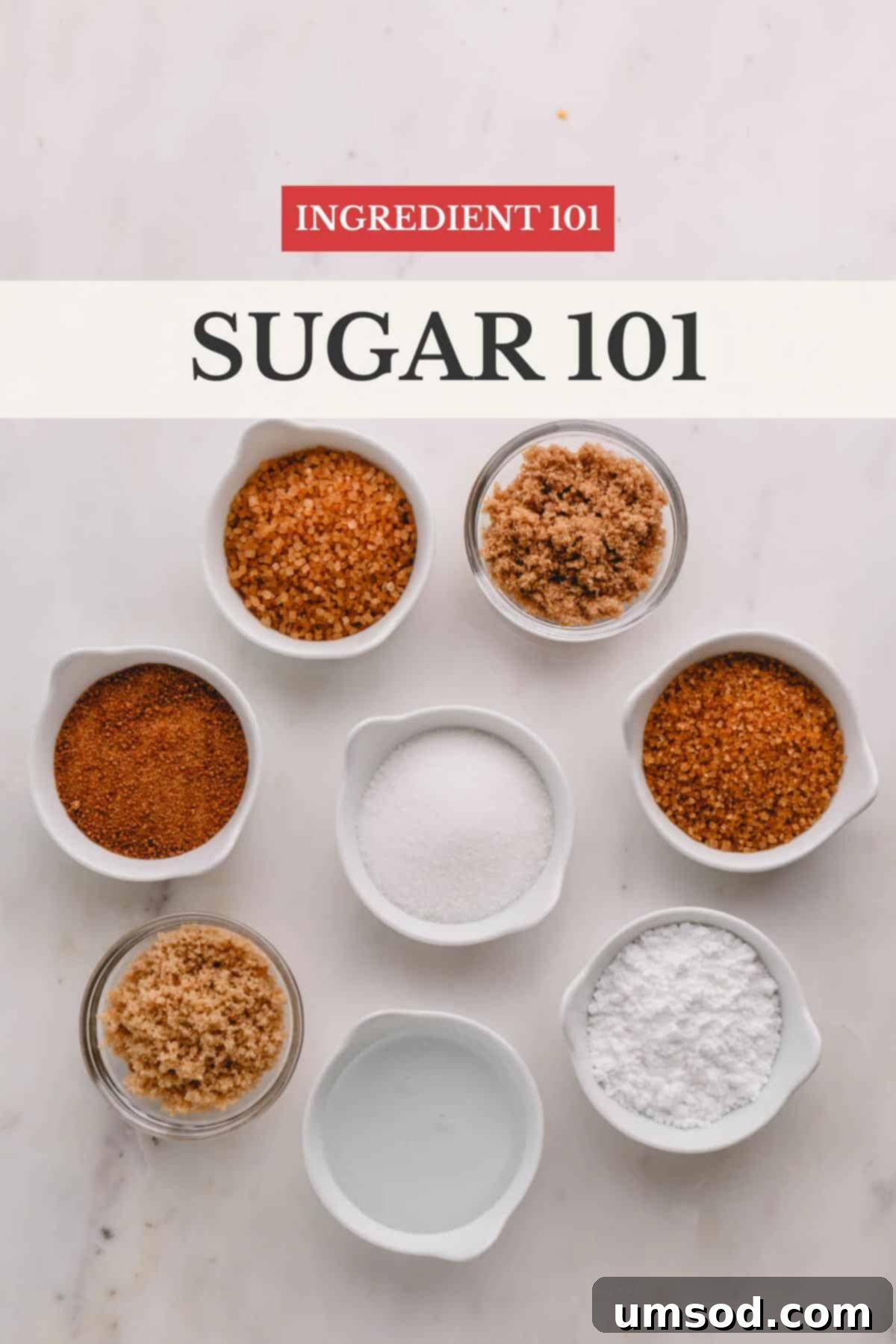
Welcome to Sugar 101, your ultimate guide to understanding the diverse world of sugars! Whether you’re a seasoned baker or just starting, mastering the various types of sugar and their unique properties is key to unlocking exceptional flavors and textures in your culinary creations. From the everyday granulated sugar to exotic muscovado and specialized liquid sweeteners, each sugar plays a distinct role far beyond simply adding sweetness. This comprehensive guide will explore the most common varieties, highlight their differences, and show you exactly how to best use them to elevate your baking and cooking.
Found this guide helpful? Pin it now to save for later!
Pin It for Later
Caster sugar, brown sugar, demerara, and muscovado sugar… The baking world is rich with an array of sugar types, each contributing its own unique characteristics to recipes. In this essential guide, you’ll gain a deep understanding of the most common sugar varieties, their specific uses, and the crucial roles they play in the kitchen. We’ll delve into the nuances of texture, moisture content, and flavor profiles that distinguish one sugar from another, empowering you to make informed choices for every recipe.
In baking, sugar is far more than just a sweetener. It’s a multifunctional ingredient that fundamentally impacts the final product. Sugar helps tenderize baked goods by inhibiting gluten development, ensuring a softer, more delicate crumb. It also acts as a humectant, retaining moisture and extending the shelf life of treats like cakes and muffins. Furthermore, sugar is vital for leavening, as it helps incorporate air into butter during the creaming process, contributing to a light and airy texture.
Beyond texture, sugar is instrumental in achieving that coveted golden-brown crust through the process of caramelization, enhancing both flavor and visual appeal. It stabilizes whipped mixtures, providing structure to meringues and soufflés. For yeast-leavened breads, sugar serves as a food source for the yeast, promoting fermentation and helping the dough rise. In essence, sugar is a cornerstone ingredient that intricately contributes to the flavor, texture, appearance, and shelf stability of a wide variety of baked goods and desserts.
Why Understanding Different Types of Sugar is Crucial for Bakers
Sugar is a foundational ingredient in nearly all baked goods, making the choice of sugar profoundly impactful on the final outcome. Different sugars possess distinct properties in terms of crystal size, moisture content, and molasses presence, which directly influence sweetness, flavor, and texture. Consequently, substituting one type of sugar for another is rarely a simple 1:1 exchange and can lead to unexpected results if not done thoughtfully.
Consider the difference between white granulated sugar and brown sugar. Brown sugar, with its inherent molasses, contains more moisture. This higher moisture content translates to a softer, chewier texture in baked goods such as cookies or brownies. However, this same moisture and flavor profile might be detrimental in recipes where a light, crisp, or delicate texture is desired, such as a classic vanilla cake or delicate chocolate macarons. In such cases, the specific characteristics of white sugar are irreplaceable.
But don’t fret! This guide is designed to clarify all these specifics. By the end, you’ll be equipped with the knowledge to confidently choose and utilize the right sugar for every recipe, ensuring perfectly sweet, beautifully textured results every single time, regardless of the sugar variety you reach for!
13 Essential Types of Sugar and Their Best Uses
Now that we’ve established the multifaceted role of sugar in baking, let’s dive into the specifics. Below, we’ll explore 13 distinct types of sugar commonly found in kitchens and specialty stores, detailing their unique characteristics and optimal applications. Understanding these differences will empower you to become a more precise and confident baker.
White Sugars: The Foundation of Sweetness
1. Granulated Sugar (Table Sugar)
White granulated sugar, often simply referred to as “sugar” or “table sugar,” is the most ubiquitous sweetener in kitchens worldwide. Produced from either sugar cane or sugar beets, it undergoes a refining process that removes all molasses, resulting in pure sucrose. Its neutral flavor and medium-sized, uniform crystals make it incredibly versatile. Granulated sugar provides a clean sweetness without imparting any additional flavor, allowing other ingredients to shine. Its crystalline structure is perfect for creaming with butter, where it helps incorporate air and creates a light texture.
BEST USES: Granulated sugar is the go-to choice for the vast majority of baking recipes. It’s ideal for a wide array of cakes, cookies, macarons, pastries, and pies. Its crystal size is perfectly calibrated to dissolve smoothly into batters and doughs, ensuring consistent sweetness and preventing a gritty texture in your finished products. It’s also excellent for sweetening beverages and for general cooking.
2. Caster Sugar (Superfine Sugar, Baker’s Sugar)
Caster sugar, also known as superfine or baker’s sugar, is essentially a more finely ground version of granulated sugar. While still crystalline, its individual grains are significantly smaller, allowing it to dissolve much more rapidly than regular table sugar. This quick-dissolving property makes it indispensable for delicate recipes where a perfectly smooth texture is paramount and where you want to avoid over-mixing. It’s finer than granulated sugar but not as powdery as confectioners’ sugar.
BEST USES: Caster sugar shines in recipes like meringues, soufflés, and delicate cakes, where its fine crystals integrate seamlessly without leaving a grainy texture. It’s also superior for sweetening liquids such as hot chocolate, cocktails, or daiquiris, as it dissolves almost instantly. If you don’t have caster sugar on hand, you can easily make your own by pulsing regular granulated sugar in a food processor or blender for a few seconds until it reaches a finer consistency.
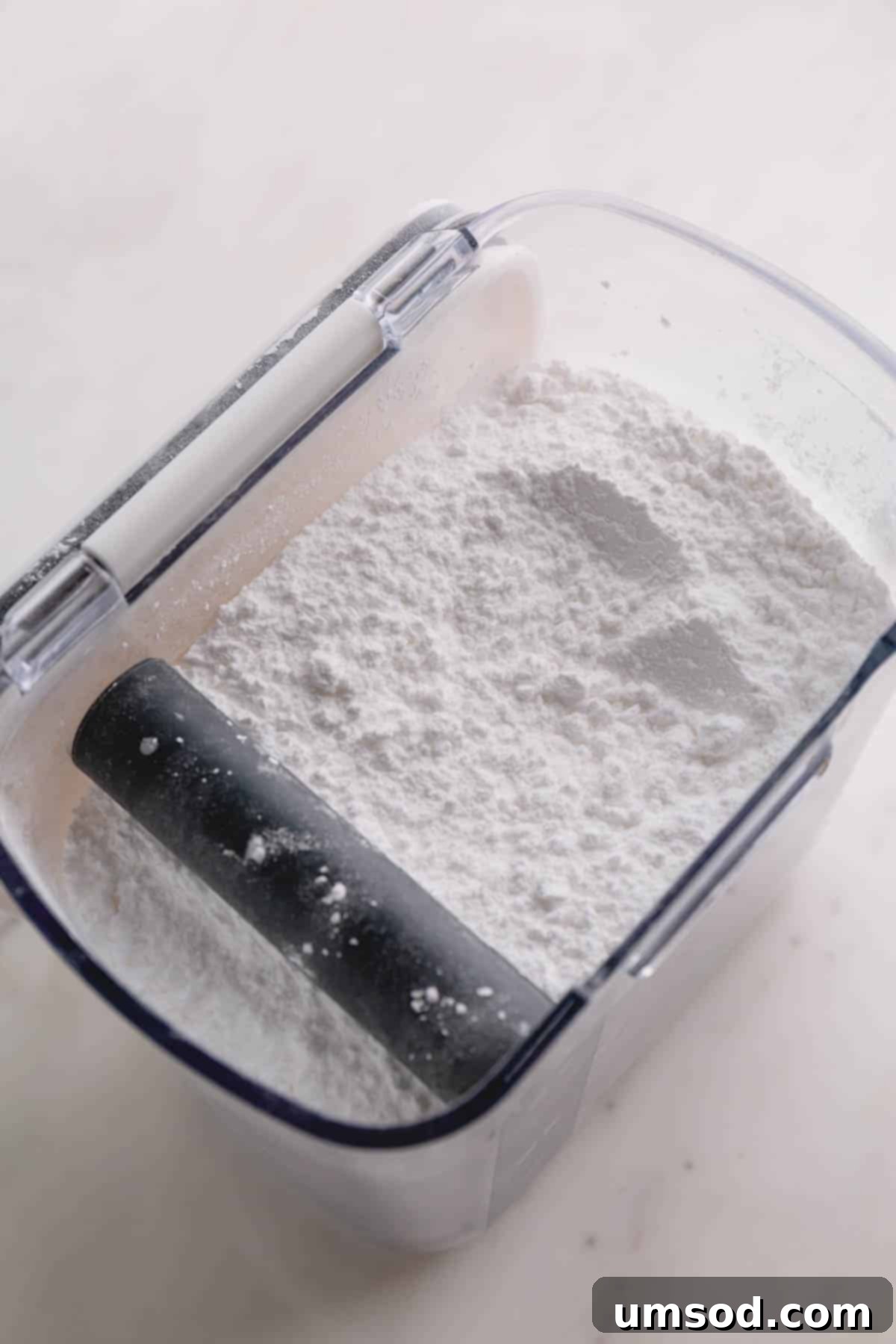
3. Powdered Sugar (Confectioners’ Sugar, Icing Sugar)
Powdered sugar, often called confectioners’ sugar or icing sugar, is granulated sugar that has been ground into an extremely fine, flour-like powder. To prevent caking and clumping, most commercial powdered sugar includes a small amount of cornstarch, typically around 3-5%. This ultra-fine texture allows it to dissolve effortlessly into glazes and frostings, creating incredibly smooth and stable finishes without any graininess. Its ability to create thick, yet spreadable mixtures is unmatched.
BEST USES: Powdered sugar is indispensable for creating silky smooth icings, frostings, and glazes. It’s also perfect for dusting over baked goods like brownies, cakes, and tarts as a beautiful, delicate garnish. Its quick-dissolving nature also makes it useful in some no-bake desserts and creamy fillings where a smooth consistency is desired.
4. Sanding Sugar
Sanding sugar is a type of coarse, decorative sugar specifically designed to add sparkle, texture, and a festive touch to baked goods. Its crystals are significantly larger than regular granulated sugar, and they are formulated to be more heat-resistant. This unique property means that unlike fine sugars, sanding sugar doesn’t melt or dissolve easily when exposed to oven heat, allowing it to retain its crunchy texture and brilliant shine after baking. It’s available in a vibrant spectrum of colors, making it a popular choice for holiday baking and special occasions.
BEST USES: Sanding sugar is primarily used as a decorative topping. Sprinkle it generously over cookies, muffins, cupcakes, pie crusts, and pastries before baking to create a dazzling, sparkling finish with a delightful crunch. Its robust nature makes it perfect for adding a professional, celebratory look to any dessert.
Brown Sugars: Adding Depth and Moisture
5. Light Brown Sugar
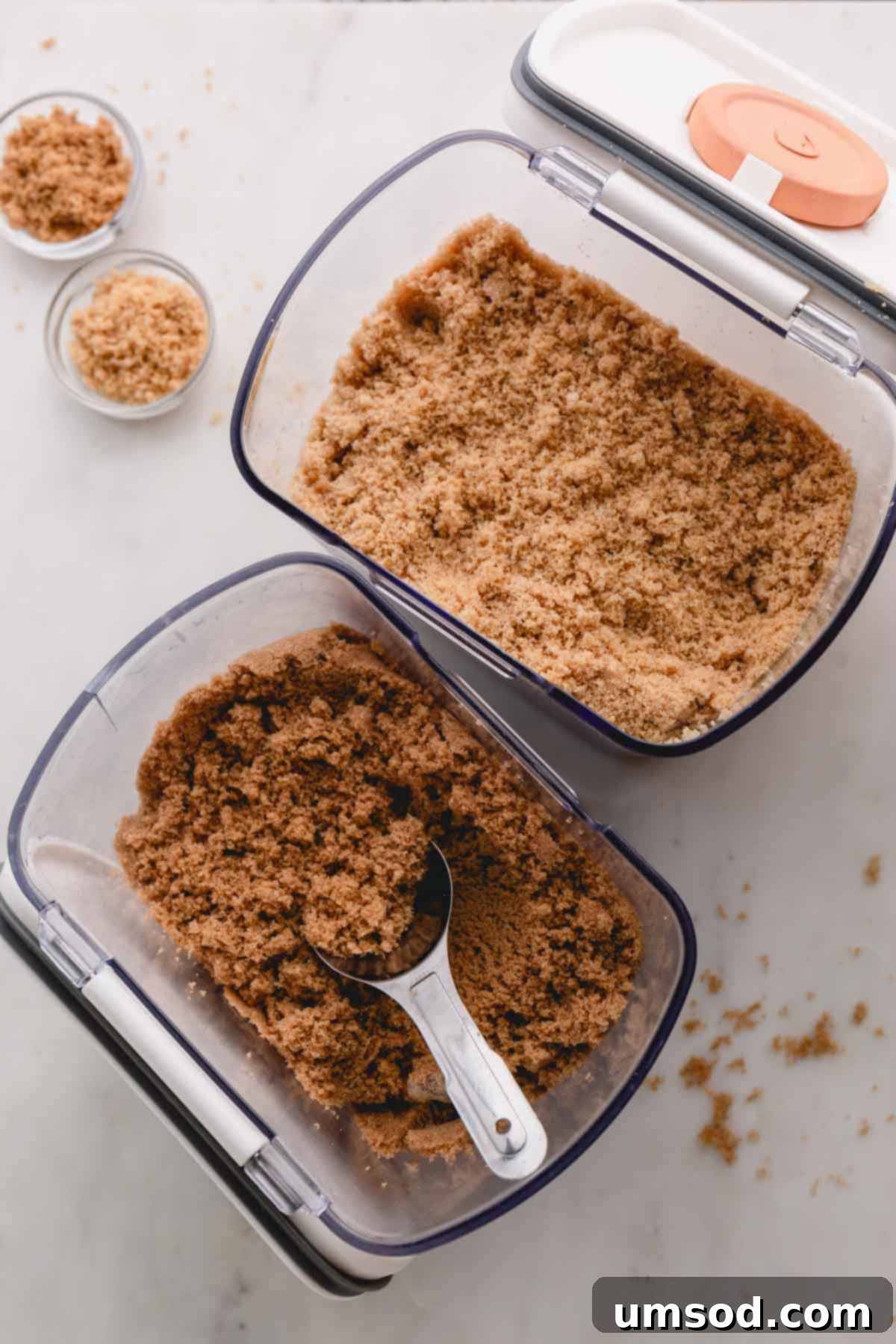
Light brown sugar is a soft, moist sugar that contains a small but significant amount of molasses, typically around 3.5% by weight. This molasses content gives it its characteristic pale caramel color and infuses it with a mild, slightly toffee-like flavor. Its moist texture means it packs well and contributes to a chewier, softer consistency in baked goods. It’s less intense than dark brown sugar, offering a balanced sweetness that complements a wide range of recipes without overpowering other flavors.
BEST USES: Light brown sugar is a favorite for sweetening cookies, brownies, cakes, and quick breads. Its moisture-retaining properties make it excellent for creating tender, chewy textures. It’s also commonly used in sauces, glazes, and savory dishes where a subtle caramel note is desired. I particularly love using light brown sugar to achieve the perfect texture in my no-spread sugar cookies.
6. Dark Brown Sugar
Dark brown sugar contains a significantly higher percentage of molasses than its light counterpart, typically around 6.5% to 7%. This increased molasses content results in a darker color, a richer and more robust flavor, and a more pronounced caramel or toffee-like taste. It’s also notably more moist and stickier than light brown sugar. The deeper flavor profile of dark brown sugar is perfect for recipes that benefit from a strong, complex sweetness.
BEST USES: Due to its higher molasses content, dark brown sugar provides more moisture and richness, making it ideal for recipes that demand deeper, more robust flavors. Think classic gingerbread, rich fruitcakes, barbecue sauces, baked beans, or highly flavored marinades. While light and dark brown sugars can often be used interchangeably in many recipes, opting for dark brown sugar will amplify the complex, molasses-driven notes and add extra chewiness. Always check the recipe for specific guidance, but when in doubt, both are versatile.
7. Muscovado Sugar (Barbados Sugar)
Muscovado sugar is an unrefined or minimally refined cane sugar that retains a much higher proportion of its natural molasses compared to light or dark brown sugar. This gives it a deep, complex flavor profile often described as smoky, malty, or even slightly bittersweet, with intense caramel notes. Its texture is moist and slightly sticky, resembling wet sand. Muscovado comes in both light and dark varieties, with dark muscovado having the highest molasses content and the most intense, almost pungent, flavor.
BEST USES: Muscovado sugar is excellent for adding a distinctive depth of flavor to rich desserts like gingerbread, chocolate cakes, fudge, and coffee-flavored baked goods. It can generally be substituted for brown sugar on a one-to-one basis, but be aware that its stronger flavor will significantly impact the final taste. It’s also fantastic in savory dishes that benefit from deep, sweet notes, such as marinades for BBQ or robust glazes.
8. Turbinado Sugar (Sugar in the Raw)
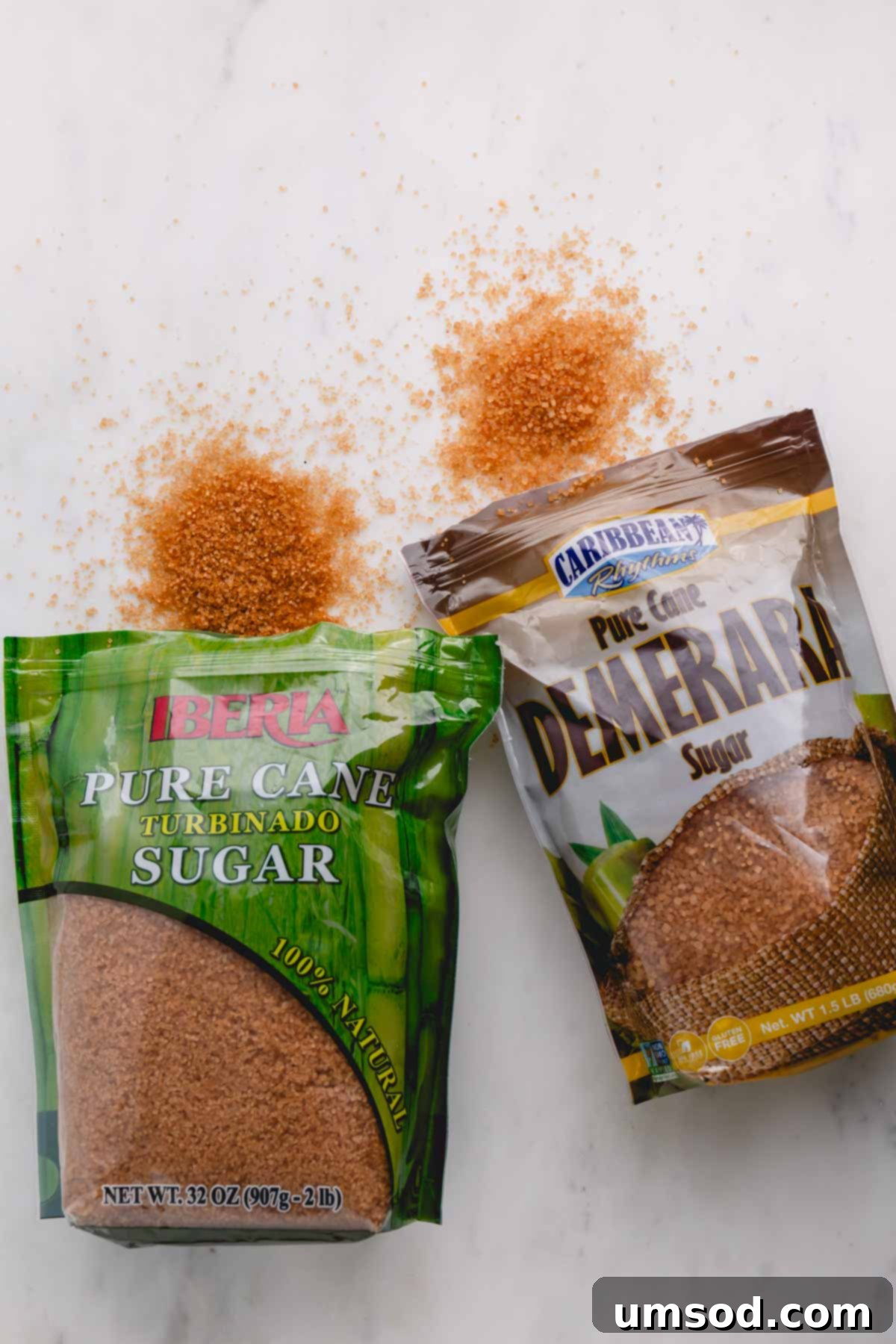
Turbinado sugar is a partially refined cane sugar, meaning it retains some of its natural molasses, which gives it a pale golden-brown color and a subtle caramel flavor. Unlike brown sugar, turbinado has large, coarse crystals, similar in size to small rock salt. This large crystal size and drier texture mean it doesn’t dissolve as readily into batters or doughs, and its molasses content is lower than that of true brown sugars, resulting in a milder flavor profile.
BEST USES: Due to its distinctive crunch and attractive sparkle, turbinado sugar is primarily used as a finishing sugar. It’s perfect for sprinkling on top of muffins, scones, cookies, fruit tarts, or even hot cereals and coffee. It adds a pleasant textural contrast and a hint of caramel sweetness without melting away, making it a great alternative to sanding sugar for a more rustic look.
9. Demerara Sugar
Demerara sugar is very similar to turbinado sugar in that it’s a large-grained, partially refined cane sugar that retains a hint of molasses. Its crystals are typically larger and coarser than turbinado, and it tends to be a bit lighter in color, possessing a delightful amber hue. It shares the same subtle caramel flavor profile and crunchy texture. Like turbinado, its large crystals make it unsuitable for incorporating directly into fine batters where a smooth consistency is needed.
BEST USES: Demerara sugar is best utilized as a finishing sugar, providing a beautiful textural contrast and a slight crunch. Sprinkle it over the tops of baked goods like crumbles, pies, cookies, and even savory dishes to add a delightful glimmer and a touch of sweetness. It’s also a popular choice for sweetening coffee or tea, where its crystals slowly dissolve, releasing its mild caramel notes.
10. Coconut Sugar
Coconut sugar is a natural sweetener derived from the sap of the coconut palm tree flowers. It’s often touted as a more natural and less processed alternative to white sugar, retaining more minerals (like iron, zinc, calcium, and potassium) and some antioxidants compared to highly refined sugars. Its flavor profile is similar to brown sugar, with notes of caramel and toffee, and it has a granular texture that can vary from fine to coarse.
BEST USES: Coconut sugar can generally be used as a one-to-one substitute for white or brown sugar in most recipes. However, be mindful that its inherent caramel notes will influence the overall flavor of your dish, and its brownish color will make your finished product slightly darker than if you used white sugar. It’s a popular choice in health-conscious baking and for those looking for an alternative sweetener with a more complex flavor.
Liquid Sugars: Enhancing Texture and Preventing Crystallization
11. Corn Syrup
Corn syrup is a sweet, viscous liquid sweetener derived from cornstarch. It’s a common ingredient in commercially prepared foods, where it functions not only as a sweetener but also as a thickener, humectant (moisture retainer), and a crucial anti-crystallization agent. Unlike granular sugars, corn syrup helps prevent sugar from crystallizing in candies and preserves, resulting in a smoother texture. It adds body and a subtle gloss to various preparations.
BEST USES: Corn syrup is incredibly versatile and can be used in a variety of home baking and cooking applications. It’s often a key ingredient in candies like fudge, caramels, and brittles, where its anti-crystallization properties are essential for achieving a smooth, pliable texture. You can also use it to sweeten baked goods, glazes, and sauces, or as a substitute for other liquid sweeteners like honey, maple syrup, or agave in many recipes. It’s a crucial ingredient in my microwave peanut brittle recipe, ensuring that classic crisp snap.
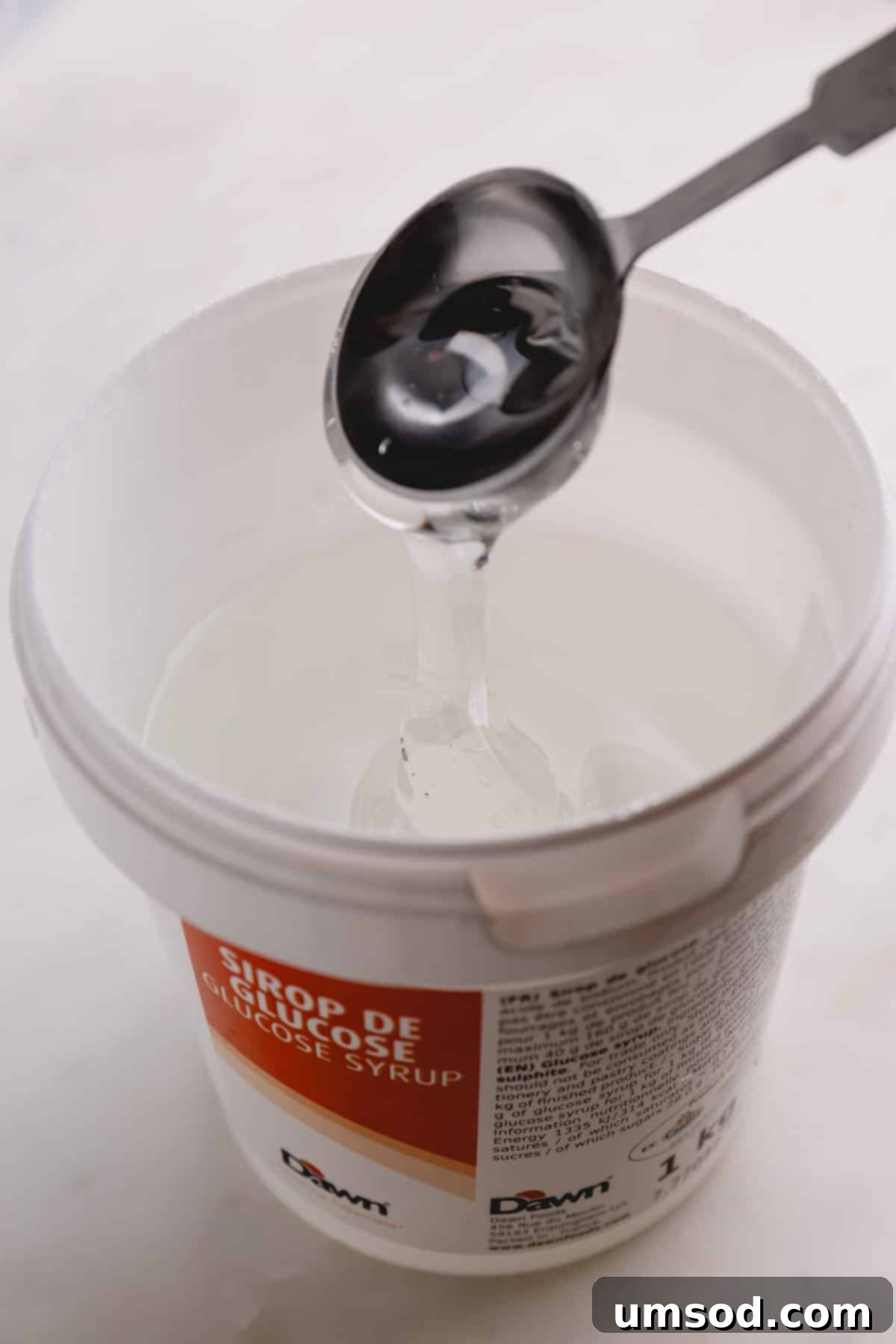
12. Glucose Syrup
Glucose syrup is another widely used liquid sweetener, very similar in function and appearance to corn syrup, often derived from corn, potatoes, or wheat. It is less sweet than sucrose (table sugar) but excels as an anti-crystallizing agent. Its primary function in confectionery and frozen desserts is to improve the overall texture, mouthfeel, and stability of products. It contributes to a smoother, more elastic consistency and helps prevent undesirable sugar crystallization or iciness.
BEST USES: Glucose syrup is a secret weapon for professional bakers and confectioners. It’s indispensable in ice creams and sorbets, where it keeps them wonderfully scoopable and prevents the formation of large ice crystals. When added to ganache, glucose syrup ensures it remains soft, pliable, and elastic, perfect for filling or coating. It’s also vital in making stable fondants, chewy candies, and fruit jellies, offering superior texture control and shelf stability.
13. Invert Sugar (Trimoline)
Invert sugar, often sold as Trimoline, is a thick, liquid sweetener created by breaking down sucrose (table sugar) into its simpler components: glucose and fructose. This “inversion” process results in a syrup that is sweeter than regular table sugar, meaning you can often use less of it to achieve the same level of sweetness. Critically, invert sugar is an exceptional anti-crystallizing agent, even more effective than corn or glucose syrup, making it highly prized in professional baking. It also possesses superior humectant properties, actively helping baked goods retain moisture and significantly extending their shelf life by preventing them from drying out.
BEST USES: Invert sugar is a favorite among professional patissiers for its ability to create incredibly smooth and stable confections. It’s widely used in making fine candies, soft caramels, high-quality ganaches, and ice creams to ensure a perfectly smooth texture and prevent crystallization. Its moisture-retaining properties also make it invaluable for keeping delicate pastries, cakes, and cookies fresh and tender for longer, making it a key ingredient for items meant to be stored.
Expert Tips for Choosing the Right Type of Sugar
Navigating the world of sugars can seem daunting, but armed with the right knowledge, you can make informed decisions that will significantly impact your baking success. Here are some key guidelines to help you choose the best sugar for your recipe:
- Granulated sugar is your versatile default: For most general baking applications, such as cakes, meringues, pies, and everyday cookies, granulated sugar is the ideal choice. Its ability to dissolve well and provide a clean, neutral sweetness makes it incredibly adaptable. While you can sometimes substitute brown sugar, expect a darker finished product and a different (often chewier) texture.
- Opt for brown sugar for moisture and chewiness: If your desired finished product is moist, chewy, and boasts a rich, caramel-like flavor, any type of brown sugar (light, dark, or muscovado) will work best. The molasses content in brown sugars directly contributes to these desirable qualities, making them perfect for brownies, bars, and some soft cookies.
- Exercise caution with dry-to-liquid sugar substitutions: Swapping a dry, granular sugar for a liquid sugar (like honey or corn syrup) requires significant modifications to the recipe’s liquid content and overall balance. It’s generally best to avoid such substitutions unless the recipe explicitly provides clear instructions and adjustments, as it can drastically alter the texture and structure of your baked goods.
- “Sugar” usually means granulated: If a recipe simply lists “sugar” without specifying the type, it is almost always safe to assume it refers to white granulated sugar. This is the standard default in most conventional baking recipes.
- Natural granulated alternatives can be 1:1: Some natural sugar alternatives, such as monk fruit sweetener, are formulated to be a direct one-to-one substitute for granulated sugar in terms of sweetness and volume. Always check the product packaging for specific conversion ratios.
- Be wary of alternative sweeteners’ potency: Sweeteners like stevia, allulose, and erythritol vary significantly in their sweetness levels and baking properties compared to traditional sugars. They do not typically work as a straightforward 1:1 swap for white or brown sugar. Fortunately, most product packages provide clear substitution ratios and usage guidelines to help you adjust your recipes accordingly.
- Liquid sweeteners are often interchangeable: When it comes to liquid sweeteners, there’s often more flexibility. If a recipe calls for honey, you can frequently use maple syrup, agave nectar, or corn syrup in its place on a one-to-one volume basis. While the flavor profile will differ, the consistency and sweetness level are often close enough for successful substitution in many applications.
Types of Sugar FAQs: Your Questions Answered
Most dry and liquid sugars, with the exception of maple syrup, should be stored in a cool, dark place away from direct sunlight and heat. It’s crucial to keep them in an airtight container to prevent moisture absorption (which can lead to clumping) or drying out. If the original packaging isn’t securely resealable, transfer the sugar to a dedicated storage container. Opened maple syrup, however, must always be stored in the refrigerator to prevent spoilage and mold growth.
The best way to prevent brown sugar from hardening is to store it in an absolutely airtight container. Beyond that, a popular and effective method is to add a terracotta brown sugar saver (often shaped like a disc or bear). Simply soak the saver in water for about 20-30 minutes, pat it dry, and then place it directly into your bag or container of brown sugar. You’ll need to re-soak it every few months to maintain its effectiveness. Other home remedies include adding a slice of fresh white bread, a few apple slices, or orange peels to the container; these provide moisture that the sugar will absorb, keeping it soft. Just be sure to replace them regularly to prevent mold.
Don’t despair if your brown sugar has turned into a rock! There are several simple methods to bring it back to its soft, pliable state. You can find detailed instructions and various tips on how to soften brown sugar in my dedicated guide.
Explore More Helpful Kitchen Guides:
- Mastering the Art of Browning Butter
- The Right Way to Measure Flour for Baking Success
- Tips and Tricks for Perfectly Separating Egg Whites
- Easy Homemade Buttermilk Substitutes
We hope this comprehensive guide has demystified the world of sugar for you! With this knowledge, you’re well-equipped to choose the perfect sweetener for every recipe, ensuring delicious results every time. Happy baking!