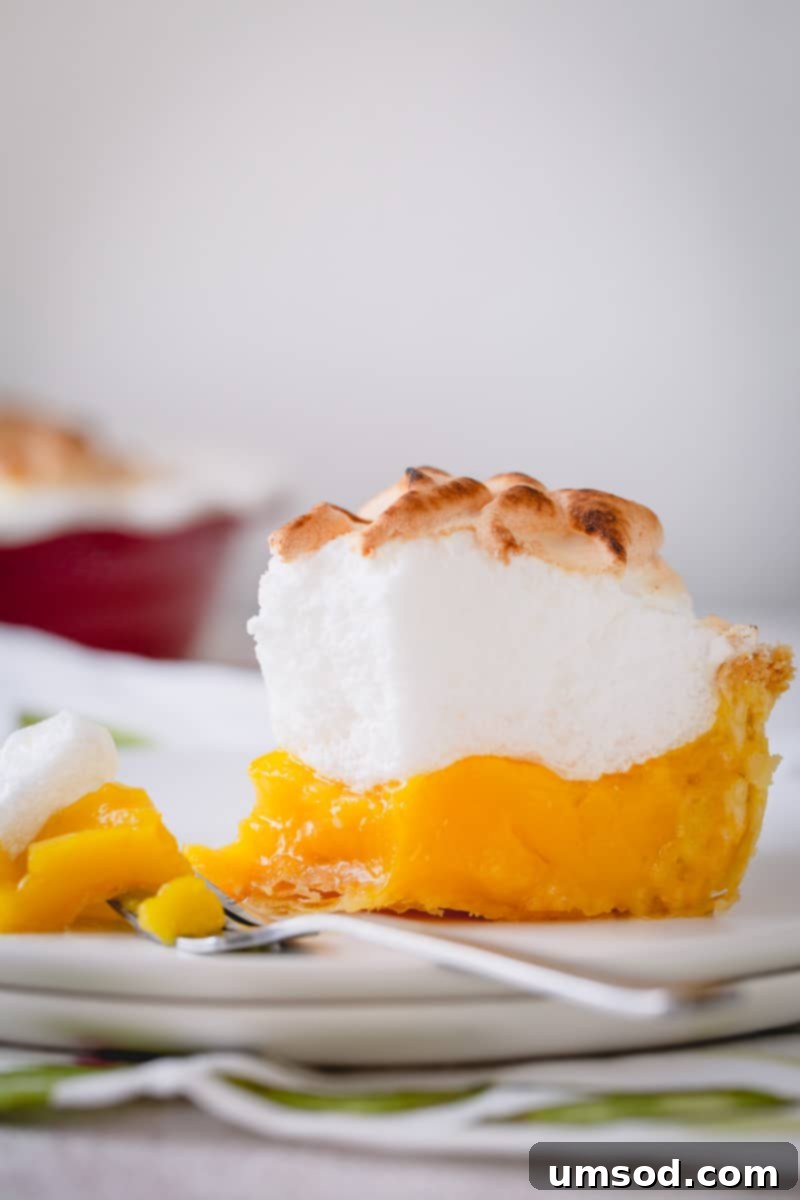
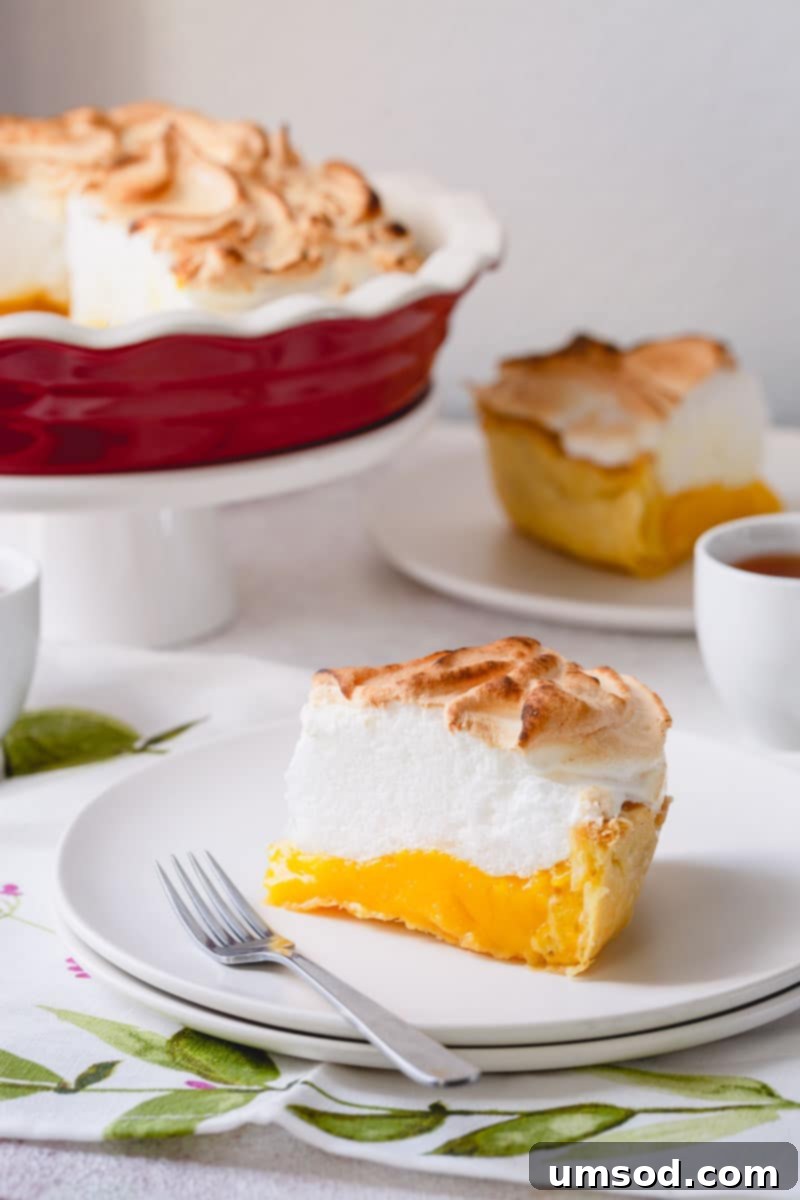
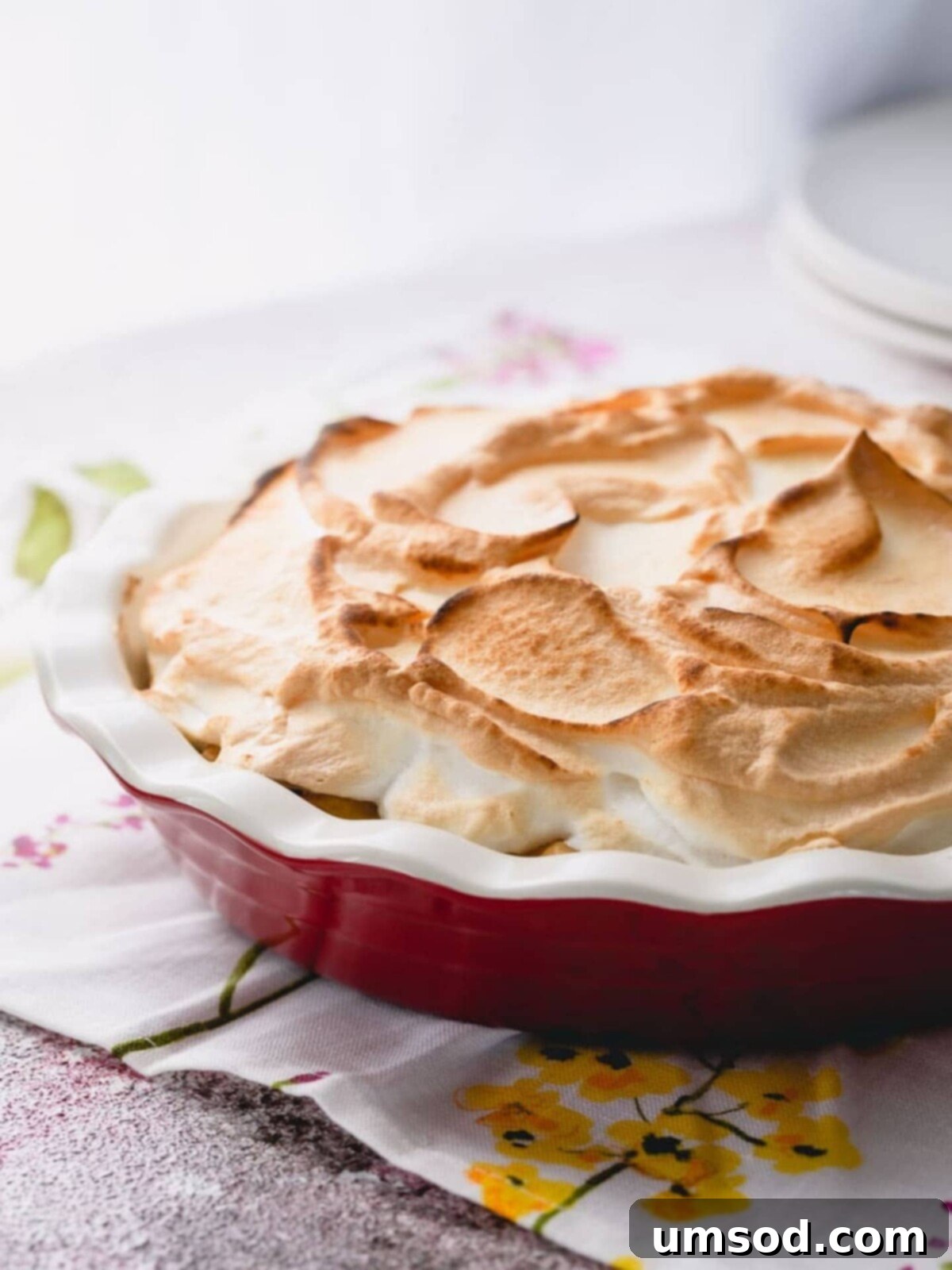
There’s nothing quite like the bright, zesty flavor of a perfectly executed lemon meringue pie. This classic dessert, with its contrasting textures and harmonious flavors, remains a beloved treat for many. Our definitive recipe guides you through crafting a buttery, flaky homemade crust, a vibrant, tangy lemon filling, and a crown of sweet, cloud-like meringue, toasted to golden perfection. Follow our expert tips and tricks to achieve bakery-quality results every single time, creating a visually stunning and incredibly delicious pie that will impress everyone.
Loved this recipe? Pin it now to save for later!
Pin It
Why You’ll Fall in Love with This Lemon Meringue Pie
While my heart often gravitates towards rich chocolate desserts like a decadent supreme chocolate cake or delicate sea salt chocolate macarons, I must confess that lemon meringue pie holds a special place in my culinary affections. This particular rendition isn’t just my favorite; it’s a cherished family staple, earning its reputation as the best lemon meringue pie you’ll ever taste. Here’s why this recipe stands out:
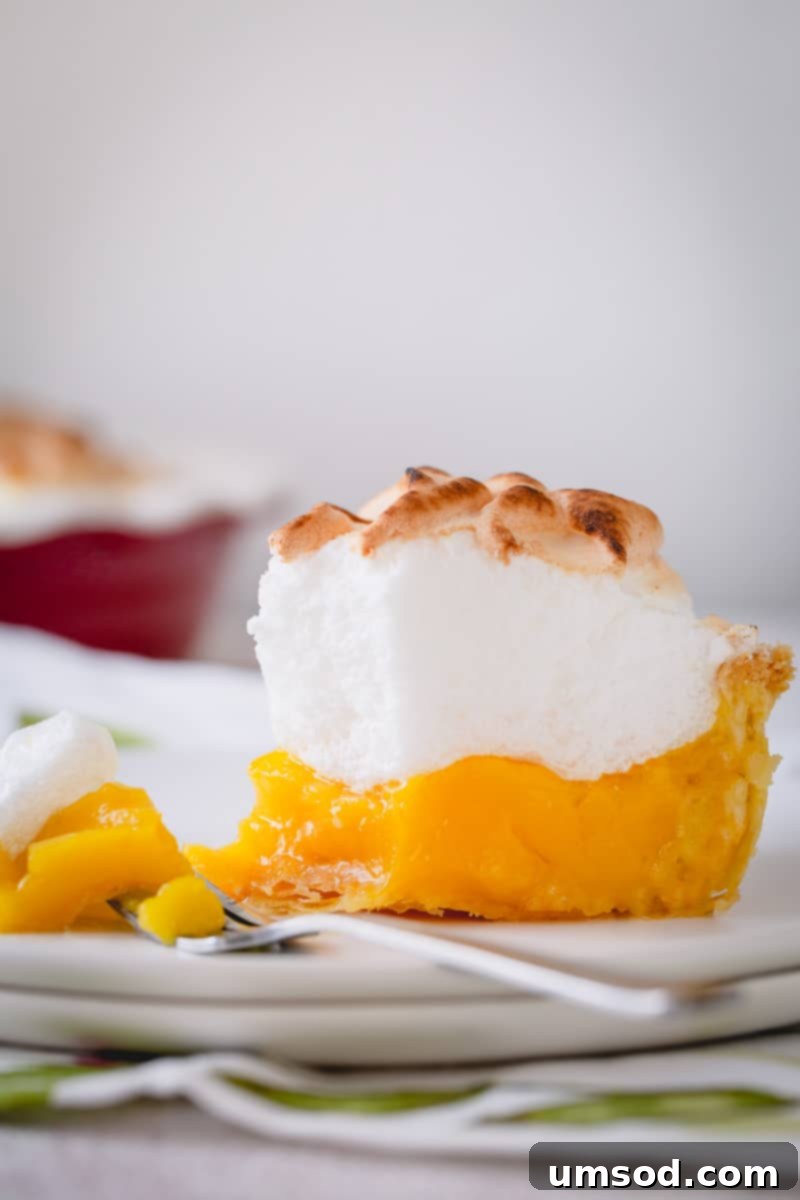
- The lemon filling boasts an exquisite, silky-smooth texture, perfectly firm to hold its shape when sliced, yet never thick or gelatinous. It melts in your mouth, not jiggles like jelly.
- Every bite offers a vibrant burst of fresh lemon flavor, beautifully balanced without being overly sweet. It’s a bright, zesty experience that truly awakens the palate.
- A magnificent cloud of fluffy meringue crowns the pie, achieving a light, airy consistency and a gorgeous toasted finish.
What’s not to adore? This guide will empower you with all the essential techniques and insider tips, ensuring you master the art of lemon meringue pie. Say goodbye to common baking woes like weeping or shrinking meringue, and confidently create a dessert that will make you feel like a true pie-making professional.
Essential Ingredients for a Perfect Lemon Meringue Pie
Crafting the best lemon meringue pie begins with understanding the role of each ingredient. Here’s a breakdown of the key components you’ll need and why they matter:
- Pie Crust: The foundation of our pie. While my preference is for a homemade all-butter pie crust for its superior flavor and flakiness, feel free to use a graham cracker crust or your favorite homemade or store-bought pre-made crust. The quality of your crust significantly impacts the overall enjoyment of the pie.
Lemon Curd Filling Ingredients
- Lemons: The star of the show! We utilize both fresh lemon juice for its vibrant acidity and lemon zest for an intense, aromatic citrus punch. For an in-depth look at selecting and using lemons in various dishes, explore my comprehensive lemon 101 guide. Always opt for fresh, ripe lemons for the best flavor.
- Cornstarch: This essential ingredient acts as a primary thickening agent for the filling. It ensures the curd sets beautifully, holding its shape without being overly stiff. Additionally, cornstarch helps absorb excess moisture, preventing the undesirable “beading” phenomenon on your meringue.
- All-Purpose Flour: Working in conjunction with cornstarch, flour provides additional structure and stability to the lemon filling. It acts as a backup thickener, preventing the filling from becoming runny and ensuring a consistently smooth texture.
- Unsalted Butter: A touch of butter enriches the lemon curd, adding a luxurious, velvety mouthfeel and a subtle depth of flavor. Always use unsalted butter in desserts to control the salt content precisely.
- Egg Yolks: These are crucial for creating a lusciously thick, creamy, and wonderfully rich lemon filling. The fat and emulsifying properties of the yolks contribute significantly to the curd’s decadent texture. Remember to temper them carefully to prevent curdling.
Meringue Topping Ingredients
- Egg Whites: The foundation of your fluffy meringue. For best results, separate the egg whites while they are cold, as this makes separation easier. Allow them to come to room temperature before whipping for optimal volume. While I’ve tested with both fresh and carton egg whites, fresh egg whites generally yield a more stable and voluminous meringue, as not all brands of carton egg whites perform consistently.
- Granulated Sugar: This is used to sweeten and stabilize the meringue. We use granulated sugar for its fine texture and ability to dissolve readily into the egg whites, creating a smooth, glossy meringue. Avoid powdered sugar for meringue, as it contains cornstarch that can alter the texture. Curious about different types of sugar and their uses? Explore our guide on types of sugar.
- Cornstarch: Another hero ingredient in the meringue! A small amount of cornstarch helps to stabilize the egg whites, contributing to beautiful, defined peaks and a more resilient meringue that is less prone to weeping.
- Cream of Tartar (Optional, but Recommended): A pinch of cream of tartar acts as an acid, helping to stabilize the egg whites and achieve maximum volume and firm peaks more easily. It’s a secret weapon for perfect meringue!
Expert Tip: Avoid Bitterness in Your Lemon Filling
Always zest your lemons before juicing them. When zesting, be very careful to only remove the bright yellow outer layer, avoiding the white pith underneath. The pith contains bitter compounds that can impart an unpleasant taste to your otherwise wonderfully tart and sweet lemon filling.
Step-by-Step: How to Craft the Perfect Lemon Meringue Pie
Creating this iconic dessert is a rewarding experience. Follow these detailed steps to ensure every component of your lemon meringue pie is flawless. Before you begin, preheat your oven to 375°F (190°C).
1. Prepare and Blind-Bake the Pie Crust
- Begin by preparing your buttery pie crust according to the recipe instructions. Ensure it’s chilled and ready for rolling.
- On a lightly floured surface, carefully roll the pie dough into a uniform 10-inch circle.
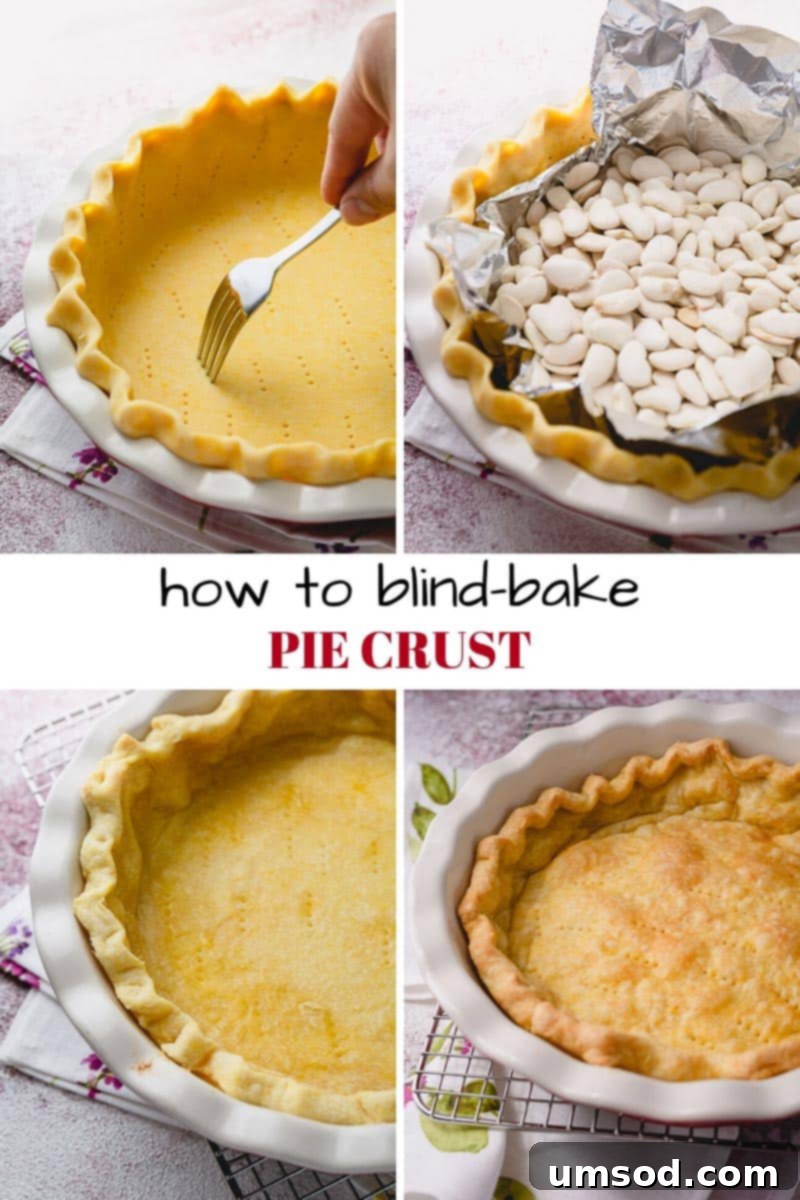
- Gently transfer the rolled dough into a standard 9-inch pie pan. Trim the edges, then fold and crimp them artistically around the rim. Use a fork to pierce holes all over the bottom and sides of the crust. These perforations allow steam to escape, preventing large bubbles.
- To prevent the crust from puffing up excessively and becoming soggy once filled, we perform a technique called blind baking. Cover the crust completely with aluminum foil, then fill it with pie weights, raw rice, or dry beans.
- Bake for 15 minutes with the weights. This initial bake helps set the crust’s structure.
- Carefully remove the foil and the weights, then continue to bake the crust for another 15-20 minutes, or until it achieves a beautiful golden-brown color. Allow it to cool slightly while you prepare the other components.
2. Prepare the Fluffy Meringue
Timing is crucial for perfect lemon meringue pie. I highly recommend preparing your meringue before you start the lemon curd filling. This allows you to immediately spread the meringue over the lemon curd while the filling is still piping hot, a key step in preventing the dreaded “weeping” meringue.
- In a small bowl, whisk together the granulated sugar and cornstarch until thoroughly combined. This mixture helps stabilize the meringue.
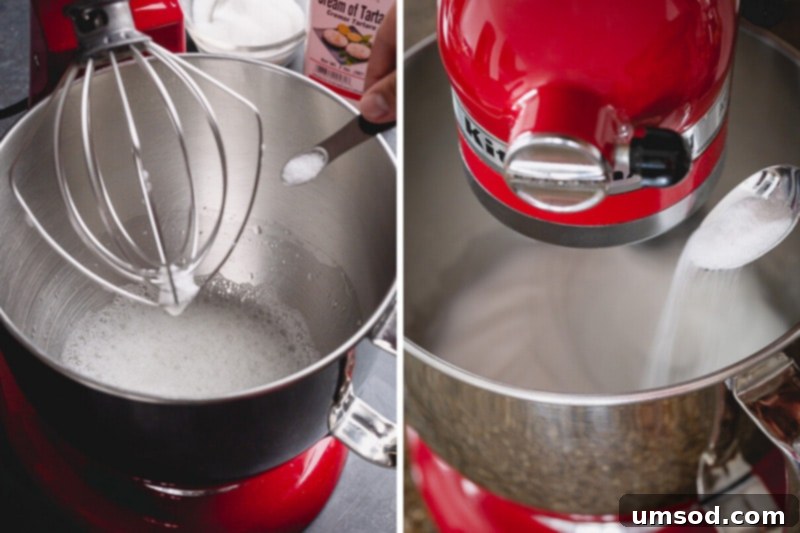
- In a large, impeccably clean mixing bowl (free of any grease), beat the room-temperature egg whites with a pinch of salt and cream of tartar (if using) using an electric mixer until they become foamy and soft peaks begin to form.
- With the mixer running on medium-high speed, slowly add the sugar and cornstarch mixture, one tablespoon at a time. Continue to beat until the meringue is glossy, thick, and holds firm, stiff peaks when you lift the whisk. Be careful not to over-whip. Set aside, ready for assembly.
3. Cook the Luscious Lemon Curd Filling
- In a medium-sized heavy-bottomed saucepan, combine the water, fresh lemon juice, granulated sugar, cornstarch, all-purpose flour, lemon zest, and a pinch of salt. Whisk these ingredients together until smooth.
- Place the saucepan over medium heat and bring the mixture to a boil, stirring constantly with a whisk. Continue to boil for 1-2 minutes, allowing the starches to thicken the mixture.
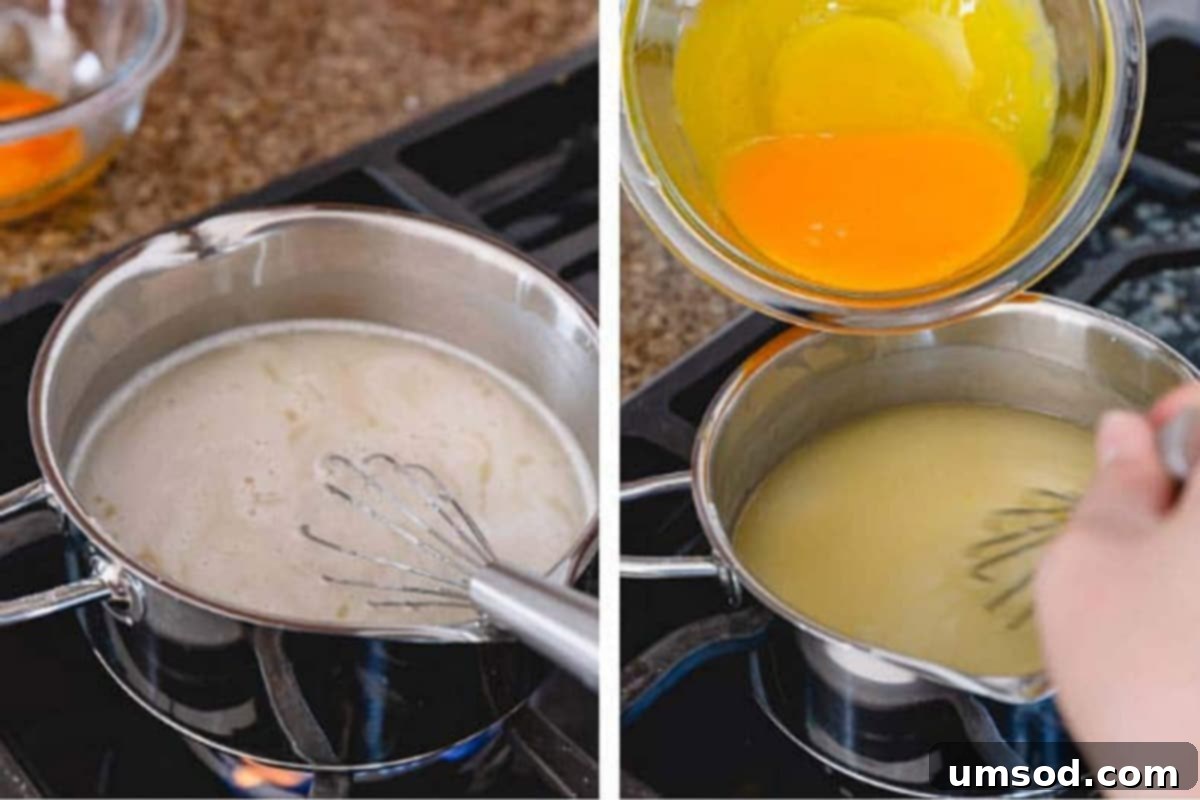
- To prevent the egg yolks from curdling, you must temper them. In a small separate bowl, whisk the egg yolks vigorously. Slowly pour about half a cup of the hot lemon mixture into the egg yolks while continuously whisking. This gradually raises the temperature of the yolks without cooking them.
- Now, slowly pour the tempered egg yolk mixture back into the saucepan with the remaining lemon mixture. Continue to cook over medium heat for an additional 3-5 minutes, stirring continuously, until the filling thickens considerably and coats the back of a spoon.
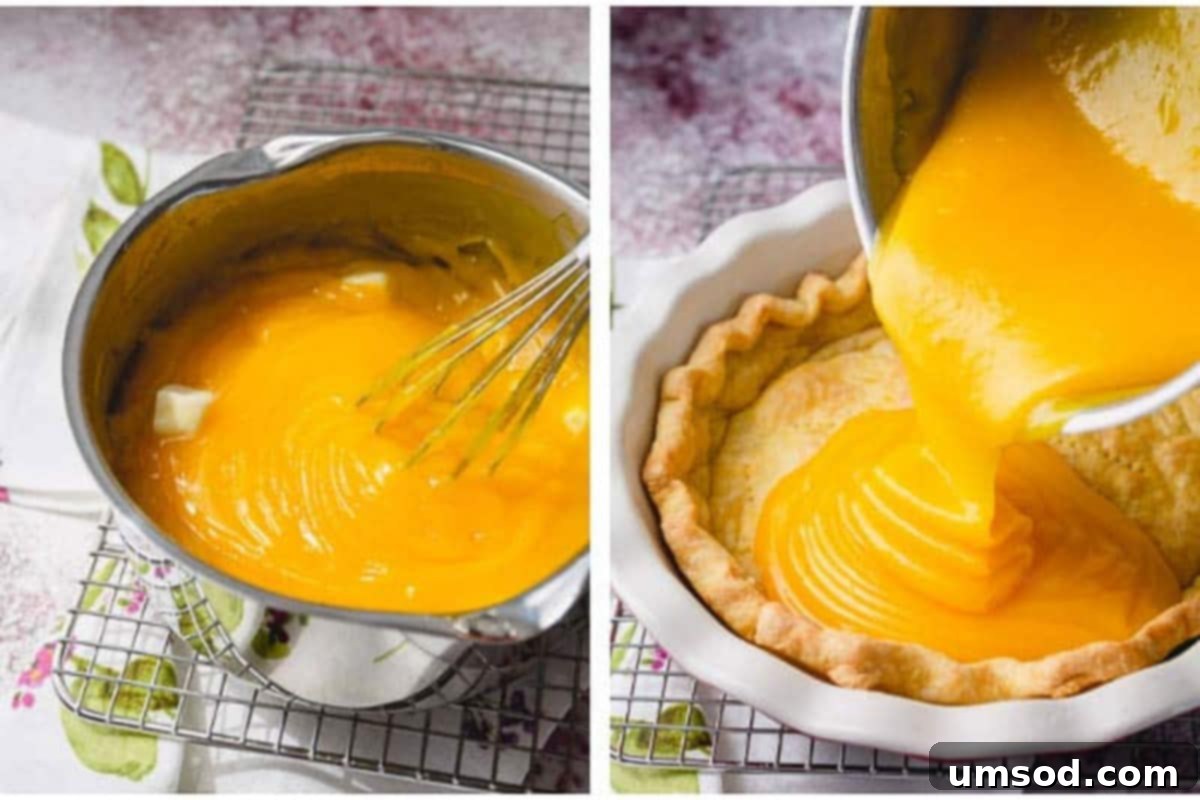
- Remove the pan from the heat immediately. Stir in the cold unsalted butter, allowing it to melt completely into the hot filling. The butter adds richness and a beautiful gloss.
- Without delay, transfer the piping hot lemon filling into your pre-baked pie crust. Smooth the top with a spatula.
4. Assemble and Finish the Pie
- Just before spreading, give your prepared meringue a quick 30-second whip with a clean whisk to revive its structure and ensure it’s light and airy.
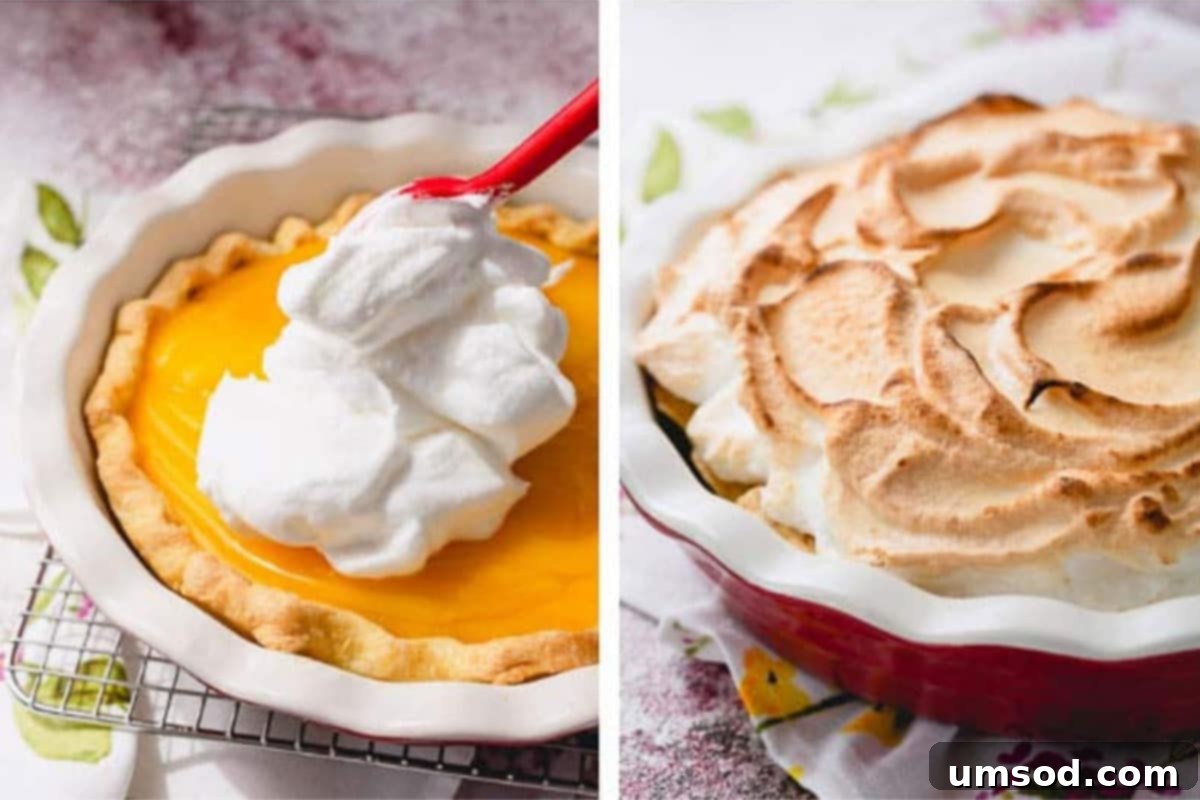
- Immediately spread the meringue on top of the piping hot lemon filling. It’s crucial to spread it all the way to the edges of the crust, ensuring it touches the crust all around to create a seal. This helps prevent the meringue from shrinking. Create beautiful peaks and swirls with the back of a spoon or a small offset spatula for an elegant finish. You shouldn’t see any yellow filling peaking through!
- Bake the assembled pie for 8-10 minutes, or until the meringue turns a lovely golden brown. Keep a close eye on it, as meringue can burn quickly.
- Once baked, allow the pie to cool completely on a wire rack at room temperature for at least 1-2 hours before slicing. This allows the filling to fully set.
Baking Secret: How to Prevent Weeping Meringue
Weeping meringue, where liquid pools between the meringue and the filling, is a common frustration for bakers. Here are three crucial tips to ensure your meringue stays beautiful and stable:
- Avoid Over-Whipping: This meringue has a lower sugar content than some, making it prone to over-whipping. Keep a vigilant eye on it and stop as soon as stiff peaks form. Over-whipped meringue can become dry and crumbly, leading to weeping.
- Utilize Cornstarch in Meringue: The small amount of cornstarch added to the meringue acts as a powerful stabilizer. It helps to absorb excess moisture and provides structure, making your meringue more resilient against weeping, even in humid conditions.
- Apply Meringue to Hot Filling: This is perhaps the most critical tip. Immediately after removing the hot lemon curd from the stove, spread the meringue over it. The residual heat from the filling helps to gently cook the bottom layer of the meringue, creating a barrier that prevents moisture from seeping out and breaking down the meringue structure.
Mastering Lemon Meringue Pie: Additional Tips for Success
Beyond the core steps, these insights will elevate your pie-making skills and guarantee a stunning, delicious result every time:
- Ensure Impeccably Clean Tools: When making meringue, any trace of oil or fat residue in your mixing bowl or on your whisk can be disastrous. Fat prevents egg whites from whipping up properly into a stiff, fluffy meringue. Use glass or metal bowls, and wash them thoroughly with soap and water, then wipe with a paper towel and a splash of vinegar or lemon juice to ensure they are squeaky clean.
- Precise Egg Separation is Key: Exercise extreme caution when separating egg whites from yolks. Even a tiny speck of egg yolk (which contains fat) in your egg whites can compromise the meringue’s ability to achieve proper volume and structure. Separating them while cold can make this task easier.
- Room-Temperature Egg Whites for Volume: While separating egg whites when cold is easier, allow them to sit at room temperature for about 30 minutes before whipping. Room-temperature egg whites whip faster and achieve a significantly better volume and a more stable meringue.
- Avoid Over-Whipping the Meringue: This point bears repeating! Beat the meringue only until it holds firm peaks when you lift the mixer. Over-whipping can make the meringue dry, grainy, and more prone to cracking or weeping.
- Assemble with Hot Filling: As discussed, always spread the meringue over the piping hot lemon filling. This foundational heat cooks the meringue from the bottom up, creating a stable layer and preventing it from breaking down or weeping.
- Mindful Cooking of the Filling: Cornstarch is the primary thickening agent in the lemon curd, activating at boiling temperatures. However, prolonged boiling or excessively high heat can cause it to lose its thickening power, leading to a runny filling. The inclusion of flour acts as a structural backup. Cook the mixture until it visibly thickens, but resist the urge to overcook it, or it may lose its desired consistency.
- Prevent Meringue Shrinking: Shrinking occurs when the meringue pulls away from the crust, exposing the filling at the edges. To prevent this, ensure you spread the meringue generously all the way to the pie crust, creating a firm seal around the perimeter.
- Do Not Overbake the Pie: Keep a watchful eye on your oven during the final bake. The meringue should turn a light, appealing golden brown. Remove the pie as soon as it reaches this stage, as overbaking can dry out the meringue and potentially cause beading or cracking.
- Cool Completely Before Slicing: Patience is a virtue when it comes to lemon meringue pie. Allow the pie to cool completely to room temperature on a wire rack for 1-2 hours before attempting to slice it. Refrigerating a warm pie can trap moisture and negatively affect both the meringue and filling textures.
How to Achieve Perfectly Clean Slices of Lemon Meringue Pie
Cutting into a lemon meringue pie can sometimes be a messy affair, with meringue sticking to the knife and the filling squishing out. However, I’ve discovered a foolproof method to achieve beautifully clean, tear-free slices every time, without needing butter or other tricks:
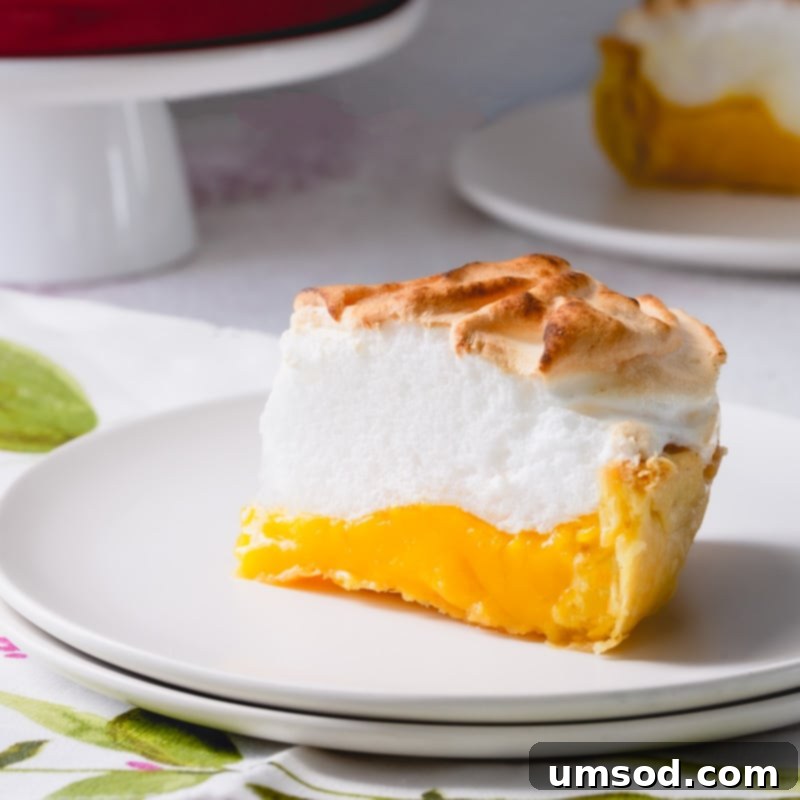
- Score with a Serrated Knife: Begin by using a sharp serrated knife. Gently score a line where you intend to cut the slice. Use a small, light back-and-forth sawing motion rather than pressing straight down. This initial scoring helps to cleanly cut through the meringue without dragging it.
- Cut All the Way Down and Clean the Knife: Once scored, continue to cut all the way down through the filling and crust. After each slice, immediately wipe the knife clean with a moist, hot towel. This removes any sticky residue, ensuring your next slice is as pristine as the first.
Lemon Meringue Pie Troubleshooting: Common Issues and Solutions
Even experienced bakers can encounter challenges with lemon meringue pie. Let’s address the most common issues and how to prevent them, ensuring your pie is always a triumph.
Issue #1: Runny Filling
- Problem: The lemon filling is not setting and remains too liquid after cooling.
- Solution: Cornstarch is your primary thickening agent, and it activates at boiling temperatures. However, if cooked for too long or at too high a heat, its thickening ability can degrade. To prevent a runny filling, ensure you bring the mixture to a full boil and cook for the specified 1-2 minutes, stirring constantly, then immediately reduce heat or remove from stove after adding egg yolks and cook only until visibly thickened. The addition of flour in this recipe provides extra insurance against this issue.
Issue #2: Weeping Meringue
- Problem: Puddles of liquid form between the lemon filling and the meringue topping. This is arguably the most frustrating pie problem!
- Solution: The most effective way to prevent weeping is to spread the meringue over the lemon filling while the filling is still piping hot from the stove. The heat from the filling helps to cook the base of the meringue, creating a seal that prevents moisture migration. This is precisely why it’s recommended to prepare your meringue ahead of the filling.
Issue #3: Meringue Shrinking
- Problem: The meringue topping pulls away from the edges of the pie crust, leaving the lemon filling exposed.
- Solution: To prevent shrinking, ensure you generously spread the meringue all the way to the very edges of the pie crust. Make sure the meringue touches the crust firmly all around, creating a good seal. This adherence helps the meringue maintain its shape during baking and cooling.
Issue #4: Meringue Beading
- Problem: Small droplets of amber-colored liquid appear on the surface of the meringue after baking.
- Solution: While not a critical flaw, beading happens due to moisture being drawn out of the meringue. To minimize this, we incorporate cornstarch into the meringue, which helps absorb excess water. Additionally, avoid over-baking the pie and ensure it cools completely at room temperature before storing it in the refrigerator. Extreme temperature changes can also contribute to beading.
Smart Make-Ahead Strategies
While lemon meringue pie is best enjoyed fresh, certain components can be prepared in advance to streamline your baking process:
Pie Dough: The pie dough is an excellent candidate for make-ahead preparation. You can prepare it up to 3 days in advance and store it, well-wrapped, in the refrigerator. For even longer storage, freeze the dough for up to 3 months. I often recommend making a double or triple batch of pie dough at once, so you always have some on hand whenever a craving for this delightful pie strikes. Simply thaw in the refrigerator overnight before use.
Storing Your Lemon Meringue Pie
This lemon meringue pie recipe yields the most delightful results when served fresh, shortly after it has cooled completely. The meringue topping, being delicate, is at its peak texture soon after baking.
If you have leftovers, you can store them covered loosely with plastic wrap in the refrigerator for up to one day. After a day, the meringue’s texture may start to become less ideal. Ensure the pie is completely cool before refrigerating to prevent condensation that can lead to weeping.
Freezing Lemon Meringue Pie is Not Recommended: Unfortunately, lemon meringue pie does not freeze well. The texture of both the filling and the meringue will significantly degrade upon freezing and thawing. The meringue, in particular, tends to become gummy and chewy, losing its light, airy quality. For the best experience, enjoy this pie fresh!
Frequently Asked Questions About Lemon Meringue Pie
Can I use bottled lemon juice instead of fresh for lemon meringue pie?
While technically possible, using bottled lemon juice is not recommended for this recipe. Fresh lemon juice provides a far superior, brighter, and more authentic lemon flavor. Additionally, this recipe calls for lemon zest, which you can only get from fresh lemons. For the best taste, always opt for fresh citrus.
Do I have to refrigerate lemon meringue pie?
Yes, any leftover lemon meringue pie should always be stored covered in the refrigerator. The egg-based filling and meringue are perishable and require refrigeration to remain safe to eat and maintain quality. Just ensure the pie is completely cooled before transferring it to the fridge.
How do I prevent my lemon curd from curdling in lemon meringue pie?
The key to preventing egg yolks from curdling in your lemon curd is tempering. This essential technique involves gradually bringing the temperature of the egg yolks up by slowly adding a small amount of hot liquid (in this case, the hot lemon mixture) to them while whisking continuously. This gently warms the yolks, preventing them from scrambling when they are fully incorporated into the hot saucepan mixture.
Explore More Zesty Lemon Desserts
If you’re a fan of the bright, refreshing flavor of lemon, you’ll love these other delightful dessert recipes:
- Irresistible Lemon Sheet Cake
- Elegant Raspberry Lemon Meringue Tartlets
- Delicate Lemon Raspberry Crepe Cake
- Light and Airy Lemon Creme Puffs

Lemon Meringue Pie
Shinee Davaakhuu
20 mins
25 mins
1 hr 45 mins
8 servings
Comment
Print Recipe
Ingredients
- 1 pie crust (9-inch, pre-baked)
FOR THE LEMON FILLING:
- 1 cup (240 ml) water
- 1 cup (200 g) granulated sugar
- ½ cup (120 ml) fresh lemon juice
- 3 tablespoons cornstarch
- 2 tablespoons all-purpose flour
- 1 tablespoon lemon zest
- ¼ teaspoon table salt
- 2 tablespoons (30 g) unsalted butter
- 4 egg yolks
FOR THE MERINGUE:
- 4 egg whites (from separated eggs for filling)
- 6 tablespoons granulated sugar
- 1 tablespoon cornstarch
- Pinch of cream of tartar (optional, for stabilization)
Instructions
To prepare the pie crust
- Preheat oven to 375°F (190°C).
- Roll the pie crust dough into a 10-inch circle on a lightly floured surface.
- Transfer the dough to a 9-inch pie pan, fold the edges to create a rim, and pierce holes all over the bottom with a fork.
- To blind-bake, cover the crust with aluminum foil and fill with pie weights, raw rice, or dry beans.
- Bake for 15 minutes. Remove the foil and weights, then continue to bake for another 15-20 minutes, or until the crust is golden brown. Set aside to cool.
To make the meringue
- In a small bowl, whisk together the 6 tablespoons of granulated sugar and 1 tablespoon of cornstarch.
- In a large, clean mixing bowl with a whisk attachment, beat the room-temperature egg whites (and cream of tartar if using) until foamy and soft peaks begin to form.
- Slowly add the sugar-cornstarch mixture, one tablespoon at a time, continuing to beat on medium-high speed until hard, glossy peaks form. Do not over-whip. Set aside.
To make the lemon curd filling
- In a medium saucepan, combine water, lemon juice, sugar, cornstarch, flour, lemon zest, and salt. Whisk until smooth. Bring the mixture to a boil over medium heat, stirring constantly, and boil for 1-2 minutes until thickened.
- To temper the egg yolks: In a separate small bowl, whisk the 4 egg yolks. Slowly pour about ½ cup of the hot lemon mixture into the whisked egg yolks, stirring vigorously. This prevents curdling.
- Pour the tempered egg yolk mixture back into the saucepan with the remaining lemon mixture. Continue cooking for 3-5 minutes over medium heat, stirring continuously, until the filling is very thick and coats the back of a spoon.
- Remove from heat and stir in the 2 tablespoons of unsalted butter until melted and fully incorporated.
To assemble the pie
- Immediately pour the hot lemon filling into the pre-baked pie crust. Give the meringue a quick whisk for 30 seconds to revive its structure, then spread it evenly over the hot filling, ensuring it seals all the way to the edges of the crust. Create decorative peaks.
- Bake the pie for 8-10 minutes, or until the meringue is lightly golden brown. Watch carefully to prevent burning.
- Cool completely on a wire rack at room temperature for 1-2 hours before slicing and serving.
⭐️ Did you make this recipe?
Please leave a review and let us know how you liked it!
Video
Tips & Notes
Storing Tips:
This recipe is best served immediately after cooling, as the meringue topping is most stable then. Leftovers can be stored covered in the fridge for up to one day.
Nutrition
Servings: 1 serving
Calories: 316 kcal
Carbohydrates: 51 g
Protein: 5 g
Fat: 11 g
Sugar: 35 g
Sodium: 192 mg
Dessert
American

Did you make this?
Leave a rating and your feedback. Thank you!
This post was originally published on January 3, 2013, and has been updated with enhanced tips, detailed instructions, and improved content for an even better baking experience.